
Flying with Disposable Vapes in 2026: Rules, Packing, and TSA Guidelines
Posted by Silar on Sep 24th 2026
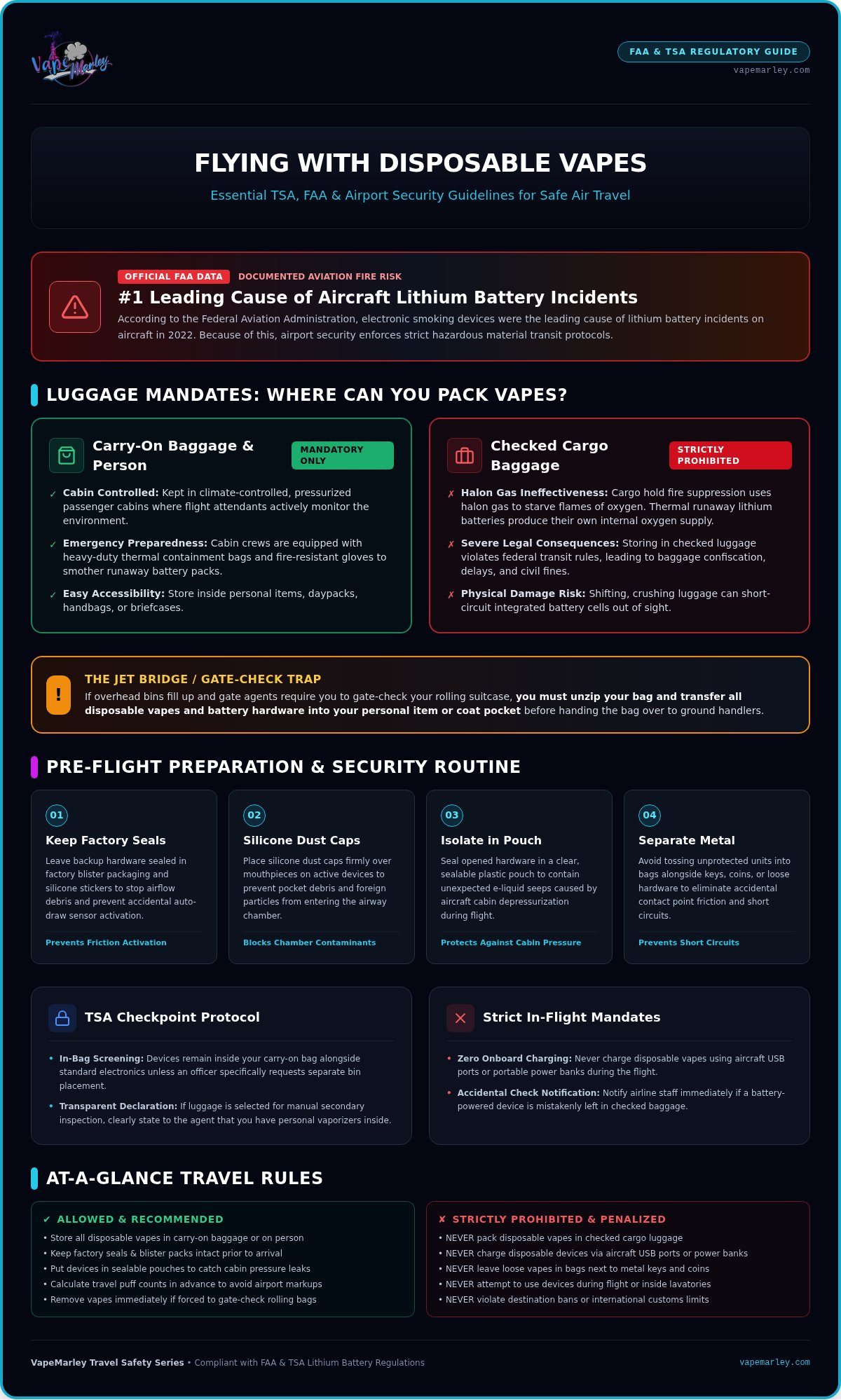
According to the Federal Aviation Administration, electronic smoking devices were the leading cause of lithium battery incidents on aircraft in 2022. Because of that documented fire risk, airport checkpoints monitor these compact devices with strict scrutiny. If you feel nervous about flying with disposable vapes, you aren't alone. Nobody wants to face surprise TSA confiscations, confusing luggage restrictions, or the frustration of e-liquid leaking across clean clothes due to cabin pressure shifts.
Fortunately, traveling with your setup is completely straightforward once you treat your batteries as regulated safety essentials. You simply need to know the baseline rules before you arrive at the terminal. In this comprehensive guide, you'll learn the exact TSA and FAA luggage requirements, foolproof packing methods to prevent accidental activation and leaks, and vital tips for handling destination bans. Here is everything you need to pack smart and board your next flight with complete confidence.
Key Takeaways
- Understand federal carry-on mandates and why checked luggage is strictly off-limits when flying with disposable vapes.
- Learn practical packing routines that protect draw-activated firing sensors and help you pass through airport screening without delays.
- Discover simple techniques to prevent e-liquid leaks caused by aircraft cabin depressurization during flight.
- Review critical international regulations to avoid severe customs penalties or sudden border confiscation at your destination.
- Calculate your travel puff counts in advance so you can pack factory-sealed backup devices and avoid inflated terminal prices.
TSA and FAA Rules: Can You Fly with Disposable Vapes in 2026?
Yes, you can travel with your devices, but you must follow clear federal guidelines. When flying with disposable vapes across domestic routes, the Federal Aviation Administration (FAA) and Transportation Security Administration (TSA) mandate that all devices remain exclusively in your carry-on baggage or on your person. Airport screeners inspect millions of travelers daily, and while their primary screening mandate targets security threats rather than counting your backup puff bars, discovering lithium-powered electronics in the wrong compartment halts the process immediately.
Every standard electronic cigarette relies on an internal lithium-ion cell paired with a heating element. Because these parts are integrated into a single sealed shell, the entire unit falls under federal hazardous material transit regulations. Knowing how to pack these units ensures smooth passage through terminal security gates.
The Carry-On Only Rule Explained
Pack every device directly inside your daypack, briefcase, or handbag. Keeping your hardware inside the passenger cabin ensures it stays in a climate-controlled, pressurized space where flight attendants can monitor the environment. If you bring a standard rolling suitcase to the gate and overhead bins run out of room, gate agents often force passengers to check their bags at the jet bridge.
Never leave your devices inside a gate-checked suitcase. Before handing your bag over to ground handlers, unzip the front pocket and transfer all hardware into your coat pocket or personal carry item.
- Keep all spare hardware inside an easily accessible personal item.
- Notify airline staff immediately if you accidentally leave a battery-powered device inside checked luggage.
- Never charge your disposables using onboard USB ports or power banks during the flight.
Why Checked Luggage Is Prohibited
The cargo hold of a commercial airliner operates out of sight. Aircraft luggage bays possess specialized fire-suppression systems, but these setups rely primarily on halon gas, which starves ordinary flames of oxygen. Lithium-ion batteries behave differently during a thermal runaway event. When crushed or short-circuited under heavy shifting baggage, a damaged battery cell produces its own internal oxygen supply, making standard cargo hold suppression far less effective.
Inside the cabin, flight crews carry heavy-duty thermal containment bags and fire-resistant gloves specifically designed to smother runaway battery packs. Packing these devices in checked luggage violates federal transit rules, exposing travelers to baggage confiscation, screening delays, and civil fines. Adhering to carry-on mandates keeps every flight secure while ensuring your hardware arrives safely at your destination.
How to Pack Disposable Vapes for Airport Security
Mastering a clear packing routine before heading to the terminal removes the friction from your checkpoint experience. Federal agencies expect travelers to follow precise safety protocols, but they do not publish straightforward checklists for draw-activated pens. To streamline flying with disposable vapes, you need to organize your gear so security screeners can inspect it quickly without flagging your bag for physical secondary checks.
Understanding internal battery architecture helps you prepare your kit properly. For an in-depth breakdown of battery safety and internal hardware construction, check out The Ultimate 2026 Guide to Disposable Vapes before packing.
Preparing Your Devices Before Leaving Home
Organization begins at home. Leaving spare hardware sealed in factory blister packaging prevents foreign particles from clogging airflow chambers. Factory seals also eliminate the risk of external friction triggering auto-draw sensors while stored in tightly packed luggage.
- Keep factory seals and silicone stickers intact until you land at your destination.
- Place silicone dust caps firmly over mouthpieces on active devices to prevent pocket debris from entering the airway.
- Isolate opened hardware in a clear, sealable plastic pouch to catch unexpected fluid seeps.
Navigating the TSA Screening Checkpoint
Official TSA guidelines permit electronic nicotine delivery systems through standard security lines when stored properly in cabin baggage. Keep your devices inside your carry-on bag alongside your standard electronics unless an officer specifically requests that passenger electronics be placed in separate screening bins.
If an agent selects your luggage for manual inspection, state clearly that you have personal vaporizers inside. Avoid tossing unprotected units into bags next to keys, coins, or loose hardware, because loose metal contact points can short-circuit exposed charging ports.
Understanding Liquid Allowances for Pre-Filled Vapes
Federal liquids oversight follows the established 3-1-1 protocol: all liquid containers must measure 3.4 ounces (100 ml) or less and fit into a single quart-sized clear bag. The pre-filled e-liquid capacity in modern disposables ranges from 2 ml up to 20 ml, which sits well below the maximum single-container volume threshold.
Airport security officers retain complete discretion over carry-on items. If a screening agent asks you to pull all liquid-containing items from your luggage, simply transfer your sealed clear pouch into your liquids bin. Packing organized gear makes flying with disposable vapes predictable, and you can grab travel-ready options and protective vape accessories at VapeMarley before your departure.
Preventing Leaks and In-Flight Rules You Must Follow
Climbing to a cruising altitude of 35,000 feet changes the physical environment around your gear. Commercial airliner cabins are pressurized, but the internal pressure still drops to the equivalent of 6,000 to 8,000 feet above sea level. This pressure differential causes trapped air inside an e-liquid reservoir to expand. As the trapped air pushes outward, it can force liquid up through the chimney and out of the mouthpiece. When flying with disposable vapes, understanding this atmospheric shift saves your pockets from sticky residue.
Strict federal guidelines govern how devices behave once the cabin doors close. Under published TSA and FAA Rules, using or altering any electronic smoking device while on board an aircraft remains completely prohibited.
Managing Cabin Pressure Changes
Preventing cabin altitude leaks requires basic physics management. Store your active disposable vertically inside your seatback pocket or carry-on bag, ensuring the mouthpiece points directly upward. This orientation keeps the liquid sitting at the base of the chamber, allowing expanding air to escape harmlessly without pushing liquid through the airway.
- Position opened devices upright so trapped air vents freely through the mouthpiece.
- Wrap unsealed hardware in a dry paper towel and seal it within a zip-top bag to catch minor seepage.
- Select premium disposables engineered with multi-layer silicone gaskets and saturated internal cotton reservoirs rather than free-floating tank systems.
Zero Tolerance: No Vaping on Airplanes
Aircraft lavatories feature sensitive optical smoke detectors designed to identify airborne particulates, not just heat. Exhaled aerosol triggers these systems almost immediately. Attempting to stealth vape at your seat violates federal aviation regulations and creates serious safety concerns for flight personnel.
Flight attendants report every in-cabin incident directly to the flight deck. Crew members do not issue warnings; instead, airline dispatch summons airport police to meet the plane at the arrival gate. Violations carry FAA civil penalties reaching thousands of dollars, immediate ejection from passenger loyalty programs, and lifetime carrier bans.
In-Cabin Battery Charging Prohibitions
Federal aviation rules strictly prohibit recharging any electronic smoking device while in flight. Never connect your disposable to an in-seat USB port, AC outlet, or portable power bank while cruising. Charging causes internal heat fluctuations that dramatically increase thermal runaway risks in enclosed cabin environments.
Stow your cords safely until you land. You can find durable cables and storage sleeves through our guide to Vape Accessories Online to keep your gear organized. Keep devices completely powered down or idle throughout transit, ensuring your experience flying with disposable vapes remains hassle-free from takeoff to landing.
International Air Travel: Destination Laws and Airline Policies
Clearing domestic security is only half the battle when taking your gear overseas. While international aviation bodies standardize flight safety protocols, national borders enforce sovereign laws. Flying with disposable vapes across borders means you transition from FAA battery guidelines directly into foreign customs jurisdictions, where local statutes dictate possession legality rather than airline convenience.
Researching your destination before departure prevents legal headaches. If you're planning a trip to a vape-friendly region or traveling domestically, you can order verified disposable vapes from VapeMarley to ensure you carry factory-sealed, clearly labeled hardware.
Countries with Strict Vaping Bans
Several popular global destinations strictly prohibit electronic smoking devices. Countries such as Mexico, Thailand, and Qatar enforce comprehensive bans covering both the sale and personal importation of vapor products. Arriving border checkpoints routinely scan all carry-on baggage right after deplaning.
- Border agents confiscate prohibited vaporizers immediately upon identification.
- Travelers carrying banned items face severe financial penalties payable on the spot.
- Certain jurisdictions classify electronic nicotine devices as controlled contraband, which can result in formal detention.
International Transit and Layover Traps
Many travelers assume airport transfer zones provide legal immunity, but this is a dangerous misconception. Laying over in a foreign hub often requires passing through local security screening between flight gates. If that hub enforces strict possession bans, your carry-on bag is fully subject to local confiscation laws.
Always inspect your layover itinerary closely. If your connecting hub enforces an outright device ban, surrender your disposables in terminal disposal bins before passing through transfer security checkpoints.
Foreign Airline Carrier Discrepancies
International carriers follow baseline safety accords, yet individual airline policies often vary. Some non-US airlines cap the total number of disposables allowed per passenger or require loose hardware to sit inside specific clear pouches throughout the journey. In addition, many foreign carriers enforce strict watt-hour verification for any battery-powered travel goods.
Check the dangerous goods section on your operating airline's website prior to takeoff. When flying with disposable vapes internationally, keep your devices in their original factory blister packaging. Factory boxes display exact nicotine levels and hardware specifications, proving to customs inspectors that your supplies comply with local personal-use allowances.
Travel-Ready Vaping: Packing Essentials and Smart Strategies
Careful trip planning transforms flying with disposable vapes from a stressful guessing game into an organized, seamless routine. Avoid scrambling for replacements at airport newsstands, where markup rates are notoriously high and authentic selection is sparse. Instead, calculate your personal usage beforehand. If you average 300 puffs daily and plan a five-day itinerary, pack enough capacity to cover your baseline plus an extra backup unit to handle unexpected flight delays.
Matching your preferences to reliable gear keeps your travel experience smooth. Adult vapers can explore curated profiles and reliable airflow systems through our guide to Top Rated Disposable Vape Brands and Flavors of 2026 before choosing their travel kit.
Choosing Travel-Friendly Disposable Devices
Not every disposable device suits active transit. Select compact hardware featuring ergonomic, pocket-friendly profiles that slip easily into dedicated compartments inside your carry-on luggage.
- Choose devices with internal silicone airflow plugs that stay sealed until your trip begins.
- Select pre-charged units for weekend travel to eliminate packing extra cords and chargers.
- Avoid bulky display models if you prefer minimizing overall luggage weight and pocket bulk.
Stocking Up and Multi-Pack Savings
Sourcing your hardware before heading to the departure concourse protects your wallet. Sourcing multi-packs online delivers authentic, factory-sealed hardware at significant volume savings. Taking advantage of options found in Best Vape Bundle Deals USA lets you stock up on verified multi-packs with nationwide shipping.
Keeping backup hardware sealed in its original manufacturer packaging also simplifies checkpoint interactions. Unopened blister packaging demonstrates clear factory origin, transparent nicotine specifications, and zero tamper risk during routine inspection.
Arrival Protocol: Safe Use After Your Flight
Resist the temptation to reach for your device the moment the plane touches down on the tarmac. Terminal concourses and baggage claim halls fall under strict smoke-free facility codes. Wait until you clear terminal exits and locate designated outdoor smoking zones before taking your first draw.
Before inhaling, take a clean tissue and gently wipe the mouthpiece and airflow vents. Cabin pressure changes frequently create minor internal condensation around the coil chimney during descent. A quick wipe ensures a clean draw right from the start. For reliable travel hardware, backup multi-packs, and essential charging gear, browse the curated catalog at VapeMarley to prepare for your next itinerary.
Take to the Skies with Total Travel Confidence
Mastering federal transit rules turns flying with disposable vapes into a completely routine part of your packing checklist. Always keep your devices secured in your personal carry-on luggage, store active pens upright to prevent altitude-driven leaks, and research international customs policies whenever you cross borders. Treating your hardware as a regulated travel essential eliminates checkpoint surprises and safeguards your gear throughout the flight.
Don't get stuck paying inflated airport retail prices for limited inventory. You can stock up on travel-ready disposable vape bundles at VapeMarley well before your departure date. Every shipment delivers 100% authentic, factory-sealed disposable vapes backed by verified age-screening technology and rapid nationwide shipping across the United States. Pack smart, respect airline safety protocols, and enjoy a smooth, hassle-free journey wherever your boarding pass takes you.
Frequently Asked Questions
Can you bring disposable vapes in carry-on bags on an airplane?
Yes, you can bring disposable vapes in carry-on bags, and this is actually the only legal way to transport them. Both the TSA and FAA require all electronic smoking devices to remain inside passenger cabin luggage or directly on your person. Keeping devices in the cabin ensures they stay in a climate-controlled environment where flight attendants can quickly handle any rare battery malfunction.
What happens if you accidentally leave a disposable vape in checked luggage?
If TSA baggage scanners detect a disposable vape inside your checked luggage, security screeners will open the bag and confiscate the device immediately. Federal regulations strictly ban lithium-ion batteries from cargo holds due to fire risks. Officers place an official physical inspection notice inside your luggage explaining the removal, and severe or repeat violations can expose passengers to civil fines.
How many disposable vapes can you bring on a domestic flight?
The TSA does not publish a strict numerical cap on personal devices when flying with disposable vapes across domestic routes. Devices must simply fit comfortably within your standard carry-on baggage allowance and remain well below the FAA 100 watt-hour battery threshold. Packing reasonable quantities for personal travel ensures airport officers pass your gear through security checkpoints without suspicion of commercial transit.
Can you charge your rechargeable disposable vape during a flight?
No, you cannot charge a rechargeable disposable vape aboard an aircraft under any circumstances. Federal aviation regulations strictly prohibit passengers from connecting electronic nicotine devices to seatback power outlets, USB ports, or portable power banks while airborne. Recharging creates internal battery heat, which significantly increases thermal runaway hazards in an enclosed cabin. Keep your charging cables packed away until you reach your arrival terminal.
Will airport security confiscate disposable vapes at the TSA checkpoint?
TSA officers will not confiscate standard disposable vapes as long as they are packed in your carry-on bag and comply with baseline hazardous material guidelines. Airport screeners search primarily for security threats rather than counting personal nicotine devices. As long as your hardware is factory-manufactured, undamaged, and contains legal substances, it will clear x-ray inspection without incident.
Why do disposable vapes leak during flights, and how do you stop it?
Disposable vapes leak because aircraft cabin pressure decreases during ascent, causing air pockets inside the fluid reservoir to expand and displace liquid through the mouthpiece. When flying with disposable vapes, prevent leaks by keeping active units positioned upright with the tip pointing toward the ceiling. Storing backup devices in their original, sealed factory blister packaging also prevents altitude pressure from forcing fluid past internal seals.
Can you use a disposable vape in an airplane bathroom or at your seat?
No, using a disposable vape anywhere inside a commercial airplane is illegal under federal law. Modern aircraft lavatories contain optical smoke detectors that identify airborne vapor particles within seconds. Attempting to vape mid-flight alerts cabin crew immediately, resulting in airport police meeting the aircraft upon arrival, substantial federal fines, and permanent blacklisting from the airline.