
Disposable Vape Troubleshooting: The Complete 2026 Fix-It Guide
Posted by Silar on Sep 16th 2026
Most disposable vape "failures" are actually simple airflow or connectivity blockages that you can resolve in under 60 seconds. It's incredibly frustrating to unbox a fresh 25,000-puff device only to have it blink or refuse to hit after just a few hours. You've spent your money on a premium experience, and a minor technical glitch shouldn't force you to toss a device. We understand the frustration of a leaking tank or a battery light that won't stop flashing when there are no buttons for a reset. Mastering the basics of disposable vape troubleshooting allows you to reclaim your device and stop wasting money on premature replacements.
This guide provides the 2026 roadmap for diagnosing modern hardware hiccups, from clogged dual-mesh coils to smart LED screen errors. You'll learn to identify if your high-capacity vape is truly empty or just suffering from a temporary airflow stall. We'll walk through the steps to revive a stubborn battery safely and explain when a device has reached its genuine end-of-life. By the end, you'll have the expert knowledge needed to fix common glitches and the confidence to know exactly when it's time to shop for a reliable new bundle.
Key Takeaways
- Diagnose the "no hit" phenomenon by checking indicator lights and understanding the balance between battery power and coil saturation.
- Master essential disposable vape troubleshooting steps, including the "Blowback Technique" and clearing debris from intake holes to restore airflow instantly.
- Decode blinking light signals on rechargeable models and learn why avoiding high-wattage fast chargers is critical for hardware safety.
- Improve flavor quality and avoid burnt hits by adjusting your vaping rhythm to ensure the internal wick stays properly saturated.
- Identify the clear indicators of a spent device so you can dispose of it responsibly and transition to a fresh high-puff-count replacement.
Why Is My Disposable Vape Not Hitting? Diagnosing the Root Cause
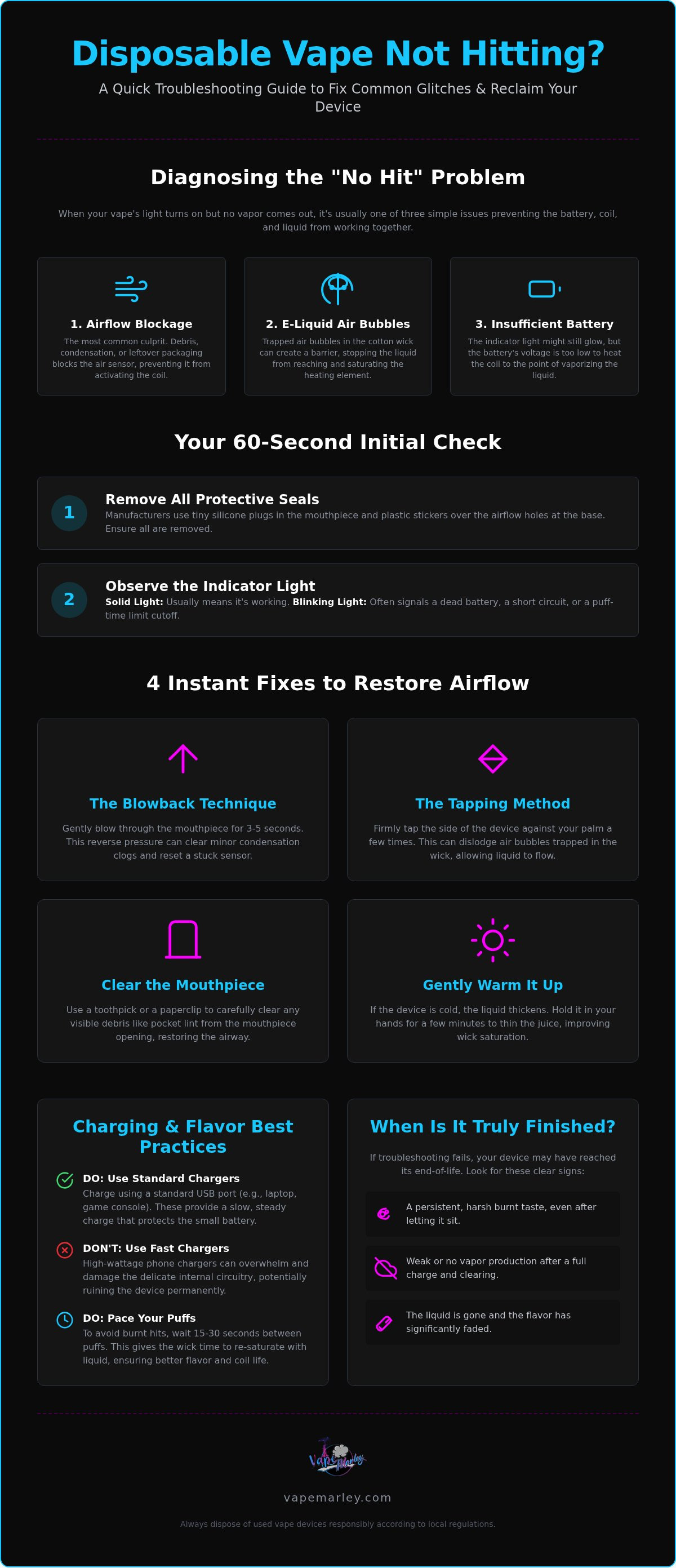
The "no hit" phenomenon is a common point of frustration for many enthusiasts. You take a draw, the indicator light glows with confidence, but absolutely no vapor is produced. This disconnect between the device’s electronics and its output usually indicates a breakdown in the internal communication of the hardware. Effective disposable vape troubleshooting begins with understanding that these devices are compact systems comprising three main parts: a lithium-ion battery, a heating coil, and a reservoir of juice-soaked cotton. When one of these elements fails to sync with the others, your experience grinds to a halt.
Most failures stem from three primary issues. Airflow blockages are the most frequent culprit, often caused by debris or forgotten packaging. Air bubbles can also form within the cotton wick, physically walling off the e-liquid from the heating coil. Finally, battery depletion might occur even if the light still flickers, as the voltage may be too low to actually heat the coil. It's vital to distinguish between a "dead" device, which has exhausted its juice or power, and a "clogged" device that simply needs a minor adjustment to function perfectly again.
The Anatomy of a Disposable Failure
Inside your device, a tiny pressure-activated sensor acts as the gatekeeper. When you inhale, the change in air pressure tells this sensor to send power from the battery to the heating element. If the airflow is restricted by pocket lint or a manufacturing error, the sensor won't "fire," leaving the coil cold. A "dud" device is specifically defined as one with a manufacturing defect in the internal wiring that prevents this electrical circuit from ever completing. Without a clear path for air, the vacuum required to trigger the sensor never materializes, making disposable vape troubleshooting a necessity for any regular user.
Quick Initial Checks for Every Vaper
Before assuming your device is a total loss, perform these essential checks to rule out simple oversight. Manufacturers often use transparent plastic stickers or tiny silicone plugs in the mouthpiece and base to prevent leaking during transit. If these aren't removed, the device cannot breathe. Next, observe the LED indicator light patterns during a draw. A solid light usually means the battery is engaged, while a blinking light often signals a low-voltage error or a short circuit. Finally, inspect the exterior for physical damage. If e-liquid has leaked into the sensor housing, it can gum up the pressure switch, rendering the device unresponsive even if the battery is full.
Airflow and Sensor Fixes: Getting Your Vape to Fire Again
If your device isn't responding despite a full battery, the pressure sensor is likely stuck. Effective disposable vape troubleshooting often focuses on the physical path air takes through the device. The "Blowback Technique" is a highly effective first step. Gently blow into the charging port or the airflow holes at the base of the device. This reverse pressure can dislodge minor internal clogs or reset a sensor that has become stuck in the "off" position. It's a quick fix that often resolves issues with draw activation without needing to open the chassis.
Cold temperatures can also cause the e-liquid to thicken, preventing it from saturating the wick properly. If your device has been in a cold car or outside, wrap it in your hands for several minutes. This gentle warmth thins the juice, allowing it to flow back into the coil area. While handling any hardware, stay aware of potential vape pen battery safety issues reported by the FDA, such as overheating if a sensor remains stuck in the "on" position. Always stop troubleshooting if the device feels excessively hot to the touch.
The "Tapping" Method for Air Bubbles
Air bubbles frequently form in the cotton wicking material during shipping or if the device was stored horizontally. These bubbles create a physical barrier that prevents juice from reaching the heating element, leading to weak hits or a burnt taste. To fix this, hold the device firmly and gently tap the side against your palm. This vibration encourages the bubbles to rise and the liquid to resettle around the coil. Avoid aggressive shaking; high-impact movements can snap the delicate internal soldering that connects the battery to the sensor.
Clearing Obstructions in the Mouthpiece
Pocket lint and small debris are common causes of failure for draw-activated devices. Because the airflow path is incredibly narrow, even a tiny speck of dust can block the vacuum needed to trigger the internal sensor. Use a flashlight to peer into the mouthpiece for visible blockages. If you see a clog, use a small pin or toothpick to carefully clear the intake holes. After clearing the path, try a "puff-and-pull" technique: take several short, sharp puffs without inhaling to force air through the system. If these manual fixes don't restore your device, it might be time to consider exploring a reliable vape bundle to ensure you always have a functional backup ready.
Rechargeable Disposable Troubleshooting: Battery and USB-C Issues
Modern high-puff-count devices, which now frequently reach counts of 25,000 to 50,000 puffs, have shifted the disposable vape troubleshooting landscape toward battery management. A blinking light is the most common signal you'll encounter. While it usually indicates a depleted battery, a persistent blink during or after a charge suggests a communication error between the USB-C port and the internal lithium cell. If your device refuses to fire immediately after being plugged in, it's likely triggered an overheating protection circuit. This safety feature prevents the coil from activating while the battery chemistry is still stabilizing from the heat of a charging cycle.
Using the wrong equipment is a frequent cause of hardware failure. Many users mistakenly use high-wattage smartphone "bricks" to charge their vapes. These adapters can push too much current into a small battery, leading to permanent damage or even safety risks. For reliable performance, it's essential to use dedicated Vape Accessories Online that match the low-amperage requirements of disposable hardware. A mismatch in power delivery is the fastest way to turn a premium device into a paperweight.
Safe Charging Practices for Disposables
To preserve the longevity of your device, avoid "fast-charging" at all costs. Most disposables are designed for 0.5A to 1A charging speeds. Plugging them into a 65W laptop charger or a modern phone block can overwhelm the internal regulator. Instead, charge your device through a laptop USB port or a standard low-amp wall adapter. Follow the "15-minute rule": check the device every quarter-hour and unplug it as soon as the indicator light signals a full charge. Leaving a disposable on a charger overnight can over-deplete the cell's lifespan or cause the juice to thin out and leak due to ambient heat.
Fixing a Finicky USB-C Port
If your device won't take a charge, the issue is often physical rather than electronic. Because these devices live in pockets and bags, the USB-C port is a magnet for lint and debris. Use a can of compressed air or a small, dry brush to clear the port. A single speck of dust can prevent the pins from making a solid connection. When you plug the cable in, the indicator light should pulse or stay solid to confirm a successful cycle. If the light remains dark, try a different cable to rule out a broken internal wire. Consistent maintenance ensures your high-capacity device lasts until the very last drop of e-liquid.
Resolving Flavor and Vapor Quality Problems
Even if your device fires perfectly, a drop in vapor quality can ruin the experience. The most common complaint is the "burnt hit," a harsh, acrid sensation that occurs when the heating coil burns the cotton wick rather than vaporizing the e-liquid. This usually happens because the juice hasn't had enough time to saturate the coil between draws. If you engage in "chain vaping," or taking multiple hits in rapid succession, you're likely outpacing the wick's ability to absorb liquid. Understanding this behavior is a core part of disposable vape troubleshooting, as it helps you preserve the device's integrity for its full advertised lifespan.
Another common issue is "spitback," where hot droplets of e-liquid enter your mouth during a draw. This is often accompanied by a gurgling sound, indicating that the chimney is flooded with excess juice. For more details on what to expect from your device's flavor output, check out The Ultimate 2026 Guide to Disposable Vapes. Managing these quality issues ensures you get the premium performance you paid for without the frustration of a degraded taste.
How to Fix a Burnt Tasting Vape
If you experience a dry or burnt hit, stop using the device immediately. Set it upright on a flat surface for at least 10 minutes. This allows gravity to pull the remaining e-liquid into the center of the cotton wick. Afterward, try a "primer puff." Take three or four very short, light draws without actually inhaling the vapor. This creates a gentle vacuum that pulls juice into the heating chamber. If the burnt taste persists after these steps, the e-liquid is likely officially empty, and the coil is burning the dry internal material. At this stage, the device is spent.
Stopping Leaks and Gurgling
Temperature fluctuations are the primary cause of leaking and gurgling. If you leave your vape in a hot car, the e-liquid thins and expands, forcing its way into the central airflow tube. To fix a gurgling device, hold it firmly and perform a quick "flicking" motion toward the floor, mouthpiece down. This uses centrifugal force to clear excess juice from the chimney. Always store your device upright to prevent gravity from slowly feeding juice into the sensor or mouthpiece. If you're tired of dealing with hardware inconsistencies, order a premium vape bundle from a verified supplier to ensure consistent quality every time.
Knowing When to Replace: The Disposable Life Cycle
Terminal failure is a reality for any electronic device. While disposable vape troubleshooting can often revive a stalled sensor or a clogged airway, it cannot replenish e-liquid that has been vaporized or repair a degraded lithium cell. Modern high-puff-count devices, with some 2026 models reaching up to 100,000 puffs, often feature smart screens to track levels; however, these sensors can occasionally lose calibration. If your device feels unusually light, produces a sharp acrid smell, or the battery indicator remains dark after a full hour of charging, the hardware has reached its genuine end-of-life. Proper disposal is essential. Because these units contain lithium batteries, you should take them to a local e-waste recycling center rather than tossing them in standard household trash.
Finding your next device shouldn't be a gamble. Positioning yourself with a reliable supplier ensures you receive authentic hardware with significantly lower failure rates. You can browse the latest high-performance models at our Disposable Vape Shop USA to find a replacement that meets current 2026 standards for safety, flavor, and puff-count accuracy. Transitioning to a vetted brand is the most effective way to avoid the frustration of early hardware failure.
The "Is It Empty?" Checklist
Before you retire your device, look for these specific indicators of depletion. A significant loss of flavor intensity often precedes a burnt taste, signaling that the internal juice reservoir is nearly dry. You might also notice diminished vapor production. Even with a full battery charge, the clouds will appear thin and wispy compared to a fresh device. Finally, watch for "airy" hits. If the draw feels like you're pulling mostly oxygen without the usual throat feel or nicotine satisfaction, the internal wick is no longer saturated enough to produce a full hit. At this stage, disposable vape troubleshooting will no longer be effective.
Upgrade to Reliability with VapeMarley Bundles
The best way to avoid the frustration of a failing device is to always have a backup ready. Our Vape Bundle Deals USA provide a cost-effective way to stock up on vetted, authentic brands. Buying in bundles allows you to test different hardware designs, helping you identify which manufacturers offer the best reliability for your specific vaping style. VapeMarley is committed to sourcing only high-quality, age-verified products that minimize the "dud" rates common in unverified marketplaces. Moving to a bundle system ensures that even if one device reaches its lifecycle limit unexpectedly, your experience remains uninterrupted and your value is maximized.
Master Your Hardware and Vape with Confidence
Mastering the art of disposable vape troubleshooting ensures that a minor technical glitch never stands between you and a satisfying experience. By understanding how to clear airflow obstructions, manage modern USB-C charging cycles, and identify the signs of a truly spent device, you protect both your time and your investment. Most hardware issues are temporary hurdles that you can resolve with the right physical adjustments or a brief reset period. When the device finally reaches its genuine end-of-life, the focus shifts from maintenance to selection.
VapeMarley serves as your reliable partner in this transition, offering a curated 2026 high-puff brand selection that prioritizes hardware consistency and flavor performance. We handle the logistics with discreet national US shipping and a secure age-verified checkout process to ensure a seamless experience from click to delivery. If your current device has reached its limit, it's time to upgrade to a system you can trust. Shop Authentic Disposable Vapes and Bundles at VapeMarley to find your next favorite device. Keep your clouds consistent and your hardware performing at its peak.
Frequently Asked Questions
Why is my brand new disposable vape not hitting at all?
A brand new device usually fails to hit because of unremoved packaging or a manufacturing "dud" rate. Ensure you've removed the silicone plug from the mouthpiece and the plastic sticker covering the airflow holes at the base. If the light blinks immediately, the battery may have discharged during transit. If the light stays solid but no vapor appears, the internal pressure sensor might be stuck, requiring a few sharp primer puffs to activate.
What does it mean when my disposable vape blinks 10 times?
A sequence of 10 blinks is the industry standard signal for a depleted battery. For rechargeable models, this indicates it's time to connect the device to a low-amp USB-C power source. If your device is a non-rechargeable model, 10 blinks mean the internal lithium cell has reached its voltage limit. At this stage, disposable vape troubleshooting won't revive the battery, and the device must be recycled and replaced with a fresh unit.
Can I refill a disposable vape if it tastes burnt?
You shouldn't attempt to refill a disposable device. These are closed systems designed for single use, and the internal cotton wick is often heat-damaged once a burnt taste occurs. Adding e-liquid won't repair a charred coil and often leads to messy leaks or short circuits. If you're experiencing frequent burnt hits, it's more effective to switch to high-quality 2026 hardware from a verified shop that prioritizes proper wick saturation.
How do I fix a disposable vape that is hitting by itself?
Auto-firing occurs when the draw-activation sensor gets stuck in the "on" position, often due to internal condensation or a juice leak. You can try blowing sharply into the mouthpiece to dislodge the sensor or tapping the device gently against your palm. If the device continues to fire on its own, it can overheat rapidly. For safety, place it on a non-flammable surface outdoors and dispose of it at an e-waste center immediately.
Why does my vape taste like burnt plastic even though it is new?
A burnt taste in a fresh device usually means the e-liquid hasn't fully saturated the heating coil. This can happen if the device was stored horizontally or in a cold environment. To fix this, let the device sit upright for 10 minutes to allow the juice to resettle. Take several very light "primer puffs" without inhaling to pull liquid into the wick. If the plastic taste persists, the device likely has a manufacturing defect.
Is it safe to charge a disposable vape overnight?
Charging a disposable vape overnight is not recommended. Most disposable batteries lack the sophisticated overcharge protection found in high-end smartphones or dedicated vape mods. Excessive charging can lead to battery stress, overheating, or juice thinning, which causes internal leaking. It's best to follow the "15-minute rule" and unplug the device as soon as the indicator light signals a full charge to ensure the longevity of the internal lithium cell.
How can I tell if my disposable vape is a fake or counterfeit?
Authentic 2026 devices include a scratch-off security code on the packaging that you can verify on the manufacturer's official website. Counterfeit products often feature blurry printing, misspelled words, or a harsh chemical taste that differs from the brand's standard profile. To avoid these risks, always source your hardware from a reputable national retailer like VapeMarley. We only stock vetted, age-verified brands to ensure you receive a genuine, high-performance product every time.
What should I do if my vape leaked in the packaging?
If you discover e-liquid inside the sealed packaging, wipe the exterior of the device thoroughly with a dry paper towel. Check the airflow holes and the charging port for any residue that could interfere with the electronics. While a minor leak from pressure changes during shipping is common, a heavily saturated sensor may cause the device to fail. Perform a few test draws; if the device gurgles or fails to fire, contact your supplier for a replacement.