
Why Does a Disposable Vape Taste Burnt Before the E-Liquid Runs Out?
Nov 23rd 2026
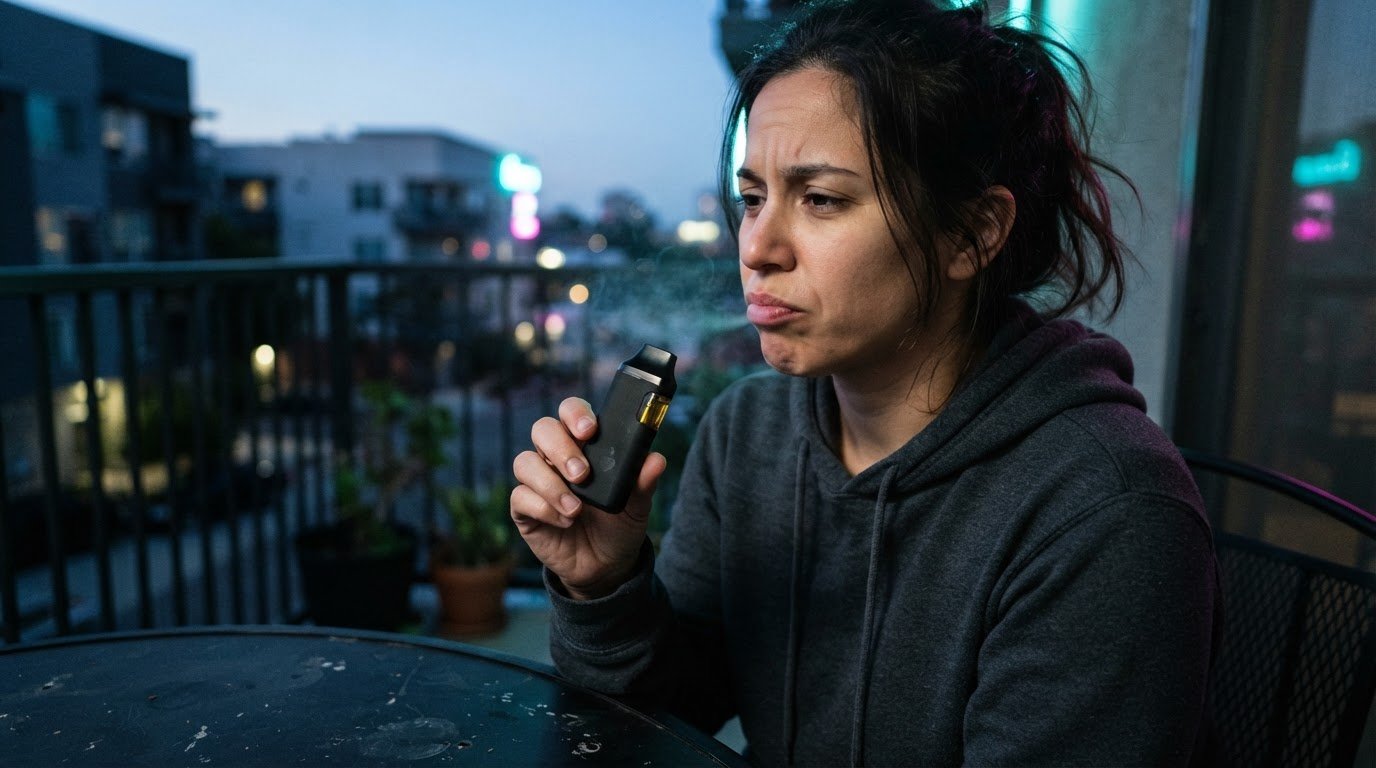
A vape can taste burnt before its e-liquid runs out if the wick is dry, the coil is worn, or the device is heating the liquid too aggressively. A burnt taste is a reason to pause, not to vape through an unpleasant hit. If adjusting the device or letting the wick soak doesn’t resolve it, the coil or disposable may have reached the end of its useful life.
It’s frustrating to see liquid in the tank and wonder why the flavor has changed. This guide covers common causes and practical fixes, from checking a coil’s wattage range to letting a refilled pod sit before use. You’ll also learn how troubleshooting differs for disposables, pods, and mods, when a coil may need replacing, and why lower voltage can help in some setups. Match the fix to the device, and stop using it if the burnt flavor persists.
Key Takeaways
- Liquid remaining in the tank doesn’t guarantee the wick is saturated; check whether the coil can draw in e-liquid before using the device again.
- Pause if the unpleasant flavor persists instead of continuing to vape through it.
- Troubleshooting differs by device: disposables, pods, and mods each have different limits and potential fixes.
- If refilling, resting the device, or adjusting its settings doesn’t help, a worn or damaged coil may need replacing.
- For adjustable devices, stay within the coil’s recommended wattage or voltage range to reduce the chance of scorching the wick.
1. DOES YOUR VAPE TASTE BURNT?
A burnt flavor can point to a dry wick, an overheated coil, or a worn-out coil. E-liquid may still be visible even when the wick beside the heating element is dry. A dry hit often tastes harsh and produces less vapor than usual. Stop drawing and inspect the device rather than assuming the remaining liquid means everything is working.
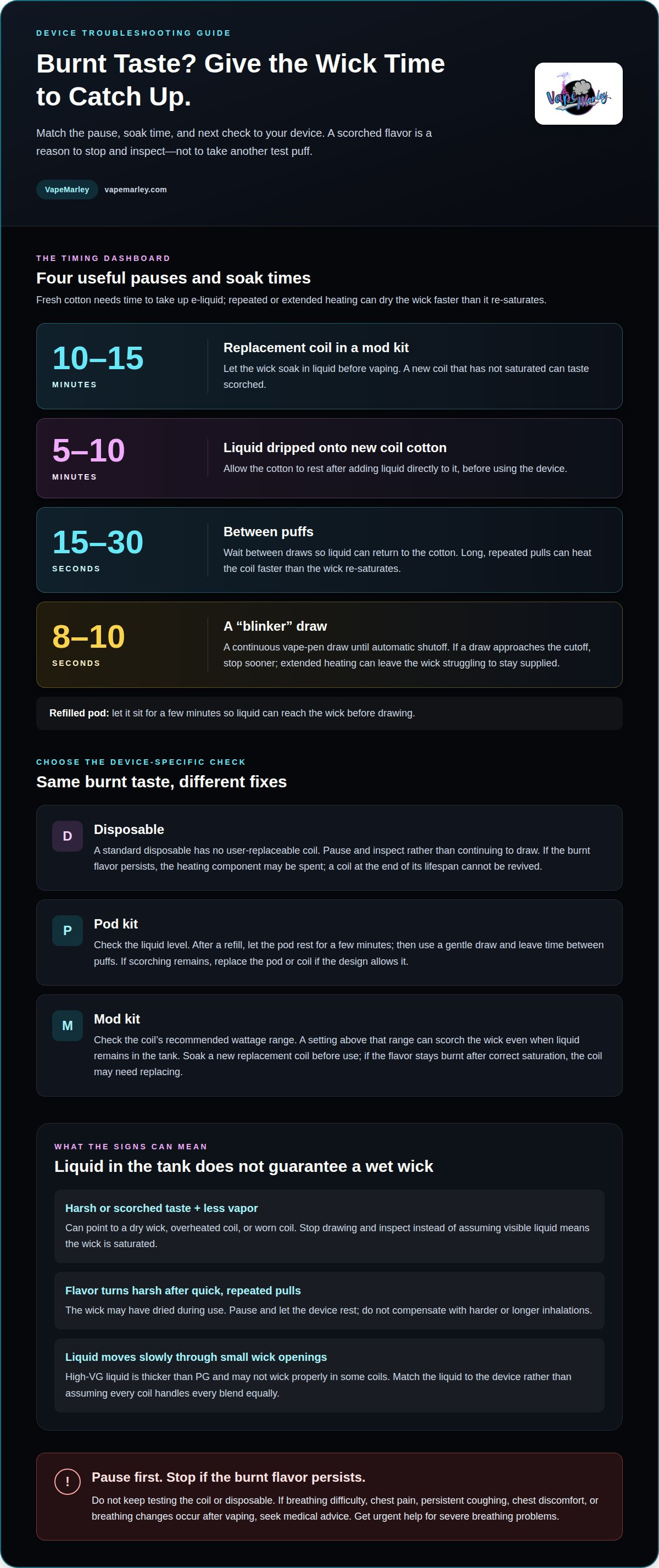
Start with the coil’s condition and the device’s recent use. If a newly installed coil tastes scorched, it may not have had enough time to saturate. For a replacement coil in a mod kit, let the wick soak in liquid for 10-15 minutes before vaping. If you drip liquid directly onto a new coil’s cotton, allow 5-10 minutes before using it. For a refilled pod, let it sit for a few minutes so liquid can reach the wick.
How you draw also affects saturation. Long, repeated pulls can heat a coil faster than liquid can return to its wick. After each puff, wait 15-30 seconds before drawing again; this gives the cotton time to re-saturate. A sequence of quick pulls followed by a sudden harsh flavor can indicate that the wick dried during use. Pause, then see whether the flavor returns to normal without taking another rapid series of puffs.
If a compatible device still struggles to wick, check the e-liquid’s thickness. Vegetable glycerin, or VG, is thicker and sweeter than propylene glycol, or PG. High-VG liquid may not wick properly in some coils, especially those with small wick-channel openings. If liquid moves slowly through the openings, the coil may heat a partly dry wick even with liquid still in the tank. Match the liquid to the device rather than assuming every coil handles every blend equally.
A scorched flavor that persists after proper saturation suggests the coil may be damaged. Let a new coil or refilled pod soak for the recommended period, then use the device within the coil’s recommended wattage range. If the harsh flavor remains, the coil may need replacing. Adding more liquid won’t restore a wick that has already burned.
Some cartridges and disposables don’t have replaceable coils. If a burnt flavor continues after a pause and the device’s liquid supply or battery is running low, the heating component may be spent. A disposable vape coil can’t be revived at the end of its lifespan. Don’t keep drawing in hopes the flavor will return; treat a persistent scorched taste as a sign to stop using the device.
2. Safety concerns when vaping with a burnt taste
A scorched flavor signals that the coil may be heating a wick without enough liquid. Stop vaping when that flavor appears; continuing can expose the wick to more heat without restoring its saturation. Liquid visible in the tank doesn’t prove the wick is wet. Treat the change in taste as a reason to pause and inspect, not as a signal to take stronger pulls.
Chain vaping can leave too little time for liquid to flow back into the wick between draws. The coil heats with each activation, while the cotton needs time to re-saturate. If several quick puffs turn a smooth flavor harsh, stop and let the device rest. Waiting 15-30 seconds between pulls gives the wick time to take up liquid. Don’t try to compensate with longer or harder inhalations.
A blinker is a continuous vape-pen draw lasting 8-10 seconds, until the device’s automatic shutoff triggers. That extended draw can keep the coil heating while the wick struggles to stay supplied. If a draw approaches the device’s cutoff, release the button or stop inhaling sooner. A burnt flavor during or after a long pull means the device needs a pause, not another immediate draw.
Watch for changes during use. A harsh or scorched note, reduced vapor, or flavor that worsens across rapid pulls can indicate an overheating coil or drying wick. Stop, let the device cool, and allow liquid to reach the wick before trying another draw. If the flavor remains burnt after resting, stop using the device rather than testing it repeatedly.
A burnt hit alone doesn’t tell you whether you have an injury or another health problem. Don’t continue vaping to see whether the feeling passes. If you develop breathing difficulty, chest pain, or symptoms that persist after stopping, seek medical advice. Get urgent help for severe breathing problems. Keep the device aside so you can describe what happened and which symptoms followed.
When should you see a doctor about a burnt taste? Seek medical advice if symptoms such as persistent coughing, chest discomfort, or breathing changes occur after vaping. A burnt flavor alone is a device warning, but symptoms that continue after you stop deserve medical attention.
Keep chain vaping and long draws separate from troubleshooting: pause first, then assess whether the flavor clears. If it doesn’t, don’t keep testing the coil or disposable. For further vaping guidance, explore the available information before choosing your next step.
3. Burnt taste troubleshooting for disposable vapes, pod kits, and mod kits
Start by identifying the device type; the right fix depends on which parts can be replaced. A standard disposable has no user-replaceable coil, while a pod kit may use a replaceable pod or coil. A mod kit usually lets you change the coil and adjust wattage. Stop using any device that keeps tasting scorched rather than taking more pulls to test it.
For a pod kit, pause after a burnt hit and check whether the pod has enough liquid. If you’ve just refilled it, let it sit for a few minutes so the wick can saturate. Then take a gentle draw and leave 15-30 seconds between pulls. If the flavor stays scorched after resting, replace the pod or coil if the design allows it. A burnt wick won’t recover simply because you add more liquid.
With a mod kit, check the coil’s recommended wattage range before using the fire button again. A setting above that range can burn the wick even when liquid remains in the tank. If you installed a new coil, give its wick time to soak before vaping. For a replacement coil in a mod kit, the recommended soak is 10-15 minutes. Persistent scorching after correct saturation and settings points to a coil that needs replacing.
A disposable can taste burnt when its wick dries, its coil wears out, or rapid draws prevent liquid from reaching the wick. In a hybrid disposable, a burnt flavor can mean the coil and battery are nearing the end of their life. If the flavor continues after a pause, stop using the device. A disposable vape coil can’t be revived at the end of its lifespan, so replace the device rather than trying to refill or repair it.
Can COVID-19 or other infections cause a burnt taste? Yes, an infection can affect taste or smell, so a burnt sensation may not come from the vape. If the flavor remains when you aren’t vaping, consider that it may have another cause.
What medical conditions can cause a persistent burnt taste? Changes in smell or taste can accompany infections, while oral or dental problems may also affect how flavors seem. A clinician can assess persistent changes, especially when they occur with other symptoms.
What home remedies may help with a burnt taste? Stop vaping, drink water, and brush your teeth and tongue gently. These steps may help with dryness or lingering flavor, but they won’t repair a damaged coil or disposable.
Keep the wattage within the range recommended for the coil to help prevent burnt hits. Don’t raise it beyond that range.
4. Worn-out coils and burnt flavor
A coil’s performance changes as residue builds up and its wick wears. Flavor may become dull, vapor may thin, or a scorched note may persist after you’ve ruled out low liquid, rapid draws, and unsuitable wattage. These changes can help distinguish a worn coil from a temporarily dry wick. If correcting the other causes doesn’t restore the flavor, replacing the coil is the practical next step.
Coils commonly need changing every 1-2 weeks, depending on how often the device is used. That range is a guide, not a fixed schedule: frequent use can wear a coil sooner, while lighter use may extend its service. A gradual drop in flavor or vapor can signal wear before the taste becomes sharply burnt. Track changes in performance rather than relying on the amount of liquid left in the tank.
For a replaceable coil, check that it’s seated correctly and that the wick was primed before use. Apply e-liquid to the exposed cotton, install the coil, fill the tank, and give the wick time to absorb the liquid. The goal is to saturate the cotton before heating it. Firing a new, dry coil can scorch its wick immediately and leave a lasting burnt flavor.
After installation, start within the wattage range recommended for the coil. Exceeding its limit can overheat the wick even when liquid is available. If the flavor turns harsh, stop using the coil; lowering the setting won’t undo a burned wick. Letting a damaged coil sit or adding more liquid may not restore the flavor, because the scorched material remains.
A disposable vape is different because its coil generally isn’t designed for replacement. If its burnt flavor continues after pausing and allowing liquid to reach the wick, the heating element may have reached the end of its life. A disposable coil can’t be revived once worn out. Don’t open the device or attempt a coil swap; stop using it and replace the disposable instead.
Use the pattern of symptoms to choose your next step. A harsh hit after repeated draws may point to temporary wick starvation, while a persistent scorched flavor after resting suggests lasting coil damage. A fresh replacement coil that tastes burnt may have been heated before its wick was saturated. If the coil is old, performance has declined, and basic checks haven’t helped, replacing it makes more sense than repeatedly testing it.
A burnt flavor can indicate that a vape coil needs replacing after other possible causes have been ruled out. Use that possibility to guide a measured decision rather than repeatedly testing the same harsh hit. Consider whether the taste remains after addressing the other plausible causes described above. If it does, replace a serviceable coil, or the disposable device if its coil isn’t replaceable. If the flavor clears, continue to monitor the device’s performance. Persistent scorching is a reason to stop using the affected coil, not to keep trying to make it work.
5. Adjusting voltage to reduce burnt taste
Voltage affects how strongly a compatible battery heats its coil. Excessive heat can scorch the wick or distort flavor, even when liquid remains. For adjustable mod kits, use the wattage range specified for the installed coil. Voltage advice for a THC cartridge is different, so don’t apply cartridge settings to an e-liquid tank.
For THC cartridges, the recommended setting depends on the extract. Live rosin uses 1.8-2.2V, while live resin uses 2.0-2.5V. Distillate uses 2.4-3.2V, with 2.4V as the starting point. These ranges are for those cartridge types, not disposable e-liquid vapes or standard refillable pods.
Use a controlled test during one session. Set the compatible battery to the low end of its cartridge range, then take a 2-4 second draw. Wait 30 seconds after changing voltage before drawing again. That pause gives the cartridge time to respond and reduces the temptation to take rapid pulls while judging the flavor.
If vapor is thin but the flavor remains clean, raise the setting by 0.1V and test again. Stop increasing as soon as vapor and flavor feel balanced. A metallic or rubber taste can indicate excessive heat; lowering voltage typically clears that taste within 2-3 hits. If the taste remains scorched, stop instead of continuing the test.
Some packaging recommends 3.0V or higher, while fixed-voltage THC cartridge batteries are usually set around 3.7V. Those figures don’t make a higher setting right for every cartridge. Extract type and cartridge instructions matter. A battery without adjustable settings may not let you lower output, so don’t try to compensate with longer draws.
Give the cartridge a fair recovery period before deciding adjustment failed. Use gentle, rested draws over 5-10 attempts, keeping each draw within the 2-4 second test. If vapor stays thin and flavor stays clean, a 0.1V increase may help. If the flavor turns burnt, stop; further heating won’t repair a damaged wick.
For e-liquid mods, follow the coil’s recommended wattage range rather than copying THC cartridge voltage settings. Wattage and voltage are different device settings, and each setup has its own limits. A disposable or fixed-output device may not offer voltage control. In that case, you can’t adjust the setting, and persistent scorching means you should stop using it.
A burnt flavor doesn’t identify a particular chemical cause by itself. Match any adjustment to the device and liquid type, and don’t raise temperatures just to chase bigger clouds. To browse vape accessories for your setup, consider the device’s adjustment options first.
VapeMarley
If a disposable keeps tasting burnt, stop using it and consider a replacement. VapeMarley offers disposable vapes, vape accessories, and vape bundles, with options to explore when choosing a replacement device or related vaping products.
Use the troubleshooting guidance above to distinguish a temporary dry wick from a device that may have reached the end of its life. If the burnt flavor persists, don’t keep vaping through it. Contact VapeMarley if you’d like help with your next step.
Make your next vaping choice with confidence
A change in flavor is useful feedback, not something to push past. Let it guide your next decision: choose a setup that suits how you vape, and pay attention to its performance over time. If a burnt taste keeps returning, stop using the device rather than chasing a stronger draw or more vapor.
As you consider what to use next, focus on a device you can operate comfortably and settings you can understand. A recurring burnt taste can help you decide whether your current setup still suits your needs. If you’re unsure what next step makes sense for your situation, VapeMarley can help you continue the conversation without pressure.
Contact VapeMarley for guidance and take your next step with confidence.
Frequently Asked Questions
Does your vape taste burnt?
Yes, a burnt taste in the vapor can point to the device, while a similar sensation in your mouth may have another cause. Notice whether food and drinks taste altered too, and whether the sensation continues between vaping sessions. That difference can help distinguish a device-related flavor from a broader change in taste. Stop using a device that tastes scorched, and seek medical advice if the change persists independently.
What can make my mouth taste scorched?
A scorched sensation may come from lingering vapor or from a taste or smell change unrelated to the device. Dry mouth, oral irritation, infection, and some medicines may affect how flavors register. Note whether the sensation also affects meals and whether it began after an illness or medication change. This pattern can give a clinician useful context when considering possible causes.
How is a burnt taste evaluated and diagnosed?
A clinician may ask when the burnt taste began, whether it follows vaping, and whether food, drink, or smells also seem different. They may review medicines and recent illness, then examine your mouth for irritation or dental concerns. Bring a brief record of triggers, duration, accompanying symptoms, and any new oral-care products. These details provide concrete context for an assessment.
What treatments can help get rid of a burnt taste?
Treatment depends on the cause, so there isn’t one remedy for every burnt sensation. If it follows use of a device, stop using that device; if it persists when you’re not vaping, arrange a medical or dental assessment. Don’t stop prescribed medicines on your own. A clinician can recommend next steps based on whether the issue appears related to oral irritation, infection, medication effects, or another cause.