

What is the difference between nicotine salts and freebase nicotine?
Posted by Silar on Nov 19th 2026
The main difference between nicotine salts and freebase nicotine is how each is formulated. Benzoic acid is added to nicotine salts to lower their pH, while freebase nicotine has a higher pH. Nicotine salts are absorbed more quickly, while freebase nicotine can produce a stronger throat hit at higher concentrations.
That difference affects how each type feels and which devices it’s commonly paired with. Nicotine-salt e-liquids are commonly sold at 25-50 mg, while freebase e-liquids are commonly sold at strengths from 0-18 mg. The right comparison depends on more than the number on the label, including the device and the way each liquid is used.
This guide explains typical strengths, absorption, throat hit and device compatibility, then covers whether the two types can be mixed and why mixing them in the same tank isn’t advised. It’s intended for adults aged 21 and older who already vape.
Key Takeaways
- Use device power and coil resistance to help guide your choice, rather than choosing a liquid by strength alone.
- Freebase e-liquid is commonly used in higher-power setups, while nicotine salts are often paired with low-wattage pod devices.
- If you’re considering combining liquids, understand how their strengths affect the final concentration and throat feel.
- Mixing in a separate, clean bottle makes it easier to prepare and assess a small test batch before making more.
- VapeMarley’s disposable vapes, accessories, and bundles offer options to explore once you know which type of setup suits you.
Can You Mix Freebase and Nic Salt E-Liquid?
Freebase and nicotine salt e-liquids can be combined in a separate, clean bottle, but mixing changes the finished liquid’s strength and feel. Nicotine salts often feel smoother at higher strengths, while freebase nicotine’s higher pH can create a sharper throat hit. Mixing can change how the liquid feels, so consider the finished blend’s nicotine strength.
Nicotine salts are commonly sold at 25-50 mg, and some salt liquids contain 20 mg or more. Freebase liquids are commonly sold from 0-18 mg. Because nicotine salts are absorbed more quickly, 20 mg nicotine salt may satisfy cravings more effectively than 18 mg freebase. That comparison describes a possible difference in effect, not a conversion formula for choosing equal amounts.
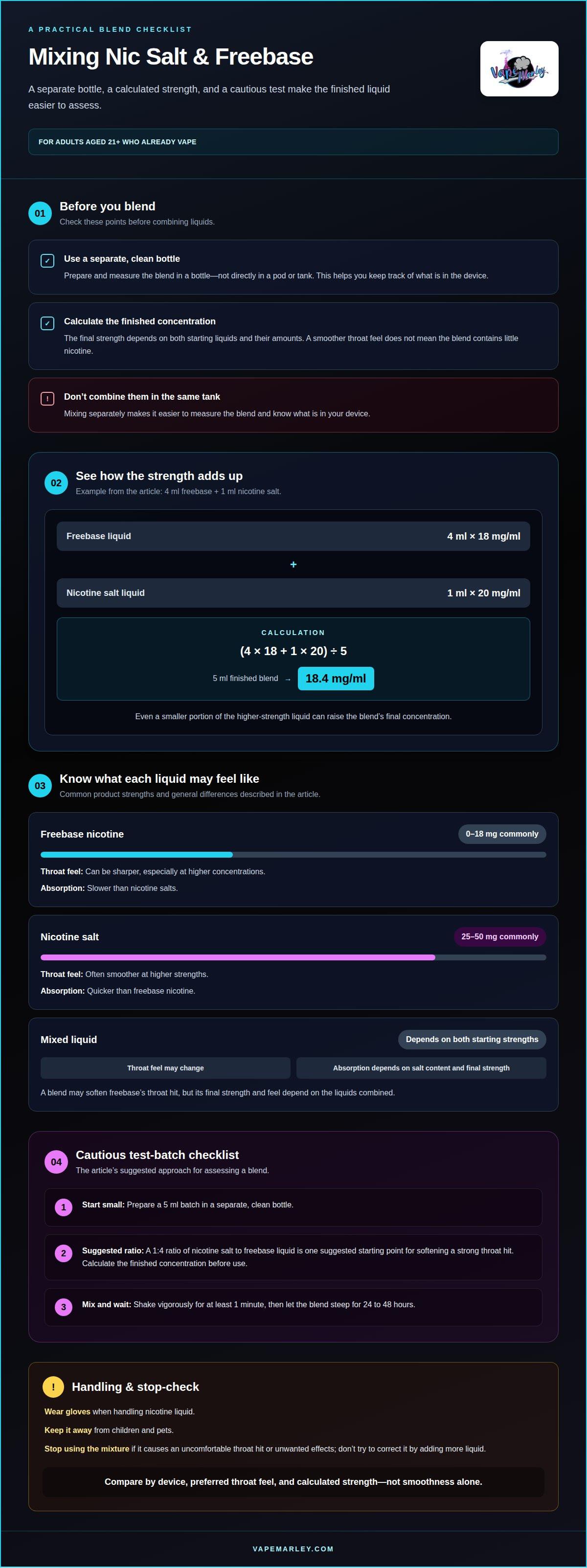
A simple calculation shows how blending affects concentration. Mix 4 ml of 18 mg/ml freebase liquid with 1 ml of 20 mg/ml nicotine salt liquid. The resulting 5 ml contains 18.4 mg/ml nicotine: (4 × 18 + 1 × 20) ÷ 5. The salt portion is only one part of the blend, yet it raises the final concentration slightly.
| Option | Typical strength | Throat feel | Absorption |
|---|---|---|---|
| Freebase nicotine | 0-18 mg | Can feel sharper, especially at higher concentrations | Slower than nicotine salts |
| Nicotine salt | 25-50 mg commonly | Often smoother at higher strengths | Quicker than freebase nicotine |
| Mixed liquid | Depends on both starting strengths | May soften freebase’s throat hit | Depends on the salt content and final strength |
For a cautious test, prepare a 5 ml batch in a separate clean bottle, not directly in a pod or tank. Shake it vigorously for at least one minute, then let it steep for 24 to 48 hours. A 1:4 ratio of nicotine salt to freebase liquid is one suggested starting point for softening a strong throat hit, but calculate the finished concentration before use.
Don’t mix the two liquids in the same tank. Preparing the blend separately makes it easier to measure and helps you keep track of what’s in the device. Wear gloves when handling nicotine liquid, and keep it away from children and pets. If the mixture causes an uncomfortable throat hit or unwanted effects, stop using it rather than adding more liquid.
Choose based on your device, preferred throat feel and calculated strength, not smoothness alone. A smoother nicotine salt blend can still deliver a substantial amount of nicotine.
What Is Freebase Nicotine?
Freebase nicotine is used in e-liquids for a wide range of devices, including sub-ohm setups. Nicotine salts are made by adding benzoic acid to nicotine, which lowers the liquid’s pH. This chemical difference helps explain why the two forms can feel different when vaping.
Freebase nicotine has a higher pH than nicotine salts and can produce a stronger throat hit at higher concentrations. Nicotine salts are absorbed more quickly by the body. In practice, the same labeled amount can feel different depending on the nicotine type, device and vaping frequency.
Strength ranges also help distinguish the two. Freebase e-liquid is commonly sold from 0-18 mg, while nicotine salt e-liquid is commonly sold at 25-50 mg. These ranges describe products, not equivalent effects: a higher salt concentration may still feel smoother on the throat than a lower-strength freebase liquid.
Flavor is a separate consideration. Nicotine type doesn’t determine whether an e-liquid tastes sweet, fruity or tobacco-inspired; that comes from the liquid’s formulation. However, combining nicotine types can slightly mute complex flavors. For example, layered notes in a blend may come through less distinctly than in an unmixed liquid.
For people who already vape, device compatibility matters alongside throat feel. Freebase nicotine suits a wide range of devices, including sub-ohm devices, while nicotine salts are commonly paired with small, low-wattage pod kits. The device affects how the liquid is delivered, so strength alone doesn’t tell you how intense a vape will feel.
Price isn’t determined by nicotine type alone. The amount, concentration, formulation and packaging affect an e-liquid’s cost, so compare specific products rather than assuming one type is always cheaper. Both types are sold as e-liquids, but available strengths and formats vary by product.
A useful comparison starts with three details: nicotine type, labeled strength and device. For example, a freebase liquid at 6 mg and a salt liquid at 20 mg shouldn’t be treated as interchangeable simply because both labels show a nicotine amount. The faster absorption of nicotine salts and the higher pH of freebase nicotine contribute to different throat sensations and effects.
Choose a liquid by matching its strength and feel to your device, rather than relying on flavor or label numbers alone. This makes the comparison more practical for people evaluating a nicotine type for their existing vaping setup.
Typical nicotine strengths for freebase e-liquid
Freebase e-liquid is commonly sold from 0-18 mg, with 3 mg and 6 mg among common strengths. Some products are also offered at 12 mg and 18 mg. For sub-ohm vaping, products commonly range from 0-6 mg; small mouth-to-lung pods may use 6-18 mg.
In the United States, commonly sold strengths include 0-18 mg for freebase and 25-50 mg for nicotine salt. These are market ranges, not a statement of an FDA nicotine-strength limit. The UK TPD sets a different rule: it limits both nicotine-salt and freebase e-liquid to 20 mg per ml. That UK limit should not be presented as a U.S. rule.
For high-wattage devices running at 40 to 80 watts, 3 mg to 6 mg freebase is a typical range. Lower-strength liquid is commonly paired with sub-ohm tanks and high-power mods. More wattage produces more vapor from each inhale, so a lower concentration can still deliver a satisfying experience. Strength and vapor output work together, but they are not interchangeable measures.
Small mouth-to-lung pods can use freebase strengths from 6-18 mg. A low-wattage pen with 6 mg is one starting example for people who smoked fewer than 10 cigarettes per day. That example isn’t a universal conversion from tobacco use to vaping. Device power, inhalation style and cravings all affect how a strength feels.
Nicotine salts have different commonly sold concentrations, including 25-50 mg, and may contain 20 mg or more. Salt and freebase liquids can feel different, so compare how they feel rather than relying on the labels alone. Don’t choose a salt strength by directly copying a freebase number.
Mixing liquids also changes the final concentration. Use a weighted average: multiply each liquid’s strength by its volume, add those results, then divide by the total volume. For instance, the calculation must account for both the amount and strength of each liquid. A 5 ml test batch is a practical small-batch size before preparing more.
Read the label in mg or mg/ml and match it to the device’s intended power range. A 3 mg freebase liquid suits a high-wattage example, while 6-18 mg options are used in small mouth-to-lung pods. If the liquid feels too harsh or cravings persist, strength alone may not explain the experience; wattage and inhalation pattern also matter.
Reasons for mixing the two nicotine types
Some experienced vapers mix nicotine salt and freebase liquids to adjust strength or throat sensation. A blend may combine the smoother feel often associated with nicotine salts and the more pronounced throat hit freebase nicotine can produce. The result depends on the starting strengths, proportions, device and individual experience.
Mixing can reduce nicotine concentration when a stronger liquid is combined with a weaker one, including a 0 mg liquid. It doesn’t remove nicotine from the stronger liquid; it lowers the amount per millilitre across the blend. Calculate the weighted average from each liquid’s strength and volume before use. Equal volumes of differently concentrated liquids produce a concentration between their starting strengths.
For example, a vaper who wants an intermediate strength such as 4 mg/ml needs to calculate the blend from the labels, not estimate by eye. Multiply each strength by its volume, add the results, then divide by the total volume. That calculation gives the blend’s concentration, but it doesn’t guarantee the same sensation or cravings response in every device.
Changing the form of nicotine may also change the vaping experience. A small amount of nicotine salt in a mostly freebase blend can alter throat feel, while a larger proportion of salt shifts the mixture further toward its characteristics. A 1:4 ratio of salt liquid to freebase liquid is one suggested starting ratio for softening a strong throat hit, not a universal setting.
Use a separate, clean bottle rather than mixing directly in a tank or pod. A 5 ml test batch keeps the first trial small and makes the proportions easier to measure. Shake the bottle vigorously for at least one minute, then steep freshly mixed liquid for 24 to 48 hours. These steps support a consistent blend before evaluating it.
Don’t mix the two forms in the same tank, where the contents and final strength are harder to track. Clearly label the bottle, and don’t open or modify a sealed disposable e-cigarette to mix liquids. The device’s existing contents and the added liquid could create an uncertain final concentration.
Mixing isn’t necessary for every device or preference. If a liquid already feels satisfying, changing its strength or throat sensation may offer little benefit. Someone adjusting after smoking may be tempted to blend liquids to manage cravings, but the labeled concentration and device remain important considerations.
Before using a blend, confirm that its calculated strength matches the intended device. Stop if the sensation becomes uncomfortable or you experience unwanted effects. Mixing changes concentration and feel; it doesn’t make nicotine harmless or ensure that a particular amount will satisfy everyone.
Freebase nicotine characteristics and absorption
Freebase nicotine is a form used in e-liquids for devices ranging from small mouth-to-lung pods to sub-ohm setups. Its higher pH can produce a more noticeable throat hit, particularly at higher concentrations. Vapers who prefer that distinct sensation may find it suits their intended setup, while others choose salt nic for its smoother feel.
Absorption differs between the two forms. Nicotine salts are absorbed more quickly by the body than freebase nicotine, so the same labeled concentration may not feel identical. That doesn’t make either form a universal fit. Device power, liquid strength and inhalation pattern all influence nicotine delivery.
Freebase liquids are commonly used at lower strengths in higher-power devices. For example, 3 mg to 6 mg is a typical range for devices running at 40 to 80 watts. The coil and wattage affect how much vapor each inhale produces, so a lower concentration can still provide a satisfying experience in that setup.
With a low-wattage device, the same freebase strength can feel different. Freebase nicotine above 12 mg can cause significant throat irritation in low-wattage devices, and 18 mg may feel very harsh in a low-wattage pod. Those examples show why the label alone can’t describe the sensation a vaper will get.
A practical comparison starts with the device’s operating style. Freebase e-liquid for sub-ohm vaping commonly has a 70VG/30PG ratio or higher VG content. Nicotine salts used in refillable pod kits are commonly paired with a 50VG/50PG ratio or higher PG ratio. These liquid characteristics affect how each formulation works in its intended device.
Coil resistance provides another useful clue. Nicotine salts are commonly paired with low-power, high-resistance devices, and pod-kit coils for salt liquids typically have resistance above 0.8 ohm. A coil around 1.0-1.2 ohms is one suggested range for a balanced mouth-to-lung vape. Freebase liquid is often used with coils below 1.0 ohm, where vapor production and airflow differ.
For a consistent comparison, keep the device and inhalation style in view rather than switching only the nicotine type. A high-wattage setup using 3 mg freebase and a low-power pod using salt liquid deliver nicotine differently. Adults aged 21 and older who already vape should follow the liquid’s intended device use and pay attention to how their bodies respond.
VapeMarley
After comparing nicotine types, VapeMarley offers a straightforward next step: explore vaping products with your device and preferences in mind. Its range includes disposable vapes, accessories and bundles, letting you consider different formats and supporting items together.
If you’re choosing between freebase and nicotine salt, use differences in strength, throat feel and device compatibility to guide your decision. Then focus on products that suit the setup you intend to use, rather than treating nicotine labels as interchangeable. VapeMarley offers disposable vapes, accessories and bundles, without traditional tobacco products.
For questions about the available options, contact VapeMarley.
Choose Your Next Step With Confidence
Start with the setup you already use and the experience you want. Consider how the device feels, what nicotine strength it’s designed for and whether its format suits your routine. This practical approach can help you make a more considered choice between nicotine salts and freebase nicotine without relying on a label alone.
VapeMarley offers disposable vapes, accessories and bundles for adults who already vape and are exploring their options. Consider these categories as you decide what fits your preferences and setup.
If you still have questions as you weigh your options, contact VapeMarley with your questions. Take the next step at your own pace, with a clearer idea of what matters to your vaping experience.
Frequently Asked Questions
What Are Nicotine Salts?
Nicotine salts are made by adding benzoic acid to nicotine, which lowers its pH. This formulation is commonly used in higher-strength e-liquids and can feel smoother on the throat than freebase liquid. Nicotine salts are absorbed more quickly than freebase nicotine. These products are intended for adults aged 21 and older who already vape. Nicotine is addictive, so keep nicotine liquids away from children and pets.
Can I Use Freebase Juice in a Pod System?
Yes, freebase e-liquid can be used in some small mouth-to-lung pod setups, where strengths from 6-18 mg are used. Match the liquid to the pod’s intended use and power. Freebase nicotine above 12 mg can cause significant throat irritation in low-wattage devices, so a higher label strength may feel harsh. A pod’s format alone doesn’t determine the right liquid strength.
Hit Comparison: Bold or Gentle?
Freebase nicotine tends to produce a more pronounced throat hit, while nicotine salts often feel smoother at higher strengths. The difference is partly related to pH: freebase nicotine has a higher pH than nicotine salts. For example, a liquid may feel sharp in a low-wattage pen, while a salt liquid may feel less harsh. Strength and device output also affect the sensation, so “bold” isn’t determined by nicotine type alone.
Satisfaction Levels: Instant or Lasting?
Nicotine salts are absorbed more quickly, so their effects may feel more immediate than freebase nicotine’s. That doesn’t establish that either type provides longer-lasting satisfaction. Strength, device and individual response all affect the experience. For instance, 20 mg nicotine salt may satisfy cravings more effectively than 18 mg freebase because of faster absorption, but that comparison isn’t a guarantee of the same result for every vaper.
What Are Nicotine Salts and Freebase Nicotine?
Nicotine salts and freebase nicotine are two forms of nicotine used in e-liquids. Nicotine salts are made by adding benzoic acid, while freebase nicotine has a higher pH and can produce a stronger throat hit at higher concentrations. The forms are commonly paired with different devices and strengths. To compare labels meaningfully, consider nicotine type alongside the device and how the liquid feels during use.
Which Nicotine Type Delivers Nicotine Faster or Feels Stronger?
Nicotine salts are absorbed more quickly than freebase nicotine, but “stronger” depends on both concentration and use. A 20 mg salt liquid and an 18 mg freebase liquid can feel different, even though their labeled strengths are close. Device power and inhalation style also matter. Don’t treat the strength number alone as a direct measure of how quickly or intensely nicotine will feel.
What Are the Differences in Throat Hit and Smoothness?
Freebase nicotine can create a sharper throat sensation at higher concentrations because it has a higher pH. Nicotine salts are often smoother on the throat at higher strengths. For example, 18 mg freebase in a low-wattage pod can feel very harsh. A smooth sensation doesn’t mean the liquid has little nicotine, so read its labeled strength rather than judging concentration by throat feel.
Which Vape Devices Are Designed for Nicotine Salts Versus Freebase Nicotine?
Nicotine salts are commonly paired with small, low-wattage pod kits and mouth-to-lung devices operating below approximately 20 watts. Freebase e-liquid is widely used in sub-ohm devices. Coil resistance is another guide: salt liquids are commonly used with coils at 1.0 ohm or above, while freebase is often used below 1.0 ohm. Match the liquid to the device’s intended operating style.