
Kado Bar Zero Nicotine vs Nicotine Vapes: Key Differences
Oct 29th 2026
The key difference in Kado Bar Zero Nicotine vs Nicotine Vapes is nicotine content: the Kado Bar NI40000 Zero Nic is listed at 0% nicotine, while nicotine vapes contain nicotine at varying strengths. Choosing zero nicotine removes nicotine from the product, but it doesn’t automatically remove the act of vaping or its potential downsides.
If you’re comparing Kado Bar Zero Nicotine vs Nicotine Vapes, look beyond the label. Flavor, throat feel, vapor production, and the routines around vaping can all shape the experience. A zero-nicotine vape may suit adults who want flavor without nicotine, but it is not risk-free and is not a guaranteed way to stop vaping.
This comparison explains how nicotine strengths differ across disposable and refillable vapes, how flavor and vapor may vary, and what a nicotine-free label does and doesn’t mean for potential risks and dependence-related habits. You’ll have a clearer basis for deciding which option better matches your priorities.
Key Takeaways
- Compare nicotine content separately from flavor and vapor production; a nicotine-free label describes nicotine, not every part of the vaping experience.
- Learn what can shape flavor and throat feel, and why the same flavor may feel different across devices.
- Understand how nicotine strengths are presented in disposable and refillable vapes so you can interpret labels more confidently.
- Consider whether the hand-to-mouth routine and regular vaping cues may continue even when nicotine is removed.
- Use your priorities around nicotine, flavor, and habits to guide a more informed choice between vape types.
Are Zero Nicotine Vapes Completely Risk-Free?
No. A 0% nicotine label describes nicotine content, not every substance in the vapor or every effect of vaping. Flavored vapor from zero-nicotine devices can irritate the lungs, and vaping may maintain familiar hand-to-mouth habits. Nicotine-free therefore means the product is listed without nicotine, not that inhaling its vapor is risk-free.
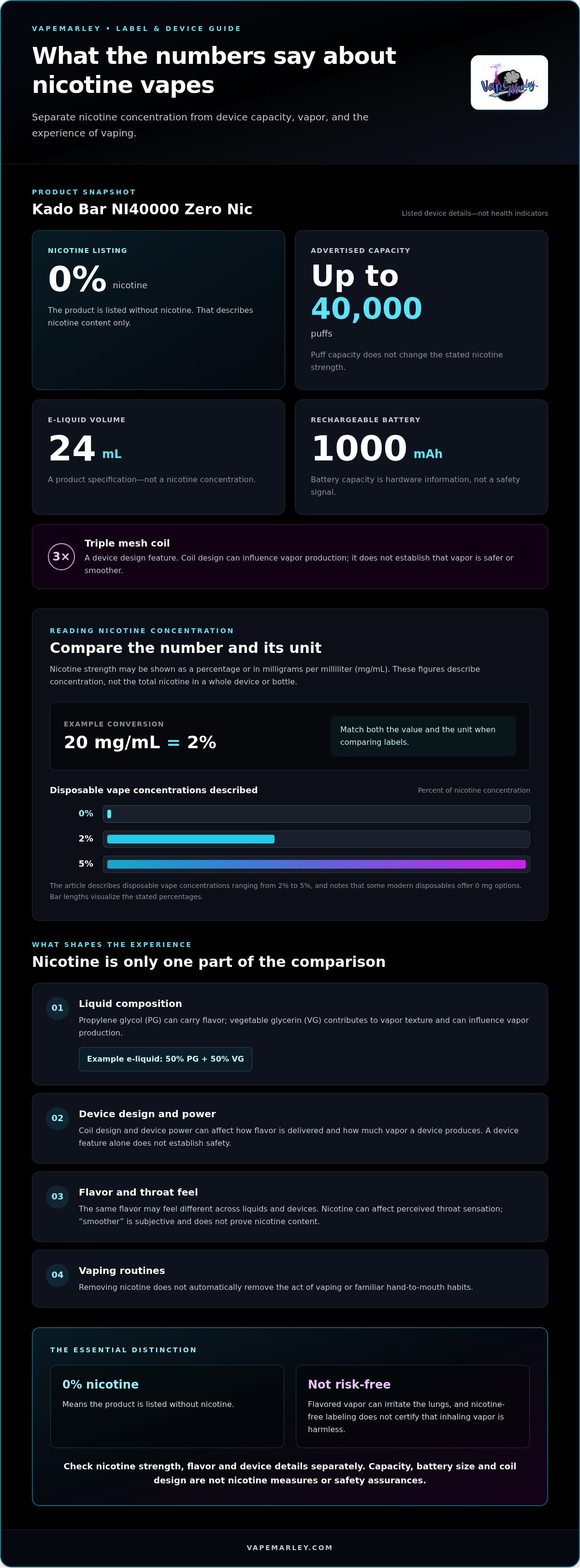
Prefilled products show why labels matter. The Kado Bar NI40000 Zero Nic is listed at 0% nicotine, with 24 mL of e-liquid and a triple mesh coil. Its advertised capacity is up to 40,000 puffs, and its rechargeable battery is 1000 mAh. Those device details describe capacity and hardware, not an assurance about health effects. For a nicotine-containing prefilled vape, the nicotine strength on its label is the relevant comparison; the device format alone doesn’t reveal the amount.
Vapor production also isn’t determined simply by nicotine. Vegetable glycerin content and coil design influence how much vapor a device produces, while device power can also play a role. The NI40000’s triple mesh coil is one concrete example of a design feature, but it doesn’t establish that its vapor is safer or smoother. A nicotine-free option can still produce flavored vapor, so removing nicotine doesn’t remove potential irritation.
Price is a separate shopping criterion, not a measure of nicotine strength or risk. Compare the product’s nicotine label and device information independently rather than treating a listed price, puff count, or battery capacity as a safety signal. For example, a device advertised for up to 40,000 puffs still has a 0% nicotine listing; the puff figure doesn’t change that stated strength.
| Option | Listed nicotine | Vapor considerations | What to weigh |
|---|---|---|---|
| Kado Bar NI40000 Zero Nic | 0% | Triple mesh coil; vapor depends on device design and e-liquid | Nicotine-free does not mean risk-free |
| Nicotine-containing prefilled vape | Use the strength printed on its label | Nicotine content alone does not determine vapor production | Consider both nicotine exposure and vaping habits |
Choose by separating the questions: whether you want nicotine, what the product label says, and whether you’re comfortable with inhaling flavored vapor. A 0% listing answers only the nicotine question; it doesn’t certify that vaping is harmless.
Flavor differences
Nicotine strength doesn’t automatically determine a vape’s flavor. A zero-nicotine and a nicotine-containing version may share a flavor profile but feel different during use. A fruit flavor, for example, may seem brighter or softer depending on the e-liquid and device. Nicotine can also affect perceived throat sensation, changing how a flavor comes across. That difference reflects the overall experience, not proof that one version contains more flavoring.
Look at three factors together: the flavor description, the liquid formulation, and the device. Propylene glycol (PG) can carry flavor, while vegetable glycerin (VG) contributes to vapor texture. A 50/50 e-liquid contains 50% PG and 50% VG. That ratio offers a useful example of how liquid composition can shape the experience, but it doesn’t guarantee a particular taste. Coil design and device power can also influence how flavor is delivered.
Compare like with like where possible. When weighing a nicotine-free option against a nicotine-containing version, keep the named flavor and device type consistent. A mint profile in one device may feel different from a fruit profile in another, even if both have the same nicotine strength. Changing several variables at once makes it harder to tell whether nicotine, the flavor formulation, or device performance explains the difference.
Use the product label as your first reference. Check whether the flavor name or description matches, then read the nicotine strength separately. A flavor description doesn’t tell you the nicotine content, and a nicotine percentage doesn’t tell you whether the taste is sweet, cool, or tart. If the liquid details include PG and VG proportions, compare those too. Checking labels this way helps keep flavor preference separate from nicotine choice.
“Smoother” is subjective, not a reliable indicator of nicotine content. One person may find a zero-nicotine vape less harsh, while another notices little difference between comparable options. The device, liquid composition, and personal taste all matter. For a practical comparison, note the flavor, nicotine strength, and device for each option before drawing a conclusion. A change in throat feel alone doesn’t establish that the flavor has changed.
Flavor choice doesn’t settle the broader question of vaping. A familiar fruit or mint taste may make vaping more appealing, but it doesn’t establish that the vapor is harmless. Treat flavor preference and nicotine preference as separate decisions: identify the taste profile you enjoy, then consider the listed nicotine level. This distinction clarifies what a zero-nicotine label does, and doesn’t, tell you about the product.
Nicotine concentrations in disposable and refillable vapes
Nicotine strength can appear as a percentage or as milligrams per milliliter (mg/mL). Those formats describe concentration, not the total nicotine in an entire device or bottle. For example, 20 mg/mL corresponds to a 2% concentration. Reading both the number and its unit helps you compare products without mistaking a liquid’s concentration for its total contents.
Disposable vapes may contain nicotine concentrations ranging from 2% to 5%. Some modern disposable devices also offer 0 mg options. A 0 mg or 0% label indicates nicotine-free e-liquid, while a 2% or 5% label describes a nicotine-containing liquid. This range makes the label especially useful when comparing disposable products: device format alone doesn’t tell you the nicotine strength.
Refillable systems can offer strengths such as 3 mg or 6 mg per milliliter. E-liquids in the guide’s listed range run from 0 mg to 20 mg. These figures use mg/mL, so a bottle’s total nicotine depends on both its concentration and its volume. The concentration stays the same if you pour some liquid into a tank, but the total nicotine present changes with the amount of liquid.
Consider two examples. A 10 mL bottle at 20 mg/mL contains 200 mg of nicotine in total. A 10 mL bottle at 3 mg/mL contains 30 mg. The first bottle has a higher concentration and a higher total amount, even though both bottles hold the same volume. These calculations describe liquid contents, not how much nicotine a person absorbs while vaping.
To compare labels clearly, use these steps:
- Find the nicotine figure and its unit, such as 0%, 3 mg/mL, or 2%.
- Separate concentration from volume; a 10 mL bottle’s total contents depend on both.
- Compare the same type of measurement across products, rather than treating percentages and total milligrams as interchangeable.
- For refillable systems, account for the e-liquid strength when you replace an empty bottle.
The phrase “nicotine strength” can refer to a concentration, while “total nicotine” refers to the quantity in a particular volume. Keeping those meanings distinct makes comparisons more precise. For instance, 20 mg/mL is a concentration; 200 mg describes the total nicotine in 10 mL at that strength. A device’s puff estimate doesn’t convert either figure into a reliable personal intake amount.
For the Kado Bar comparison, the zero-nicotine option is listed at 0%, while nicotine-containing products can carry different concentrations. Read the specific product label before comparing strengths, and don’t assume every disposable or refillable vape uses the same measurement. A consistent method is simple: note the unit, note the concentration, then consider liquid volume separately.
Nicotine dependence and behavioral habits
Nicotine and vaping routines are related, but they aren’t the same thing. Nicotine is the chemical associated with dependence; a nicotine-free vape removes that chemical from the product. However, the familiar actions around vaping, such as reaching for a device during a break, may continue without nicotine. A zero-nicotine label changes one part of the experience, not necessarily the routine surrounding it.
Notice what prompts you to vape. You might reach for a device after a meal, while driving, or during a stressful moment. Such situations can become linked with the hand-to-mouth action, flavor, or inhale itself. Naming a specific cue can help distinguish a learned routine from nicotine cravings and give you a practical starting point if you want to change your vaping habits.
Try recording each vaping moment for a few days. Note the situation, what prompted you, and whether you wanted nicotine, flavor, or the familiar action. Look for repeated patterns rather than judging each instance. If breaks are a common trigger, plan a different break activity. If a device is always within reach, moving it out of sight may make the routine less automatic.
Switching to nicotine-free vaping may remove nicotine exposure from that product, but it doesn’t necessarily end the behavior. Someone who continues vaping at the same familiar moments may maintain the cues and gestures associated with the habit. This distinction matters when setting a goal: reducing nicotine and stopping the routine are separate aims, and a change that addresses one may not address the other.
For people aiming to stop nicotine use, nicotine replacement therapy combined with behavioral support improves quitting success by about 15-20%. That figure describes the combination, not a guaranteed result for an individual. Support can help identify triggers and build alternatives, while nicotine replacement therapy addresses nicotine cravings. A plan can therefore consider both the chemical dependence and the daily pattern around vaping.
A simple habit-focused plan can start with three actions:
- Identify the cue: Record a recurring situation, such as a work break or after-meal moment.
- Choose a replacement action: Prepare a different activity for that same cue, such as taking a short walk during a break.
- Review the pattern: Notice whether the alternative interrupts the routine or whether another trigger keeps prompting vaping.
Use your goal to assess progress. If your priority is avoiding nicotine, focus on product nicotine labels. If your priority is changing a dependence-related habit, track the situations and actions that keep vaping in your routine. Separating these aims clarifies the difference between nicotine-free and nicotine-containing vaping and helps you decide what change you want to pursue.
Nicotine-free versus nicotine-containing vaping
The central difference is whether the e-liquid contains nicotine. A 0 mg label indicates nicotine-free liquid, while a positive strength identifies nicotine-containing liquid. That distinction matters if avoiding nicotine is your priority, but it doesn’t describe every part of vaping. Flavor, aerosol, and the actions tied to using a device remain separate considerations. For example, choosing a nicotine-free product doesn’t automatically change when or why someone reaches for a vape.
A Kado Bar Zero Nicotine vs Nicotine Vapes comparison is most useful when you separate the questions it raises. First, decide whether nicotine content matters most. Then consider whether flavor or the vaping routine also affects your choice. Those priorities can differ: someone may want to avoid nicotine but keep a familiar flavor, while someone else may want to change the habit of vaping during a daily break.
Nicotine-containing vaping adds nicotine exposure, and nicotine is addictive. A zero-nicotine label addresses that ingredient, not every potential effect of inhaling aerosol. For instance, a person using nicotine-free liquid may still experience throat dryness or mild irritation. Treating those as separate concerns helps avoid assuming that a product without nicotine is automatically harmless.
Match your decision to a specific goal. If your immediate aim is to avoid nicotine, focus on the product’s stated nicotine strength. If you also want to change a routine, identify the situations that prompt you to vape, such as a commute or work break. A label can answer the nicotine question, while noticing those situations helps you consider the behavioral side of the choice.
Use the Kado Bar Zero Nicotine vs Nicotine Vapes comparison as a decision aid, not a complete assessment of every product feature. Keep these considerations distinct:
- Nicotine: Read the listed strength to determine whether the liquid contains nicotine.
- Flavor: Consider the flavor profile independently of nicotine content.
- Routine: Notice the settings or moments that lead you to vape.
- Aerosol: Remember that nicotine-free labeling doesn’t establish that inhaling aerosol has no effects.
A nicotine-free option may suit an adult seeking to avoid nicotine while continuing to vape, but that goal differs from stopping vaping altogether. A nicotine-containing option contains an addictive chemical, so nicotine exposure deserves consideration. Neither label answers every question about flavor, aerosol, or habit. Decide which factor matters most, then use product details to make a more informed choice.
For questions as you explore product options, contact VapeMarley with your questions. A clear goal can help you take your next step with confidence.
VapeMarley: Disposable Vapes
VapeMarley offers disposable vapes for adults comparing device formats after weighing nicotine strength, flavor, and routine. Product labels can help distinguish nicotine-free options from nicotine-containing ones, while device details provide context for the broader experience. Vape accessories and bundles are also available for shoppers considering related vaping products.
Use the priorities in this comparison to guide your next step. If nicotine content is central to your decision, focus on the strength stated for each product. If you’re also considering flavor and device format, compare those details separately rather than treating one feature as a substitute for another.
Visit VapeMarley to explore its disposable vapes and related offerings.
Choose Your Next Step With Confidence
Let your next choice reflect what matters most to you instead of relying on a single feature. The Kado Bar Zero Nicotine vs Nicotine Vapes comparison can help organize your priorities, but your own reason for vaping should guide what you consider next. Decide whether nicotine content, flavor, or changing a familiar routine matters most right now.
If your priorities change, revisit them before choosing another device. A clear personal goal can make product details easier to assess and help you notice whether your habits still match that goal. You don’t have to treat one choice as a permanent commitment; focus on an informed decision that reflects what you want today.
For questions as you explore your options, contact VapeMarley with your questions. A thoughtful next step starts with knowing what you’re looking for.
Frequently Asked Questions
Why Choose Zero Nicotine Vaping?
Zero-nicotine vaping may appeal to adults who want to avoid nicotine while keeping other aspects of vaping. Someone might prefer a particular flavor but not want nicotine in the e-liquid, for example. This choice doesn’t necessarily end vaping or change the routines associated with using a device. Consider your goal first: avoiding nicotine is different from stopping vaping or changing a regular habit.
Are There Different Types of Vapes?
Yes. Disposable vapes come ready to use, while refillable systems let users add e-liquid to a reusable device. Both formats may have nicotine-containing and zero-nicotine options. The practical difference is how you use and maintain them: replace a disposable when depleted, while a refillable system requires separate e-liquid. Compare format, liquid strength, and flavor as distinct choices.
Ingredients: What’s Inside Each Type?
Vape e-liquid commonly contains propylene glycol and vegetable glycerin as a base, along with flavoring and either nicotine or no nicotine. The exact formulation varies by product. The device heats the liquid to create aerosol for inhalation. Read the package ingredient information rather than relying on flavor names: a fruit or mint description identifies a taste profile, not the full ingredient list.
Is Nicotine Harmful for You?
Nicotine is an addictive chemical, so products containing it can contribute to dependence. California’s Proposition 65 warning identifies nicotine among chemicals a product can expose users to and states that nicotine is known to the State of California to cause birth defects or other reproductive harm. That warning is a reason to take nicotine exposure seriously, especially during pregnancy or when reproductive health is a concern.
What are the health risks of zero-nicotine vaping compared with nicotine vaping?
Zero-nicotine vaping avoids nicotine exposure from the e-liquid, but doesn’t eliminate potential effects from inhaling aerosol. Nicotine-containing vaping adds the possibility of nicotine dependence. Flavor, device, and frequency of use also shape exposure. Someone switching to zero nicotine may still experience throat dryness or irritation, for example. The comparison concerns different exposure considerations, not a guarantee that either option is harmless.
Can zero-nicotine vape aerosol still contain harmful chemicals or metals?
A 0% nicotine label describes nicotine content; it doesn’t certify that aerosol contains no other substances. Flavored vapor can irritate lungs, and some people experience throat dryness or mild irritation. A nicotine label alone can’t establish whether a particular device’s aerosol contains metals. That requires product-specific aerosol testing. Treat nicotine strength and information about aerosol composition as separate considerations when evaluating a vape.