

Is Vaping Better Than Smoking? What the Evidence Says in 2026
Oct 1st 2026
Vaping may expose adult smokers to fewer toxic chemicals than cigarettes, but “less harmful” does not mean safe. So, is vaping better than smoking? The careful answer depends on what you compare and whether someone switches completely, rather than continuing to smoke while vaping.
Conflicting claims can make the choice confusing, especially when nicotine dependence and unanswered questions about long-term effects are part of the picture. If you smoke, it’s reasonable to want a clear sense of how the risks differ and whether switching could matter. If you don’t smoke, vaping isn’t a risk-free alternative to start.
This article explains how cigarette smoke and vape aerosol differ, what research can and can’t say about relative harm, and why dual use may limit potential benefits. It also covers nicotine dependence and practical next steps, including support for quitting smoking or nicotine. The aim is a balanced view, not a claim that vaping is harmless or a one-size-fits-all recommendation.
Key Takeaways
- Find out whether “is vaping better than smoking” is the right question for your situation, and which comparison the evidence addresses.
- See how tobacco combustion and vape aerosol form differently, and why that distinction matters when weighing exposure.
- Learn how complete switching differs from smoking fewer cigarettes while vaping.
- Consider how nicotine dependence, individual use patterns, and gaps in long-term research affect risk.
- Explore practical next steps for discussing your options with a qualified health professional and finding support to quit.
Is vaping better than smoking? The short answer, and what it means
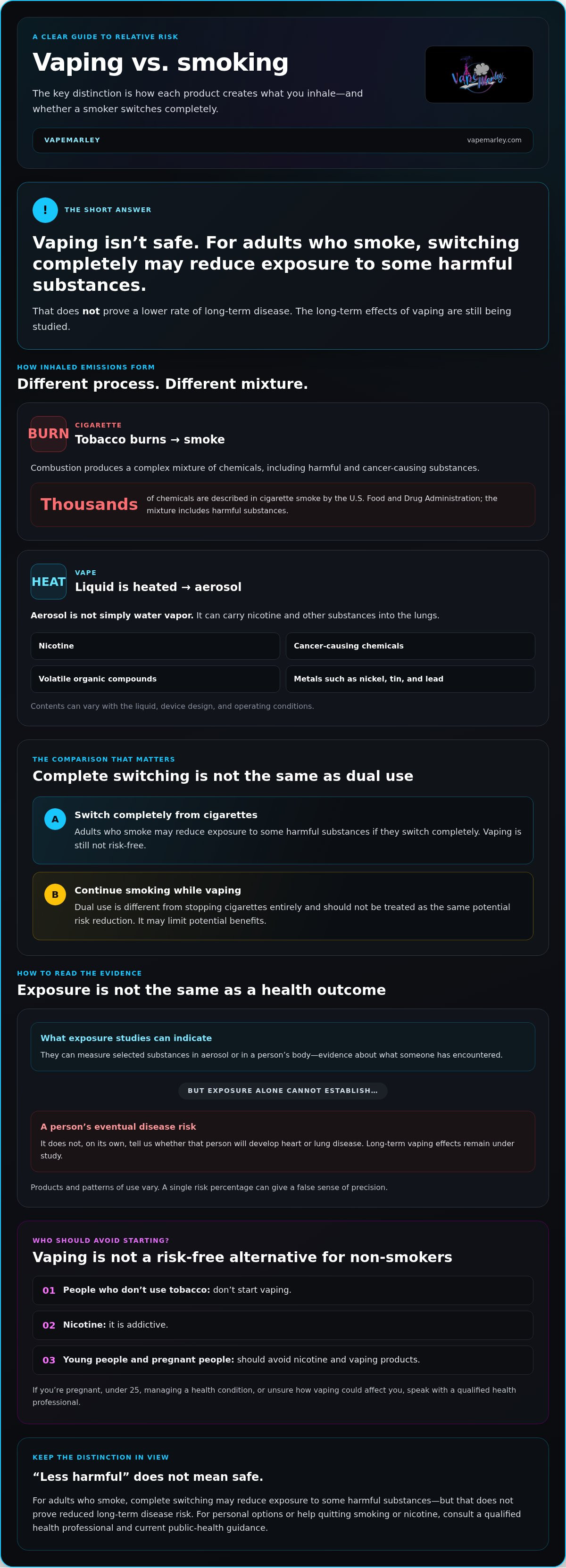
Vaping isn’t safe, but adults who smoke may reduce their exposure to some harmful substances by switching completely from cigarettes. That comparison has limits: evidence about exposure does not automatically prove lower rates of disease over the long term, and the effects of vaping over many years are still being studied.
So, is vaping better than smoking? The most useful answer is specific. Researchers mainly compare vaping with smoking among adults who already smoke, not with breathing clean air or with using no nicotine. Continuing to smoke while also vaping is different from stopping cigarettes entirely, and shouldn’t be treated as the same potential risk reduction.
What does “better than smoking” actually mean?
“Relative harm” means comparing one product with combustible cigarettes. Cigarettes burn tobacco, producing smoke that contains many harmful chemicals. Vapes heat liquid to create an aerosol, which can contain nicotine and other substances. It isn’t simply water vapor. The difference in how these products create inhaled emissions can affect exposure, but it doesn’t establish that vaping prevents or causes specific long-term diseases at a known rate.
Exposure studies and clinical-outcome studies answer different questions. Measuring certain substances in aerosol or in a person’s body can indicate what they’ve encountered. On its own, that measurement cannot tell us their eventual risk of conditions such as heart or lung disease. Product types and use patterns also vary, so a single risk percentage can give a false sense of precision. The overview of Safety of electronic cigarettes brings together background on reported risks and research. For health decisions, consult current public-health guidance and a qualified clinician.
Who should not start vaping?
If you don’t use tobacco, don’t start vaping. Nicotine is addictive, and young people and pregnant people should avoid nicotine and vaping products. If you’re pregnant, under 25, managing a health condition, or unsure how vaping could affect you, speak with a qualified health professional rather than relying on broad comparisons.
In short: vaping may reduce exposure to some harmful substances for adults who switch completely from smoking, but it isn’t risk-free, and reduced exposure does not prove reduced long-term disease risk. That distinction helps keep relative-risk claims in perspective. The next sections look more closely at smoke and aerosol, dual use, and what adults who smoke can consider when weighing their options.
How cigarette smoke and vape aerosol affect the body differently
The key difference starts with how each product creates what a person inhales. Cigarettes burn tobacco; e-cigarettes heat a liquid to produce an aerosol. That changes the mixture, but it doesn’t make the aerosol harmless or show, by itself, what a person’s long-term health outcome will be.
| Feature | Cigarette smoke | Vape aerosol |
|---|---|---|
| How it forms | Burning tobacco produces smoke. | A device heats liquid to form an inhaled aerosol. |
| What may be inhaled | A complex mixture of chemicals, including harmful and cancer-causing substances. | May contain nicotine and other potentially harmful substances; contents vary. |
| Key uncertainty | Exposure and health effects vary among people. | Devices, liquids, and use patterns differ, and long-term effects remain under study. |
What happens when tobacco burns?
Combustion means burning. As tobacco burns, smoke carries a mixture of chemicals into the lungs. The U.S. Food and Drug Administration describes cigarette smoke as containing thousands of chemicals, including harmful substances. That doesn’t mean every smoker inhales the same dose or develops the same illness. Exposure depends on factors such as smoking patterns, and health outcomes can differ from person to person.
The FDA’s overview of chemicals in cigarettes provides more detail on what burning tobacco produces.
What is in vape aerosol?
Vape aerosol isn’t water vapor or cigarette smoke. It’s a heated mixture that can carry nicotine and other substances into the lungs. The CDC notes that e-cigarette aerosol can contain nicotine, cancer-causing chemicals, volatile organic compounds, and metals such as nickel, tin, and lead. That doesn’t mean every device or puff contains the same substances at the same levels. Liquid ingredients, device design, and operating conditions can all affect the aerosol.
A peer-reviewed study by Goniewicz and colleagues measured selected toxicants in emissions from e-cigarettes. Its findings illustrate why product-specific results shouldn’t be assumed to describe every device. The study was published in 2014, so it is one piece of evidence, not a complete account of products or long-term health outcomes. The CDC’s e-cigarette overview also summarizes potential aerosol contents and health concerns.
For general information about product categories, VapeMarley’s vape selection is available from a retailer with a commercial interest in vaping products. This retail information is not medical guidance, and vape products aren’t a proven safe option.
Does switching completely make vaping less harmful than dual use?
The comparison changes if someone continues to smoke. Complete switching means stopping combustible cigarettes, rather than simply cutting down while adding vaping. That distinction matters because ongoing smoking still exposes a person to the toxic products of burning tobacco. Switching may reduce exposure to some harmful substances, but it can’t guarantee a particular health benefit or tell someone how quickly their health might change.
Complete switching removes cigarette smoke from the comparison; dual use keeps cigarette smoking in the picture. The CDC cautions that using both cigarettes and e-cigarettes is not an effective way to protect health. That guidance doesn’t mean every person’s exposure or outcome is identical. It does underline why “I smoke fewer cigarettes” is not the same as “I’ve stopped smoking.”
What does switching completely involve?
Switching completely means no longer smoking combustible cigarettes. Using a vape on some occasions while still smoking on others is not a complete switch. Nor is intending to quit the same as having stopped: a plan marks a goal, while sustained abstinence means continuing not to smoke over time. Research may rely on participants’ reports of their use, so findings can depend on how smoking and vaping are measured.
If you’re considering a change, talk with a clinician about your health, nicotine use, and evidence-based ways to quit. Vaping isn’t an FDA-approved smoking-cessation treatment, and this comparison shouldn’t replace personal medical advice.
Why is dual use not the same as quitting smoking?
Dual use means using cigarettes and vaping products during the same period. Someone might smoke fewer cigarettes, use a vape between cigarettes, or move back and forth between the two. These patterns differ from person to person, but cigarettes remain a source of smoke exposure as long as smoking continues. Cutting down may be a step toward quitting, yet it shouldn’t be treated as equivalent to stopping.
CDC guidance notes that even low levels of cigarette smoking can carry serious health risks. That helps explain why a reduced cigarette count alone doesn’t establish that smoking-related harm has been avoided. It also doesn’t allow a precise prediction of an individual’s risk.
Long-term comparisons between exclusive vaping, dual use, and smoking remain uncertain. People use different products and may change their habits over time; studies also vary in how they define and measure these patterns. Evidence about exposure or quitting outcomes can inform the discussion, but it can’t promise a specific long-term result for an individual. If your goal is to stop smoking, focus on support that helps you reach and maintain that goal, and review your options with a qualified health professional.
What vaping risks and uncertainties should adults weigh?
Vaping can involve nicotine dependence and exposure to substances that may affect health. The risk isn’t identical for every person or product. Device design, liquid, frequency of use, and whether someone also smokes all matter. That variation makes broad claims about what vaping will do to an individual unreliable.
As the CDC explains, nicotine is addictive. Nicotine exposure is not the same as exposure to all the harmful chemicals produced by burning tobacco, but that distinction doesn’t make nicotine harmless. The question “is vaping better than smoking” doesn’t answer whether vaping is right for a particular person or whether its long-term risks are fully understood.
What is known about nicotine and dependence?
Nicotine can lead to dependence, making it difficult to stop using a product. The CDC warns that nicotine can harm brain development in young people and is a health risk during pregnancy. People who are pregnant, young, or trying to quit nicotine should avoid starting vaping and seek advice from a qualified health professional about their circumstances.
What remains uncertain about long-term vaping?
Research on long-term effects is still developing. Studies can differ in the devices and liquids examined, how often participants vape, and whether they also smoke. Products and patterns of use change over time, so findings about one product or group may not apply to everyone. The CDC describes potential concerns such as respiratory symptoms and airway effects, while the full picture of long-term health outcomes remains under study. For those managing preexisting breathing challenges or unexplained airway irritation, explore Specialized Allergy and Asthma Medical Services to get targeted medical guidance.
FDA regulation or marketing authorization should not be mistaken for proof that a product is risk-free or FDA-approved as a smoking-cessation medicine. Those are separate questions. For current information, consult the CDC’s e-cigarette overview and FDA guidance, and discuss personal health concerns with a clinician.
Known concerns, uncertainties, and when to seek advice:
- Known concern: Nicotine can be addictive, and health authorities warn of particular risks for young people and during pregnancy.
- Possible effects: Vaping has been associated with respiratory symptoms; individual effects may vary.
- Uncertainty: Long-term outcomes are not fully established, and different products and use patterns limit broad comparisons.
- Seek medical advice: Talk with a qualified health professional about symptoms, pregnancy, nicotine dependence, or how a health condition could affect your choices.
If you’re an adult who already uses vaping products and want to review retail product information, view VapeMarley’s disposable vape listings. VapeMarley is a retailer with a commercial interest in vaping products, and its products are not a cessation treatment or medical advice.
What should you do if you smoke and are considering vaping?
Start with your goal. If you want to stop smoking, focus on a plan to quit cigarettes completely rather than simply adding vaping or aiming to smoke less. You don’t have to work it out alone. A healthcare professional can help you compare options based on your health, nicotine use, and past quit attempts.
Where can someone get help quitting cigarettes?
Ask a clinician about counseling and FDA-approved smoking-cessation medicines, such as nicotine replacement therapy, varenicline, or bupropion. These options aren’t right for everyone, so get advice about what may suit you. The CDC also directs people in the United States to 1-800-QUIT-NOW, which connects callers with their state quitline for support and coaching. A quitline can provide guidance, but it doesn’t replace medical advice for personal health questions.
Before speaking with a clinician, consider noting when you tend to smoke, what makes quitting difficult, and what support you’ve tried before. This can help shape a practical plan, including how to handle cravings and what to do if you smoke again. A setback doesn’t mean you can’t try again.
How should readers assess commercial information?
Check health claims against current FDA and CDC guidance and independent research, not only product descriptions or testimonials. Pay attention to what a study measured, when it was published, and whether it examined exposure, quitting, or long-term health outcomes. These are different questions. If a claim suggests a product is safe or proven to help people quit, look for strong evidence from an authoritative health source before relying on it.
So, is vaping better than smoking? For an adult who smokes, the relevant comparison depends on whether cigarettes stop completely, and the evidence cannot promise an individual health outcome. Discuss quitting approaches with a qualified professional before making a change. Vape products are not medical advice or a guaranteed way to quit.
For adults seeking product-category context rather than health or cessation guidance, read the 2026 disposable vape guide. VapeMarley is a retailer with a commercial interest in vaping products. Its guide should not be treated as a substitute for independent health advice.
Make your next step an informed one
So, is vaping better than smoking? For adults who smoke, switching completely may reduce exposure to some harmful substances, but vaping isn’t safe, and long-term health effects remain uncertain. Continuing to smoke while vaping is not the same as stopping cigarettes. Your next step depends on your goals and health, so consider discussing quitting support and treatment options with a qualified health professional.
If you’re an adult reviewing vaping products, keep retail information separate from medical guidance. VapeMarley sells vaping products, not traditional tobacco products, and uses age verification as part of the shopping experience. Its product information is not a quitting treatment or proof that vaping is safe.
Review VapeMarley’s age-verified product information if it’s relevant to your needs. Whatever you decide, reliable health advice and a plan that supports your wellbeing can help you take a considered next step.
Frequently Asked Questions
Is vaping safer than smoking cigarettes?
Vaping may expose adults who switch completely from cigarettes to fewer harmful substances, but it isn’t safe. Cigarette smoke comes from burning tobacco, while vape aerosol has different contents and can still contain harmful substances. Evidence about reduced exposure doesn’t prove the same reduction in long-term disease risk. Individual risks vary with products and use patterns, and researchers are still studying vaping’s long-term health effects.
Can vaping help you quit smoking?
Some evidence suggests nicotine e-cigarettes can help adults quit smoking, but they aren’t FDA-approved smoking-cessation medicines, and they won’t work for everyone. A Cochrane review published in 2026 found evidence that nicotine e-cigarettes helped more people quit than nicotine replacement therapy in the studies reviewed; this doesn’t guarantee an individual outcome. Ask a healthcare professional about current clinical guidance and cessation options suited to your needs.
Is vaping safe if you do not smoke?
No. If you don’t smoke or use tobacco, don’t start vaping. Vape aerosol isn’t harmless water vapor, and some products contain addictive nicotine. Avoiding initiation matters because vaping can expose you to substances with potential health effects and may lead to nicotine dependence. If you’re curious about vaping or feel pressure to try it, talk with a trusted healthcare professional instead of treating it as a risk-free alternative.
What happens if you smoke and vape at the same time?
Using cigarettes and vaping products during the same period is called dual use. It isn’t the same as switching completely, because cigarette smoke exposure continues. Smoking fewer cigarettes doesn’t automatically remove smoking-related risks or establish that your health risk has fallen. If you want to quit, discuss a plan with a healthcare professional and ask about evidence-based support rather than assuming that adding a vape will protect your health.
Does vape aerosol contain nicotine?
Some vape products contain nicotine, but contents differ by product. Check the package and product labeling for nicotine information, and don’t assume a product is nicotine-free based on its flavor, appearance, or marketing. The aerosol may also contain substances besides nicotine. If you’re unsure how to interpret a label or have concerns about nicotine exposure, consult a qualified health professional or current FDA and CDC information.
Is vaping harmful during pregnancy?
Vaping is not considered safe during pregnancy, and health authorities advise avoiding nicotine. Nicotine can harm a developing fetus, while the effects of other substances in vape aerosol are also a concern. If you’re pregnant and currently smoke or vape, speak with your healthcare professional promptly about a plan to stop and support options. Don’t start vaping as a way to manage cravings without qualified medical guidance.
What is the safest way to quit smoking?
There isn’t one approach that suits everyone, but evidence-based support can improve your chances of quitting. Ask a healthcare professional about counseling and FDA-approved cessation medicines, including nicotine replacement therapy or prescription options. In the United States, the CDC’s 1-800-QUIT-NOW connects callers with their state quitline for support and coaching. A clinician can help you choose a plan that fits your health and circumstances.