
How to identify counterfeit vape products
Nov 12th 2026
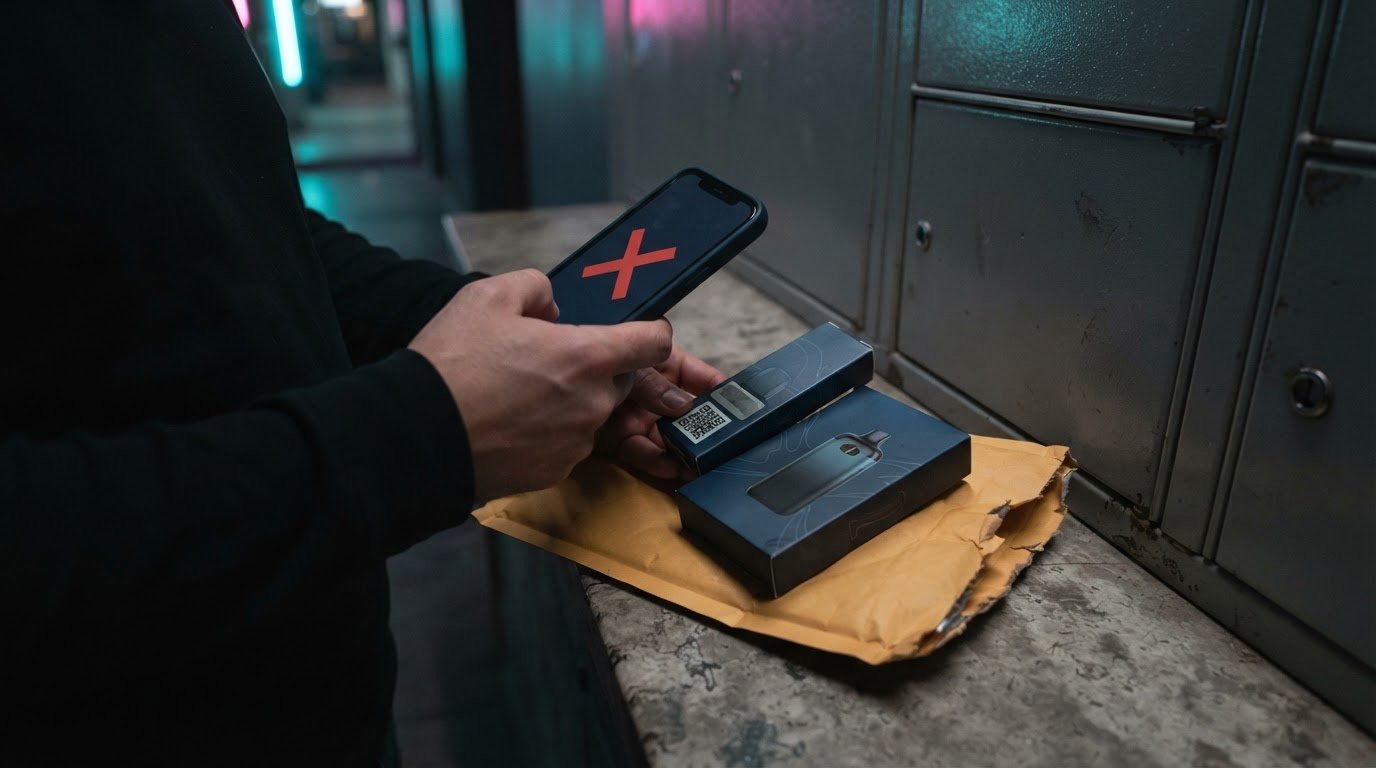
A vape can look convincing and still be counterfeit. Counterfeit vape products imitate genuine devices or branding, so appearance alone cannot confirm authenticity. A manufacturer’s verification code that returns an error or shows multiple previous checks is a warning sign.
Look beyond the device itself. Unclear labels, missing safety warnings, unusually low prices, or claims that conflict with the manufacturer’s product information can raise concerns, especially when several signs appear together.
This guide explains how to check authentication codes, packaging, sellers, nicotine strength, liquid volume, and puff claims. You’ll learn what to look for, how to compare product details with the manufacturer’s information, and what to do when something doesn’t add up.
Key Takeaways
- Use a manufacturer’s authentication code or QR feature to look for signs that a device may not be genuine.
- Inspect packaging for clear labeling and safety warnings, and treat several irregularities together as a reason for caution.
- Compare the seller’s offer and the device’s nicotine, liquid-volume, and puff claims with the manufacturer’s product information.
- Learn how imitation devices can differ from authentic products, and why a convincing appearance alone isn’t proof.
- If a product seems suspicious, avoid using it and follow appropriate steps for reporting and disposal.
Brand authentication codes and QR codes
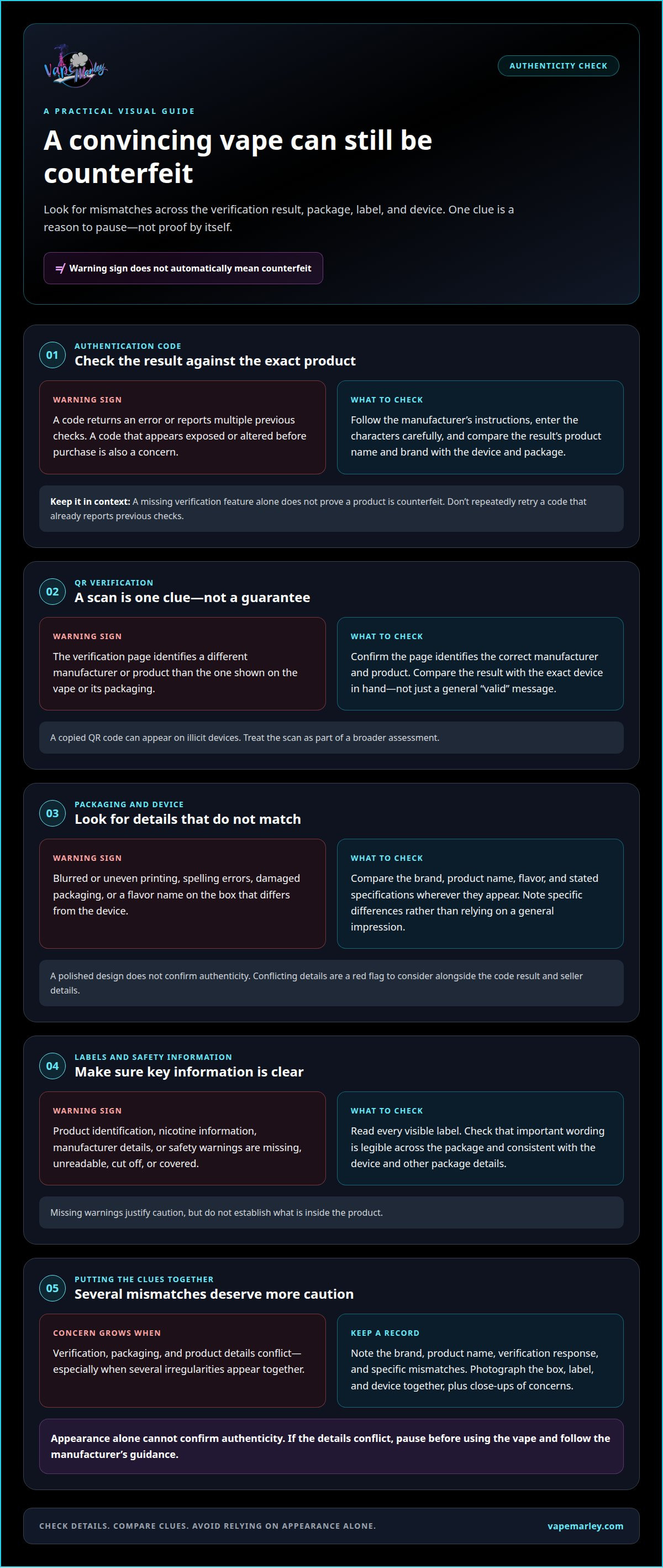
Start with the manufacturer’s authentication feature, not a logo or familiar-looking package. A scratch-off code, QR code, or failed verification can offer a useful clue, but assess the result alongside the device and its packaging.
-
Locate manufacturer authentication features
Find the code or QR mark on the vape’s packaging or device, then follow the printed instructions. Manufacturers use different verification methods, so don’t assume every brand uses the same system. One brand may provide a scratch-off code, while another directs you to scan a QR code. If there’s no verification feature, that alone doesn’t prove the product is counterfeit; continue with the other checks in this guide.
-
Check codes and verify authenticity
Enter a scratch-off code on the manufacturer’s website, following the brand’s printed instructions. Read the result carefully: an error or multiple previous checks may indicate a counterfeit device. If a QR code opens a verification page, confirm that it identifies the correct manufacturer and product. A QR scan alone doesn’t guarantee authenticity; treat it as one part of your assessment.
- Compare the verification result with the exact device in your hand. Check that the product name and brand on the page match the packaging, rather than relying on a general message that the code is valid. If the package names one model but the result identifies another, pause before using the vape. A mismatch may mean the code was copied, entered incorrectly, or paired with the wrong product. Follow the manufacturer’s guidance before drawing a conclusion.
- Enter each code as the manufacturer directs, and keep the package available while checking. A missing character, confusing letter, or damaged scratch-off area can affect the result. Before treating an error as decisive, compare the code you entered with the printed characters. If the code appears exposed or altered before purchase, record that detail. Don’t repeatedly retry a code that already reports previous checks.
- Treat authentication as one part of a broader check, not a substitute for inspecting the product. A copied QR code or verification code can appear on illicit vaping devices, while a genuine product may still have confusing packaging or a damaged label. Note the brand, product name, and verification response, then compare them with the device and box. If details conflict, don’t rely on the code alone to decide that the vape is authentic.
Packaging and labeling warning signs
Inspect the box and label separately, then compare what each says about the same device. Unclear labeling or missing safety warnings are reasons to pause, not proof on their own.
-
Inspect packaging warning signs
Inspect the box, wrapper, and printed surfaces before opening the device. Look for blurred text, uneven printing, spelling errors, or product details that differ between the front and back. For example, the flavor name on the box should match the name on the device. Damaged or altered packaging can also make the product harder to assess. Record specific differences instead of relying on a general impression.
-
Review labeling red flags
Read every visible label and look for clear product identification, nicotine information, manufacturer details, and safety warnings. Unclear or missing information deserves attention. A warning label that is cut off, unreadable, or inconsistent with the rest of the package is a reason to stop and assess further. A polished design doesn’t prove that the label meets relevant standards or that the product is authentic.
- Compare matching details on the package and device. Check the brand, product name, flavor, and stated specifications wherever they appear. If the box names one flavor and the device names another, note the mismatch. Consistent details support a more thorough assessment; conflicting information is a red flag to consider alongside authentication results and seller details.
- Look for safety information that is present but difficult to read. Tiny, smudged, or partly covered text can make the package hard to understand. Check that key wording is visible across the label, not hidden by a sticker or folded seam. Missing safety warnings matter because packaging should communicate important product information clearly. Their absence doesn’t establish what’s inside, but it does justify caution.
- Separate observable problems from conclusions about the product. A misspelling, unclear manufacturer name, or inconsistent label can raise concern, but no single packaging detail proves that a vape is counterfeit or dangerous. Several mismatches are a stronger reason to avoid using the product while you assess it. An unregulated appearance isn’t a legal determination; focus on details you can document, such as a missing warning or conflicting product name.
- Keep the packaging if you need to report a concern. Photograph the box, label, and device together, then take close-ups of any specific mismatch or missing warning. Include the product name and manufacturer information shown on the package. These details help explain your concern and preserve the information if the packaging is later damaged or discarded.
Suspicious prices and sellers
Compare the offer and sales channel before buying. In the United States, penalties depend on the conduct and applicable law, rather than one universal penalty for every case. U.S. Customs and Border Protection seized over 18 million illegal vape devices during the first eight months of Operation Red Mist; none were authorized for sale by the FDA.
-
Compare suspicious prices
Compare the same device across retailers, including its model and included accessories. A price that is half the price elsewhere is a warning sign, especially when product details are unclear. A low price alone doesn’t prove counterfeiting, but it should prompt closer scrutiny. Don’t let a steep discount outweigh mismatched specifications, missing warnings, or a failed manufacturer check.
-
Assess suspicious sales channels
Choose reputable, authorized retailers and review the seller’s identity before purchasing. Check that the listing clearly names the product and brand and gives consistent information about the device. A listing that hides who is selling it, uses vague descriptions, or changes details between pages makes it harder to assess what you’ll receive. Treat these issues as reasons to pause.
- Review the full listing, not just its headline offer. Compare the device name, product description, and photographs. A brand name paired with an unrelated image or a different model description creates a mismatch. Save the listing details if you need to report it. Online platforms usually provide a way to report a suspicious seller or product listing.
- Check what the seller says about the device and its batteries. Claims that conflict with the packaging or manufacturer’s information deserve attention, particularly if the listing avoids basic questions. Counterfeit products can contain components or liquids that differ from genuine products, so unsupported assurances from a seller don’t replace clear product information and consistent details.
- Assess multiple warning signs together. A dramatic discount, vague seller identity, and inconsistent product details are more concerning together than any clue alone. If a discounted device also has a model name that conflicts with its packaging, don’t focus only on the price. Record the seller’s name, listing, and specific discrepancies so you can clearly explain your concern.
- Use the platform’s reporting tools if a listing appears suspicious, and report your concern to the manufacturer. Keep relevant evidence, such as the product name, seller details, and listing images. If you already have the device and suspect it’s counterfeit, stop using it rather than finishing its contents. Handle the device and battery carefully, and don’t put them in regular trash.
Checking nicotine strength, liquid volume, and puff claims
Compare the figures on a vape’s label with the manufacturer’s official product information. Mismatches in nicotine strength, liquid volume, or puff claims can signal a product that needs closer scrutiny.
- Read the nicotine strength on the package and note its unit, such as milligrams per milliliter. Compare the figure with the manufacturer’s product page for the exact device and variant. The United States has no federal cap on vape nicotine strength, so a high figure alone doesn’t establish counterfeiting. Focus on whether the package and manufacturer’s specifications agree.
- Check whether the nicotine strength is clearly shown on the label. Missing or inconsistent information makes it difficult to know what a device contains. Compare the strength printed on the package with any information shown on the device. If the values differ, treat the discrepancy as a warning sign, not proof of the product’s contents.
- Compare the stated liquid volume with the device’s visible tank or reservoir. For example, a package claiming 10mL alongside a visibly smaller tank is a reason to question whether the product matches its description. Use the manufacturer’s official product information to check the expected volume. Don’t estimate exact contents from appearance alone, but note a clear mismatch between the claim and device.
- Assess puff claims against the product’s size and listed specifications. A small disposable claiming more than 10,000 puffs is identified as an unrealistic claim in the available product guidance. Treat that figure as a red flag to investigate, especially if the manufacturer’s own page gives a different claim. Puff counts are claims, not a direct measurement of how long every consumer’s device will last.
- Compare every listed specification for the same model, not just a similar device. Check the manufacturer’s page for nicotine strength, liquid volume, and puff claims, then note what matches or differs. One discrepancy might be a listing error, but several conflicting figures can point to a more serious concern. Reputable sellers should provide information that aligns with the named manufacturer and device.
- Remember that a label comparison cannot measure what a vape actually contains. Nicotine testing requires analysis, and a printed figure alone doesn’t confirm the liquid’s composition. For context, Legend Technical Services, Inc., an ISO 17025 accredited lab, tested nicotine in sixteen Gust Pro and Lightning flavors. That example shows why testing, rather than appearance alone, is needed to establish nicotine content.
Definition and production of counterfeit vapes
Counterfeit vapes imitate genuine brands or products, making copied names and familiar designs look authentic. Counterfeiting can involve copied branding and packaging, but appearance alone doesn’t reveal what a device contains.
Health risks can include exposure to unwanted substances: studies have identified solvents, pesticides, and heavy metals in counterfeit e-cigarette cartridges. Some fake vapor products have also contained traces of illicit drugs, including fentanyl and methamphetamine.
- Use the product’s brand and model to understand what may be targeted. Counterfeiters can imitate recognizable vaping products, and one 2021 case study found that 70% of Puff Bar devices circulating in the market were counterfeit. That figure concerns Puff Bar devices in that case study, not every brand or product category.
- Know the difference between a counterfeit and an ordinary product variation. Counterfeit vapes imitate a genuine brand or product, while a difference in flavor, appearance, or design alone doesn’t establish counterfeiting. Compare the claimed brand and model with manufacturer information, then consider mismatches alongside the seller, packaging, and authentication results.
- Stop using a vape as soon as you suspect it’s counterfeit, rather than finishing its contents. Keep the device and packaging to document the brand, model, and seller. If you experience unusual symptoms after use, consult a doctor as soon as possible. Don’t put the vape or its battery in regular trash.
- Report the suspected product to its manufacturer and report an online listing or seller to the platform. You can also contact local authorities or a consumer protection agency. Include the product name, seller details, and specific reasons for concern, such as mismatched product information or a failed code check.
- Choose a safe disposal route for the device and battery. Contact local waste disposal services or a licensed vape shop for guidance, and use designated battery drop-off locations rather than regular trash. Keep the product out of use while arranging disposal to help prevent someone else from using a device you suspect may be counterfeit.
- Use the evidence you gathered to make your report specific. Provide the brand, model, seller, and listing details, then describe any mismatch or authentication result. Reporting the concern to the manufacturer, platform, and relevant local authorities or consumer protection agencies gives each a clear basis for reviewing it.
For a product choice after completing these checks, explore disposable vapes.
More than 1.19 million illegal vapes were confiscated in the UK between 2023 and 2024, while UK Trading Standards seizures increased by 59%.
VapeMarley: Disposable Vapes
VapeMarley offers disposable vapes for readers choosing a device after reviewing the signs of counterfeiting. Browse the available options with the checks in mind: compare product names and specifications, and look for clear packaging and manufacturer information. If you’re considering accessories or want a convenient group purchase, Vape Accessories and Vape Bundles are also available. A retailer’s product range doesn’t replace the authentication steps above, so avoid using any vape you suspect is counterfeit. Use the guide’s checks to make an informed choice, then explore the options that fit your needs. For questions about VapeMarley’s offerings, contact VapeMarley.
Make your next choice with confidence
Let clear product information guide your next purchase instead of relying on appearance or a persuasive listing. A measured approach helps you make choices that fit your preferences while staying alert to counterfeit vape products. If details leave you uncertain, pause and gather the information you need before deciding. A confident purchase starts with details you can assess, not assumptions.
VapeMarley offers a place to explore vaping options with your priorities in mind. Whether you’re considering a future purchase or want help understanding the available choices, a direct conversation can help you take the next step. Contact VapeMarley with your questions.
Stay curious, take your time, and choose with care.
Frequently Asked Questions
What Are Fake Vapes?
Fake vapes are devices presented as genuine products or brands when they aren’t authentic. Their packaging or branding may imitate a real product, but their contents and construction may differ. A familiar logo, for example, doesn’t establish that the liquid or battery matches the manufacturer’s product. Treat “fake” as a reason to examine the product’s identity and seller, not as a judgment based on appearance alone.
What Is a Fake Vape?
A fake vape is a device whose identity or branding misrepresents what it is. The word can also be used casually for a product that seems suspicious, but an unexpected flavor or a device that doesn’t work properly doesn’t by itself prove counterfeiting. Check whether the device claims to be a specific brand or model and whether its details match the manufacturer’s information.
How can consumers identify counterfeit vape products?
Look for several independent inconsistencies instead of relying on one clue. For instance, a verification result that conflicts with the model name, combined with a seller listing that describes a different device, deserves attention. Keep the box, device, and listing details together while reviewing them. If you can’t reconcile the product identity, don’t use it; report the concern to the manufacturer or selling platform.
Where are counterfeit vape products commonly sold in the United States?
Assess the seller whether you encounter a product online or in a physical store. The sales channel alone doesn’t establish authenticity. For an online listing, note whether the seller is identified and the specific model is described consistently. In person, keep the receipt and packaging so the seller and product remain identifiable if you need to raise a concern.
How do counterfeit vape prices compare with authentic products?
A sharp discount can be a warning sign, but price alone can’t establish whether a vape is counterfeit. Compare the same model and included items, not unrelated devices or bundles. A listing for a different variant, for example, may not be a fair comparison. Consider the seller’s identity and product information alongside the offer, and don’t let a low price outweigh conflicting details.
How can consumers verify a vape product’s authenticity?
Use the manufacturer’s authentication method when one is provided, such as a scratch-off code or QR feature. Follow the instructions and compare the verification result with the exact product name and model. An error or repeated previous checks can raise concern. Keep the package during the process, and treat the result as one clue, not proof by itself.
Which vape brands and products are most often counterfeited?
A 2021 case study found that 70% of Puff Bar devices circulating in the market were counterfeit.