
How to Clean a Vape Mouthpiece: A Careful, Step-by-Step Guide
Posted by Silar on Oct 17th 2026
A harder scrub can make a disposable vape’s airflow problem worse by pushing debris deeper or letting liquid reach the device. If you’re wondering how to clean a vape mouthpiece without damaging it, start with a careful surface clean.
It’s reasonable to want a clear airway and a clean mouthpiece, especially if you’re unsure whether a disposable can be opened or rinsed. This guide explains how to remove visible debris with gentle tools, why taking apart or washing a disposable vape can cause damage, and when cleaning isn’t the right fix.
You’ll learn what to do step by step, what to avoid, and when to stop and set the device aside or replace it. Clean only what you can reach without forcing anything into the airway. Don’t use the device until any exterior moisture has fully dried. Vaping isn’t risk-free. Nicotine is addictive, and vape products must be kept out of reach of children and pets. Products are for adults 21 and older, and age verification is required at checkout.
Key Takeaways
- Limit cleaning to visible, accessible debris. Mouthpiece cleaning isn’t internal device repair.
- To learn how to clean a vape mouthpiece, start with the device instructions and use a gentle method that keeps liquid away from the opening.
- Don’t assume a disposable mouthpiece detaches, and don’t disassemble or rinse the device.
- If a blockage won’t clear without force, disassembly, or liquid, stop cleaning and set the device aside or replace it.
- Keep the mouthpiece away from loose debris, and store vape products out of reach of children and pets. Nicotine is addictive.
Why a Clean Vape Mouthpiece Matters, and What Cleaning Can Actually Fix
Lint at the opening, a sticky mark, or airflow that feels different can raise a simple question: is the mouthpiece dirty, or is something else wrong? Start by separating what you can see from what you can only suspect. A careful look can reveal accessible debris, but a symptom alone can’t show whether a problem lies deeper inside a sealed disposable device.
Here, mouthpiece cleaning means gently removing debris that is visible and reachable on the mouthpiece surface or opening. It doesn’t mean opening the device, cleaning internal components, or attempting a repair. An Electronic cigarette contains components beyond its mouthpiece, and disposable devices may limit what you can reach from the outside.
Cleaning an accessible mouthpiece is not the same as cleaning a vape’s internals. Address only what you can see without force. Cleaning may not resolve every airflow or device issue.
What collects around a vape mouthpiece?
Depending on how a device is carried and stored, you might notice pocket lint, dust, or residue around the mouthpiece opening. Some devices show little visible buildup, while others collect debris on the exposed surface. Material around the opening isn’t necessarily the same as material deeper in the airway or inside the device.
Inspect the opening before choosing what to do. If debris is clearly on an accessible surface, gentle surface cleaning may be appropriate. If you can’t tell where it is, or it appears to sit beyond the opening, don’t probe to investigate. A visual check helps you distinguish a reachable speck from a suspected internal obstruction without pushing anything farther in.
When can cleaning help, and when might it not?
Cleaning may remove visible, accessible debris from the mouthpiece. That’s its realistic scope. It can’t confirm why airflow feels restricted, and it shouldn’t be treated as a promise of better flavor or device performance. A persistent restriction may have a cause beyond visible buildup that surface cleaning can’t reach.
If the opening looks clear but the problem remains, repeating the cleaning isn’t a diagnosis. Don’t force a tool into the airway, take apart a disposable, or introduce liquid to reach hidden material. If the suspected blockage isn’t accessible without those steps, stop and set the device aside rather than treating mouthpiece cleaning as a fix for every fault.
Use vape products only as directed, and don’t describe vaping as risk-free. Nicotine is addictive. Keep products out of reach of children and pets, and consult a medical professional if you’re unsure about health effects.
Before Cleaning a Vape Mouthpiece: Check the Device and Set Safe Limits
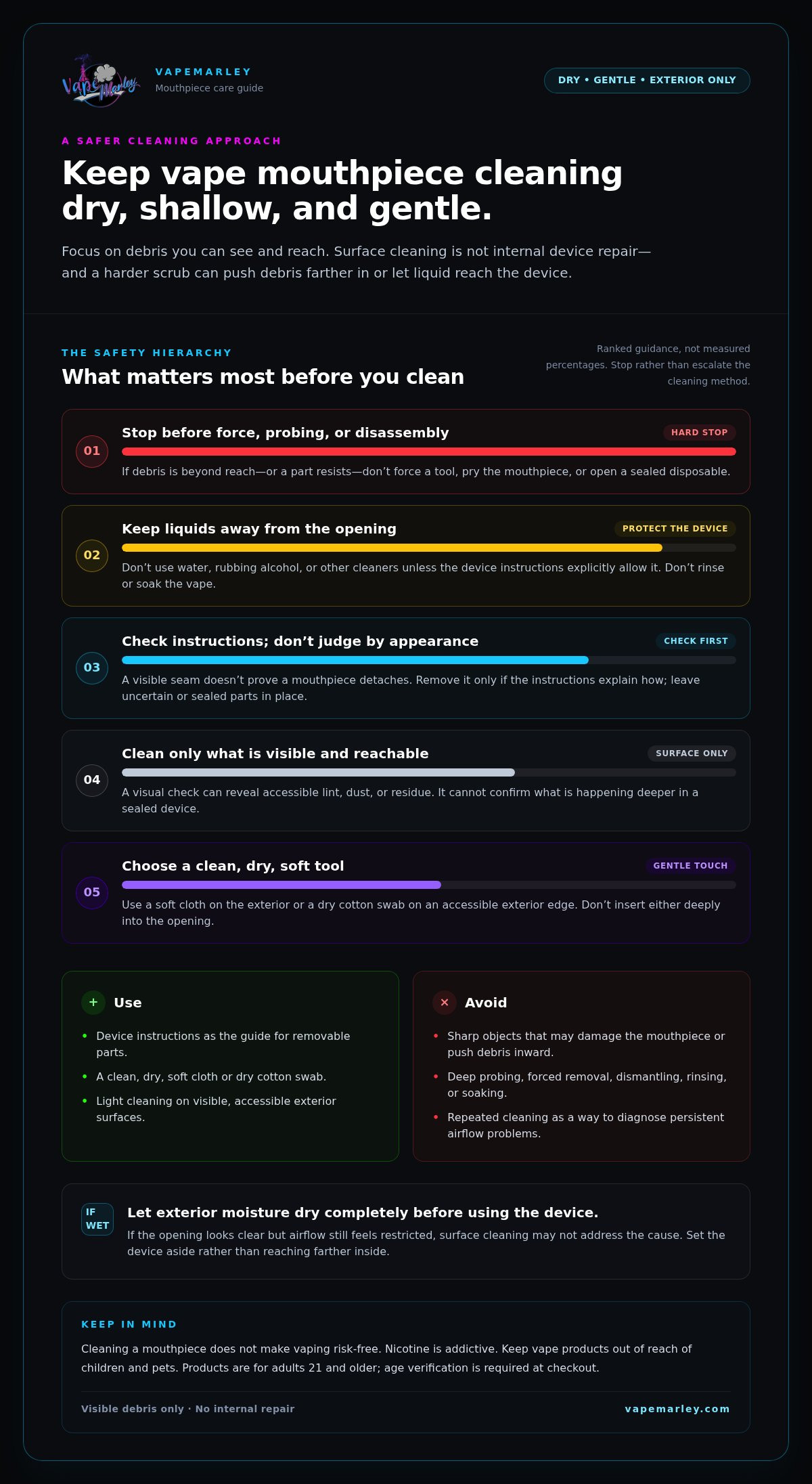
Before deciding how to clean a vape mouthpiece, check the device instructions. Disposable designs differ, so don’t assume a mouthpiece is meant to come off just because it looks like a separate piece. Look for explicit removal or cleaning directions. If the instructions don’t clearly describe a removable part, treat the mouthpiece as fixed.
Do not dismantle a sealed disposable vape to clean its mouthpiece. Twisting, prying, or forcing a part can damage the device or expose areas that aren’t intended for user cleaning. If the design is sealed or you can’t tell whether a part detaches, clean only exterior surfaces you can reach without pressure. Cleaning should never become an attempt to open or repair the device.
How to tell whether the mouthpiece is removable
Use the device instructions as your guide, not appearance alone. A visible seam doesn’t prove that a part is designed to detach. Remove a mouthpiece only if the instructions explicitly explain how, and stop if it resists or requires a tool. For an uncertain or sealed design, leave the mouthpiece in place and clean only its accessible exterior.
Tools and substances to avoid
Keep your tools simple: use a clean, dry, soft cloth for the outside, or a dry cotton swab for an accessible exterior edge. Don’t insert either deeply into the opening. Avoid sharp objects, which can scratch or damage the mouthpiece and may push debris farther inside.
For a disposable device, don’t apply water, rubbing alcohol, or another cleaning liquid unless its instructions explicitly allow it. Even a small amount near the opening can travel beyond the surface. Keep liquids away from the opening, and don’t rinse or soak the vape. If debris can’t be reached with a gentle, dry touch, stop rather than switching to a more forceful method.
- Use: a clean, dry, soft cloth or dry cotton swab on accessible exterior surfaces.
- Avoid: liquid cleaners, rinsing, sharp tools, deep probing, and forced removal.
- Stop: if cleaning requires opening the device or pushing into the airway.
These limits are about device care, not a guarantee of health or performance. The American Heart Association discusses health risks associated with vaping. Cleaning a mouthpiece doesn’t make vaping safe. Nicotine is addictive, and products must be kept out of reach of children and pets. Vape products are for adults 21 and older, with age verification required at checkout.
If the mouthpiece can’t be cleaned within these limits and you’re considering a replacement, browse disposable vape options. Follow applicable local and state laws when purchasing or using vape products.
How to Clean a Vape Mouthpiece: A Gentle Step-by-Step Method
A dry-first approach keeps the task focused on visible debris, not hidden parts of the device. Before you begin, make sure you can work without twisting off the mouthpiece, forcing a tool into the opening, or bringing liquid near the vape. If any step requires one of those actions, stop. This method is for the accessible mouthpiece and its exterior only.
Clean accessible surfaces with a dry-first approach
Use a clean, dry, soft cloth on the outside of the mouthpiece. A dry cotton swab can help reach a visible edge, but keep it at the surface. Neither tool should enter the airway. Work gently so loosened lint or residue isn’t pushed inward.
- Check the device instructions. Look for specific mouthpiece cleaning guidance before touching the device. Follow the manufacturer’s directions, and don’t assume a mouthpiece detaches unless the instructions explicitly say it does.
- Inspect the opening. Look for debris you can see clearly, such as a strand of lint on the rim. If the material appears deeper inside, or you can’t tell where it sits, don’t probe to investigate.
- Wipe the exterior. With a clean, dry, soft cloth, gently wipe the outer surface of the mouthpiece. Use light strokes rather than scrubbing, and avoid sweeping debris toward the opening.
- Lift accessible debris. If a small amount remains around the visible edge, use a dry cotton swab to lift it away. Touch only the area you can see and reach without inserting the swab into the airway. Don’t use sharp tools or apply pressure.
- Inspect the opening again. Check whether the visible surface debris has come away. Don’t insert a tool farther to look for anything hidden, and don’t repeat the process more forcefully if residue remains.
- Stop if the limits aren’t enough. If cleaning would require force, liquid, or device disassembly, don’t continue. Leave the mouthpiece intact and use the guidance in the next section for a persistent obstruction.
Finish with an inspection, not a deeper probe
Take a final look from the outside. The aim is to see whether accessible surface debris has been removed, not to prove that the internal airway is clear. A clear-looking rim doesn’t diagnose the cause of continued airflow restriction, so don’t treat this check as a device test.
If liquid has entered the opening or the device is wet, don’t use it. Don’t try to dry the inside with a swab, cloth, or other object. Set it aside and follow the device instructions. If debris or an obstruction remains beyond safe reach, stop rather than escalating the cleaning attempt.
Clogged Vape Mouthpiece: What to Do and What to Avoid
If airflow still feels restricted after you’ve checked the visible opening, don’t assume the blockage is safe to reach. A persistent obstruction may sit beyond the mouthpiece, where surface cleaning can’t address it. Repeating the same attempt with more pressure won’t tell you what’s causing the problem and may push debris farther inside.
If clearing the opening requires force, stop and don’t probe deeper. This is the key limit for a sealed disposable vape. Don’t heat the device, puncture the opening, dismantle it, or blow liquid through it. Those actions can damage the device or expose its internal components. The answer to how to clean a vape mouthpiece has a clear boundary: clean only what’s visible and accessible without force.
How to respond to persistent restricted airflow
Take another look at the opening in good light, without inserting a tool. Check whether you can actually see debris at the surface. If the opening looks clear but airflow remains restricted, the cause may be elsewhere in the device. Surface cleaning can’t confirm or correct an internal fault, or guarantee that airflow will return.
Set the device aside if it appears damaged, has become wet, or continues to malfunction. Don’t keep testing it to see whether the issue has resolved. For concerns that remain, follow the device maker’s instructions rather than attempting a repair yourself.
When to stop using the device
Stop using a vape that is visibly damaged, unusually hot, exposed to liquid, or still malfunctioning. Don’t open it to inspect the battery or other internal components. A sealed disposable isn’t designed to be repaired through mouthpiece cleaning, and taking it apart can create additional risks.
- Stop cleaning if clearing visible debris requires pressure, liquid, a sharp tool, or disassembly.
- Set it aside if the device is wet, damaged, unusually hot, or behaving abnormally.
- Follow the maker’s guidance if the concern persists; don’t try to repair sealed parts.
When the obstruction can’t be cleared safely, replacement may be more sensible than escalating the cleaning attempt. Browse disposable vape options if you’re considering a replacement. Vape products are for adults 21 and older, and age verification is required at checkout. Nicotine is addictive; keep products out of reach of children and pets. Vaping isn’t risk-free. Consult a medical professional if you’re unsure about health effects.
Keep a Vape Mouthpiece Cleaner and Know When to Replace the Device
Good habits can help limit what reaches a mouthpiece, though they can’t prevent every instance of dust or residue. Keep the device in a clean place, and avoid storing it where the mouthpiece rubs against loose lint or rests on a dusty surface. Before use, take a quick look at the opening. If you notice debris on an accessible exterior edge, remove it gently using the dry-first method described earlier.
There’s no need for an invented daily or weekly cleaning schedule. Inspect the mouthpiece as needed, especially after carrying or storing it somewhere debris could collect. The goal is to notice visible buildup and respond carefully, not to clean parts you can’t reach.
Simple habits that help limit mouthpiece debris
Keep the exposed end from touching unclean surfaces, and don’t share a mouthpiece. Cleaning can remove some visible surface debris, but shouldn’t be presented as making a shared device risk-free. These precautions support more mindful handling without suggesting that any hygiene routine removes the health risks of vaping.
When cleaning is no longer the answer
Cleaning has limits. It can’t extend a device’s usable life, diagnose a fault, or guarantee improved flavor or performance. If the mouthpiece remains obstructed after accessible debris is removed, or the device seems damaged or unreliable, set it aside rather than escalating to force, liquid, or disassembly. For unresolved concerns, follow the device maker’s instructions. Consider replacing the device if it continues to malfunction.
If you’re considering a replacement, VapeMarley is an online source for adult-use vape products. Age verification is required at checkout. You can browse disposable vape products when you’re ready, while following applicable local and state laws.
Vaping isn’t risk-free, and cleaning a mouthpiece doesn’t change that. Nicotine is addictive. Keep vape products out of reach of children and pets, and consult a medical professional if you’re unsure about health effects.
Choose a Careful Next Step
Good device care includes knowing when to stop. If the mouthpiece still seems blocked or the vape shows signs of damage, don’t force a fix. Set it aside and consider whether it’s time for a replacement. Knowing how to clean a vape mouthpiece responsibly means limiting the task to visible surfaces and choosing cautiously when cleaning can’t address the problem.
If you’re ready to explore replacement options, browse VapeMarley’s online selection. VapeMarley offers “Authentic Products, Every Time,” with devices sourced directly from authorized distributors. Products are for adults 21 and older, and age verification is required at checkout.
Nicotine is addictive. Keep vape products out of reach of children and pets. Make the next choice thoughtfully, and consult a medical professional if you’re unsure about health effects.
Frequently Asked Questions
How often should I clean a vape mouthpiece?
Clean it when you notice accessible debris rather than following a fixed schedule. For example, if you spot lint after carrying the device in a pocket, check the visible surface and follow the device instructions before wiping it. “How to clean a vape mouthpiece” shouldn’t imply a routine deep clean. Limit care to reachable exterior areas, and stop if the opening still seems obstructed.
Can I use rubbing alcohol to clean a vape mouthpiece?
Use rubbing alcohol only if the device instructions explicitly allow it. Liquid can travel from the mouthpiece into the device, and instructions for one vape shouldn’t be assumed to apply to another. For visible marks on an accessible exterior surface, begin with a clean, dry cloth. Don’t soak the mouthpiece or open a sealed disposable to reach hidden residue.
Can water damage a disposable vape mouthpiece?
Water can enter the device through the mouthpiece opening, so don’t rinse or soak a disposable vape. Keep cleaning dry unless the device’s instructions explicitly permit another method. If liquid has entered the opening, set the vape aside and follow the maker’s guidance. Don’t try to dry internal parts with a tool or take the device apart to inspect for moisture.
Can I clean a disposable vape mouthpiece without taking it apart?
Yes. You can wipe accessible exterior surfaces without opening the device. Use a clean, dry cloth or a dry cotton swab to lift debris from a visible area around the rim. Keep the swab at the surface rather than inserting it into the airway. If a part doesn’t detach easily or cleaning would require prying, leave it in place and stop.
What should I do if my vape mouthpiece is still clogged after cleaning?
Stop if you can’t reach the obstruction from the opening without force, liquid, or disassembly. A remaining blockage may not be limited to visible debris, and cleaning can’t guarantee a solution. Set aside the device if it’s damaged, wet, unusually hot, or still malfunctioning. For unresolved concerns, follow the maker’s instructions instead of attempting to repair a sealed device.
Does cleaning a vape mouthpiece make it safe to share?
No. Don’t treat cleaning as making a shared mouthpiece risk-free; the simplest choice is not to share it. Vape products are for adults 21 and older, and age verification is required at checkout when purchasing from VapeMarley. Nicotine is addictive; keep vape products out of reach of children and pets. If you’re unsure whether vaping is appropriate for you, consult a medical professional.