

How New Product Flavor Trends Are Changing the Consumer Market
Posted by Silar on Nov 10th 2026
The next wave of Flavor Trends pairs familiar tastes with unexpected twists. Playful sweet-and-spicy combinations, nostalgic profiles, global inspirations, and ingredient-led ideas are shaping what consumers may want to try next.
A familiar flavor can feel new when paired with a surprising contrast. Ingredients rooted in different food traditions can also bring fresh character to established formats. Nostalgia and interest in better-for-you choices show that novelty is only one reason a flavor catches on.
This article explores emerging global flavor directions and how they’re influencing consumer preferences. From playful combinations and tangy, savory profiles to comforting classics and ingredient-led ideas, discover how familiarity and new experiences are shaping what comes next.
Key Takeaways
- Look for flavor pairings that balance familiarity with a surprising twist, rather than relying on novelty alone.
- Notice how sweet, spicy, tangy, and savory notes work together to create more layered taste experiences.
- Explore how floral, citrus, fermented, and foraged ingredients can signal emerging directions in food and drink.
- Consider how nostalgic flavors can meet better-for-you ingredients without losing their comforting appeal.
- Use annual flavor forecasts as a guide to the ingredients and combinations gaining attention, not as a guarantee of what every consumer will prefer.
Nostalgia, global escapism, and playful sensory experiences
Consumers are drawn to flavors that connect familiar favorites with a fresh sensory experience. One useful starting point is emotional relevance: 49% of consumers say emotional connection is extremely or very important when choosing where to eat. Nostalgic flavors can provide that connection through recognizable tastes, while global ingredients introduce an element of discovery. The balance matters. A familiar format can make an unfamiliar seasoning or fruit feel more approachable without flattening its cultural character.
Culinary authenticity means more than borrowing an ingredient’s name. It means understanding the flavor’s context and using it thoughtfully. For example, West African suya spice can season American Southern dishes such as fried chicken, cornbread, shrimp and grits, or barbecued meats. This pairing brings distinct food traditions together instead of treating global cuisine as a decorative label. Nearly half of consumers surveyed globally say honoring food traditions through choices that reflect their heritage is very to extremely important in their diet.
Familiar formats can introduce global comfort foods to new audiences. Dumplings are a clear example: their recognizable filled-and-folded form can accommodate different savory seasonings, fillings, and sauces. A menu can keep the format consistent while drawing on a specific culinary tradition for its ingredients and preparation. The same principle guides product development: preserve what makes a dish recognizable, then let its flavor offer something new. This encourages exploration without reducing a cuisine to a single shorthand ingredient.
Global flavors can move across menu formats, too. Suya-inspired seasoning might appear on a Southern-style entrée, while aromatic citrus can bring brightness to drinks, desserts, or savory dishes. For Summer 2026, highlighted citrus examples include yuzu, calamansi, bergamot, blood orange, and Meyer lemon. Each offers a distinctive aromatic profile, giving product developers options beyond familiar lemon or orange. Across formats, the useful question is how the ingredient complements the base, texture, and occasion.
Tropical fruits add color and recognizable fruit character to this mix. Mango, passionfruit, guava, and pineapple can evoke tropical flavor while pairing with chili for a sweet-and-spicy direction. Dragon fruit also stands out: Kerry Group named it a standout flavor. According to Mintel, 27% of consumers are interested in tasting products with international flavors. For Summer 2026, the practical opportunity is to combine global inspiration with familiar product formats, making new tastes easier to approach while keeping their distinct identity visible.
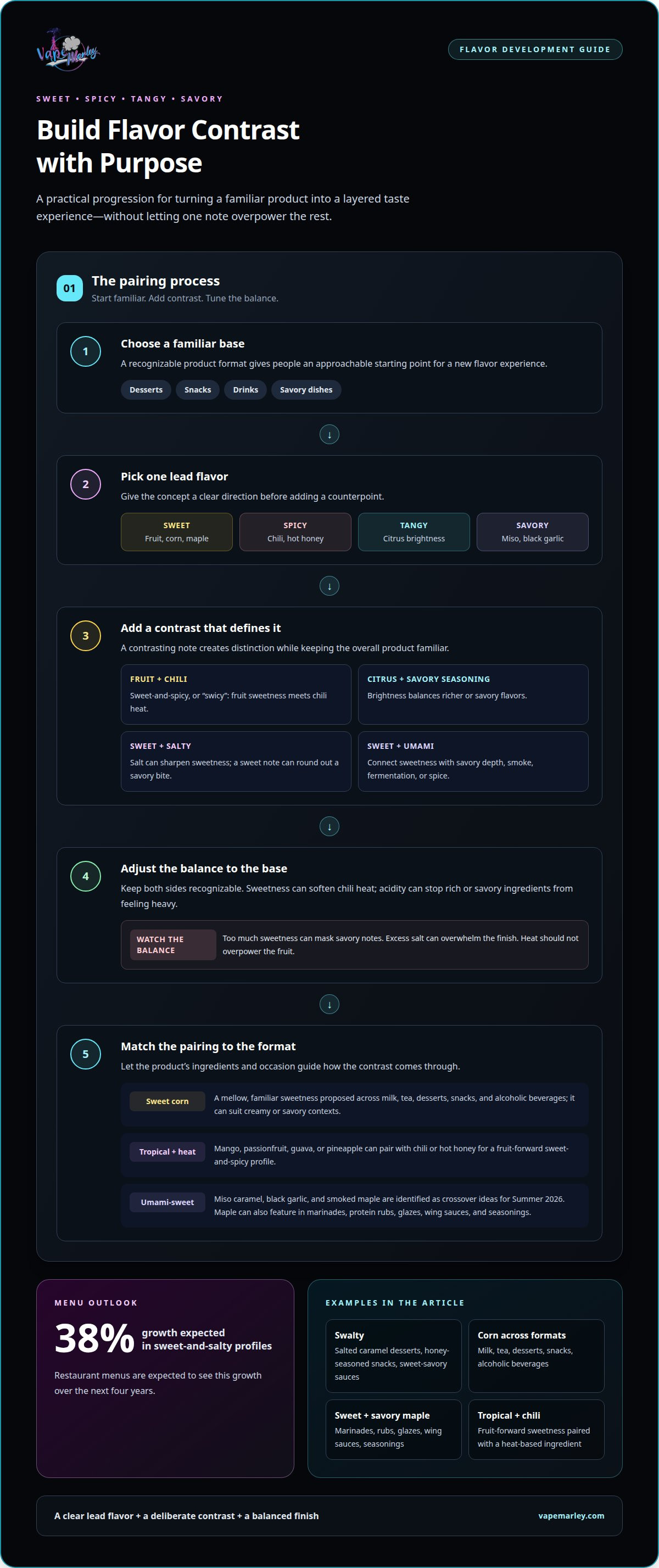
Swicy describes a blend of sweet and spicy elements, often pairing fruit with chili or another heat-based ingredient. Fruit brings sweetness, while the chili adds heat and contrast. When developing a menu, adjust the balance to suit the base so the heat doesn’t overwhelm the fruit. The same idea can shape drinks, desserts, and savory dishes, with the format guiding how the pairing comes through. Keeping both elements recognizable makes the flavor direction clear while allowing for different fruits and levels of heat.
Sweet, spicy, tangy, and savory flavor combinations
Contrasting tastes give people a reason to try a familiar product in a new way. Sweetness can soften chili heat, while acidity can keep rich or savory ingredients from tasting heavy—an approach showcased by specialty culinary purveyors such as Muskoka Olive Oil Co. when using bright acidic elements to balance complex profiles. A practical development approach is to choose one lead flavor, then add a contrasting note that defines it. Fruit and chili create a sweet-and-spicy profile; citrus paired with savory seasoning adds brightness. This makes the flavor memorable without requiring an unfamiliar format.
Sweet-and-salty pairings show how contrast can shift a product’s character. Restaurant menus are expected to see 38% growth in sweet-and-salty, or “swalty,” profiles over the next four years. Salt can sharpen sweetness, while a sweet note can round out a savory bite. The combination appears in formats such as salted caramel desserts, honey-seasoned snacks, and sweet-savory sauces. Each depends on balance: too much sweetness can mask the savory element, while excess salt can overwhelm the finish.
Tropical sweet-and-spicy flavors offer another route to contrast. Mango, passionfruit, guava, and pineapple can bring fruit-forward sweetness, while chili or hot honey supplies warmth. For Summer 2026, these ingredients are suggested for more refined tropical profiles. A practical pairing step is to match the fruit’s character with the heat source, then adjust the balance through the product’s other ingredients. Hot honey, for instance, can combine sweetness and heat in one element, while chili brings a more direct spicy note.
Sweet corn is moving beyond the side dish to become a flavor idea across categories. Products featuring or proposing corn include milk, tea, desserts, snacks, and alcoholic beverages. Its appeal comes from a familiar sweetness that suits both creamy and savory contexts. In tea or milk, corn can create a mellow, rounded profile; in snacks, it can pair sweetness with salt or spice. This versatility lets developers explore a distinctive ingredient across different occasions and formats.
Sweet-savory combinations can also draw on ingredients traditionally associated with richer or more savory dishes. For Summer 2026, miso caramel, black garlic, and smoked maple are identified as umami-sweet crossovers. McCormick executive chef Kevan Vetter describes maple in savory and spicy applications, including marinades, protein rubs, glazes, wing sauces, and seasonings. These examples show how one ingredient can play a functional role beyond dessert, linking sweetness with smoke, fermentation, or spice.
For product teams, the opportunity is to create contrast with purpose. Start with a familiar base, choose a clear sweet, spicy, tangy, or savory lead, and add a complementary note. A pineapple-and-chili concept, for instance, needs enough fruit character to remain recognizable and enough heat to create contrast. Considering the format, culinary context, and eating occasion helps the pairing feel coherent rather than merely unusual.
What’s Next in Global Flavor Trends?
Indulgence can influence how consumers judge a product’s appeal and quality. In Mondelez’s 2024 State of Snacking, 95% of consumers said they snack for flavor, taste, and texture. In the same report, 94% said they snack as a treat. Together, these findings suggest that satisfying flavor and texture help make a snack feel rewarding. Tiramisu coffee drinks have increased by 172% over the past four years, showing how a recognizable dessert profile can travel into beverages. Familiarity can signal comfort, while a polished combination adds discovery.
Texture and layered flavor give product developers more than one way to make an experience distinctive. According to Innova Market Insights, 64% of consumers seek snacks with layered flavors. Rather than relying on one dominant note, a product can unfold through complementary flavors and contrasting textures. The trend also meets interest in different product choices: Datassential reports that 46% of consumers who have tried fermented foods say they love or like them. Fermented ingredients can bring tang and complexity, while a satisfying texture helps make the overall combination feel complete.
Neuroflavor refers to flavor experiences designed to influence mood, cognition, or emotional states. Products positioned around calm, clarity, energy, or emotional support may include beverages, mints, tinctures, chocolates, and scent-integrated foods. The opportunity is to pair a functional purpose with an enjoyable flavor, rather than treating taste as an afterthought. For example, a beverage concept can combine mood-focused positioning with layered flavor and a texture suited to its format.
Sales data can help teams decide which ideas deserve further development. Nestlé internal research found that almost half of consumers would try a product and choose a brand for the first time because of an intriguing new flavor. Around 40% of consumers who increased their non-chocolate candy consumption attributed that increase to better flavor variety. These findings point to two useful signals: trial linked to novelty and repeat category interest linked to choice. Teams can compare those signals with product-format performance before deciding which flavor combinations to advance.
For product development, begin with a clear consumer experience, then build the flavor and format around it. Innova’s layered-flavor finding supports testing combinations that develop across the bite or sip. Foraged flavors can also offer a sense of discovery: more than half of consumers associate them with innovation and adventure. Rubix reports that 67% of Gen Z consumers want more floral-infused foods and drinks. These signals support exploring floral, foraged, or fermented notes, while keeping the overall profile coherent. In Summer 2026, development guidance favors layered systems and combining functional benefits with indulgence.
Nostalgic flavors with better-for-you ingredients
For Gen Z and younger consumers, nostalgic comfort paired with surprising flavor or texture can create a fresh experience. Among Gen Z and Millennials, 73% prioritize experiences over goods, making a memorable snack or drink format part of the appeal.
Nostalgia gives new products a familiar starting point. According to Mondelez’s 2024 State of Snacking, 79% of consumers associated snacks with memories of home. That connection can guide new product development: retain a recognizable flavor profile, then update its ingredients, format, or texture. A familiar vanilla snack, for example, could gain a creamy tropical note, while a classic dessert profile could appear in a drink. The aim is recognition with a reason to explore.
Summer 2026 creamy tropical dessert ideas include coconut, pineapple, ube, vanilla, and brown sugar. These ingredients can build distinct profiles across ice cream, baked goods, snack bars, and beverages. Coconut and vanilla can establish a creamy base; pineapple can add fruit character, while ube contributes a recognizable color and flavor identity. A product can use these ingredients to evoke a familiar dessert style without copying one specific recipe.
“Newstalgia” brings comforting references together with contemporary choices. A recognizable flavor can feel updated through its texture, format, or ingredients. Think of a soft-centered snack with a crisp coating, or a classic cake-inspired profile served as a chilled beverage. Better-for-you positioning also calls for precision: consumers may value ingredient choices, but a nostalgic flavor alone doesn’t make a product nutritionally better. Descriptions should distinguish sensory appeal from specific nutrition claims.
Ingredient awareness helps explain why some brands are revisiting formulation choices. 74% of consumers are more aware of ultra-processed foods, and 46% believe artificial dyes should be banned. These figures point to interest in ingredients and appearance, but they don’t prove that every consumer wants the same changes. Developers can respond by considering recognizable ingredients and color sources, while ensuring the finished product still delivers the expected flavor and texture.
To develop a nostalgic snack with a modern twist, begin with a specific memory or category, such as a creamy dessert, fruit treat, or baked favorite. Choose one or two ingredients that signal the reference, then decide what to change: texture, sweetness, or format. Coconut, pineapple, and brown sugar, for example, can create a creamy tropical dessert profile. This focused approach keeps the reference clear while offering consumers something new.
For product teams, the strongest balance is familiarity with a clear update. A known profile can make a new format easier to understand, while thoughtful ingredients and texture can make it feel current. Testing these elements separately helps reveal whether the appeal comes from the nostalgic flavor, the ingredient choice, or the sensory twist.
For example, coconut, pineapple, and vanilla can anchor a familiar dessert direction, while format choices help it suit everyday occasions. The average consumer snacks up to three times a day. Mushroom coffee awareness is 26%, compared with 34% for matcha. Nearly 15% of new salty snack launches in 2023 featured bold heat.
Annual flavor outlook
In the United States, flavors drawing attention include pistachio, black currant, dark sweet cherry, tiramisu, matcha, and botanical notes. Annual outlooks also feature tea-based, zero-proof, and fermented flavor ideas, alongside fruit-and-spice combinations.
Pistachio is gaining ground in beverages: pistachio beverages have increased by 100% in four years and are projected to grow by 164% by 2029. That rise gives brands a reason to explore pistachio beyond desserts, including creamy drinks and coffee combinations. For a more aromatic direction, the Summer 2026 outlook pairs pistachio with rosewater, saffron, and cardamom. These ingredients can shift a familiar nutty profile toward floral, fragrant, or warming notes.
Coffee and tea offer familiar formats for experimenting with richer or more distinctive flavors. Tastepoint by IFF identifies tiramisu as a North American flavor trend prediction, extending a recognizable dessert profile into drinks. Matcha also has an established audience: 60% of millennials prefer the taste and caffeine kick of matcha lattes over traditional coffee lattes. For tea-based innovation, matcha, hojicha, jasmine, and bergamot are highlighted alongside interest in natural energy, calm and focus benefits, and less sweetness.
Annual flavor picks can signal different routes for product development. McCormick named black currant its 2026 flavor of the year, while Torani named forest pine its 2026 flavor of the year. T. Hasegawa listed dark sweet cherry at the top of its flavor trends. These selections range from fruity depth to a distinct forest-inspired note. They give brands examples to consider when building seasonal concepts, pairing ingredients, or updating familiar formats.
Botanical and zero-proof profiles add options beyond sweet drinks. Summer 2026 botanical greenhouse cooler flavors include cucumber, basil, mint, elderflower, and lavender. For zero-proof aperitivo and tea spritzes, highlighted notes include blood orange, tart cherry, bergamot, juniper, and tea. Consumers of zero-proof drinks want bitterness, structure, and complexity rather than overly sweet mocktails. That preference makes balance and flavor layers central to creating an adult-tasting drink.
Fermented and brined refreshers offer another route, with kombucha peach, ginger shrub, pickled watermelon, and dill-lime among the Summer 2026 ideas. Each combines a familiar fruit or herb with a tangy, savory, or sharp edge. Brands can use annual outlooks as prompts, then shape combinations around the intended format and emotional appeal. To explore a different kind of flavor-led discovery, explore a fresh flavor experience.
VapeMarley
VapeMarley offers a way to explore vaping products as you consider how flavor preferences shape consumer choices. Its range includes disposable vapes, vape accessories, and vape bundles, giving customers options across these categories. If you’re interested in vaping products, browse the available offerings to find what fits your preferences. Flavor inspiration in food and beverages doesn’t necessarily translate directly to vaping, but curiosity about changing tastes can prompt broader product discovery. For questions about VapeMarley’s offerings, contact VapeMarley.
Make Your Next Discovery Count
Flavor trends are a starting point, not a script. A new idea can spark curiosity, but personal preference determines what’s worth exploring. Notice the details that matter to you, whether it’s a familiar profile, an unexpected combination, or a different product experience. This makes trend awareness practical: you can distinguish passing novelty from the choices you genuinely enjoy.
For businesses, the same principle applies. Consumer signals can inspire ideas, while thoughtful selection helps keep products relevant and distinctive. The next opportunity may come from adapting an established idea rather than chasing every new one. Stay open to combinations that feel purposeful, and let your interests shape what you explore next.
Ready to continue the conversation? Contact VapeMarley to discuss trends and explore what’s next for you.
Frequently Asked Questions
What consumer research and sales data support current flavor trends?
Consumer surveys, company research, and category sales signals each offer evidence, but measure different things. In Mondelez’s 2024 State of Snacking, 75% of consumers expressed excitement about discovering new snacks. That indicates interest in trying new options, not guaranteed purchases. To assess commercial potential, brands can compare that kind of consumer sentiment with category performance and product trial data. Together, these signals help distinguish curiosity from demonstrated buying behavior.