
Disposable Vape vs Pod System: Key Differences Explained
Oct 31st 2026
The simplest option isn’t automatically the better value. In a Disposable Vape vs Pod System comparison, disposables usually cost less upfront and require less setup, while refillable pod systems can cost less over time and use fewer devices. The right choice depends on what matters most to you: convenience, upkeep, cost, or waste.
Disposables appeal because they’re ready to use and don’t need refilling. Pod systems take more care, including charging and, for refillable models, adding e-liquid. In return, you can reuse the battery and replace the pod or coil. Each format has trade-offs, so the better fit depends on your preferences.
This guide compares the two formats on cost, maintenance, convenience, and waste. You’ll see what affects long-term value and how to weigh the trade-offs against your routine, so you can make a more informed choice.
Key Takeaways
- Compare upfront convenience with ongoing refills, charging, and maintenance to see which format better fits your routine.
- Reusable pod systems use fewer devices, but still involve replaceable parts and extra equipment.
- Consider how single-use devices contribute to plastic and electronic waste when weighing convenience against environmental impact.
- Review nicotine strength and device options carefully to make a choice that aligns with your preferences.
- Use the decision guide to weigh cost, upkeep, and waste before choosing a device type.
Disposable Vape vs Pod System: Which Is Really Better?
The better fit depends on whether you prioritize immediate convenience or reusable equipment and ongoing upkeep.
In the United States, purchase eligibility depends on the minimum age and other rules that apply where you live. Follow the applicable requirements before buying either device type.
State and local rules may restrict sales of disposable vapes, flavored products, or pod systems. Requirements vary by jurisdiction, so a product category alone doesn’t determine whether a sale is permitted where you live.
Neither format makes vaping risk-free. Many products contain nicotine, which is addictive. Choosing a pod system instead of a disposable doesn’t remove the concerns associated with nicotine or inhaling aerosol.
Disposable Vape Convenience and Cost
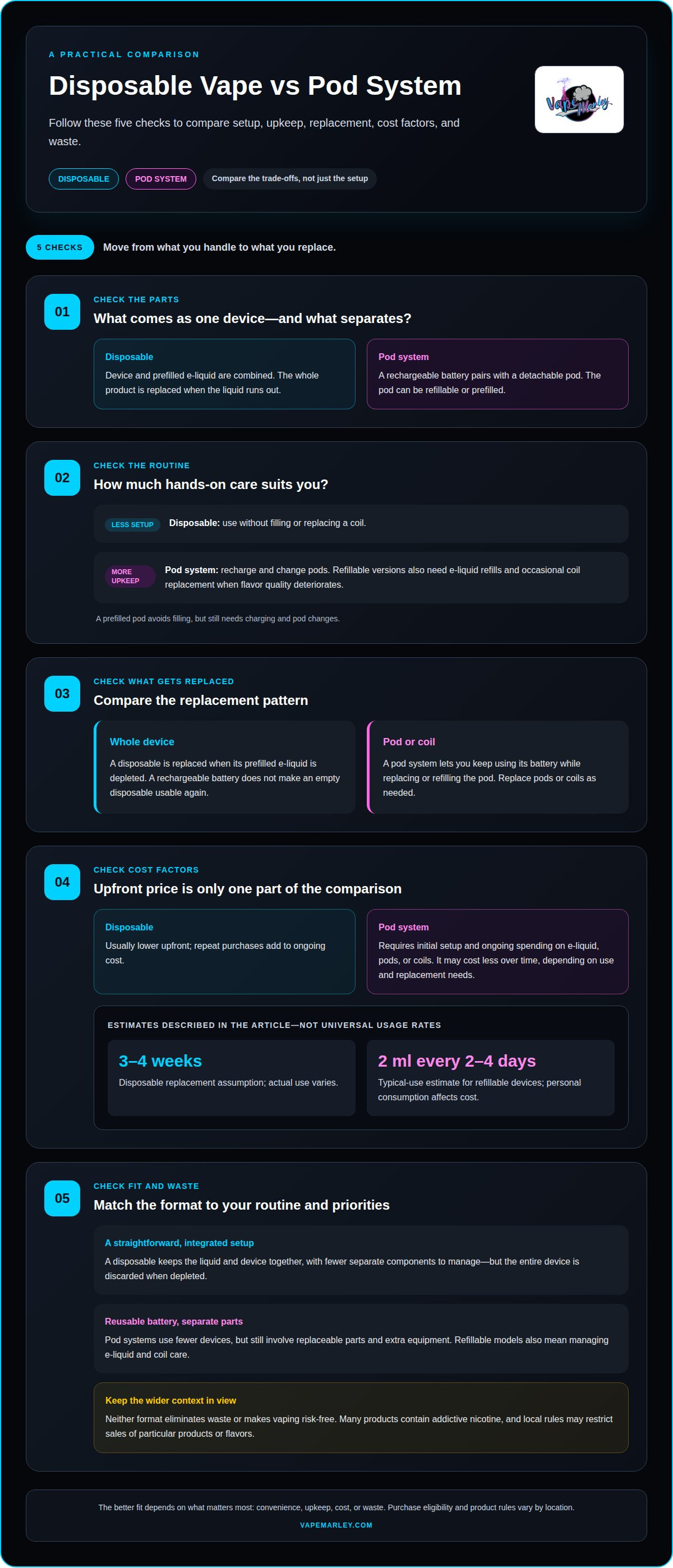
A disposable vape is designed to be used without filling a pod or replacing a coil. It requires fewer routine steps than a refillable system, which needs charging and e-liquid refills. Although the initial cost may be lower, the disposable must be replaced when its prefilled e-liquid runs out. Some disposables have rechargeable batteries, but charging an empty device doesn’t make it usable again.
Replacement frequency affects the overall comparison. This estimate assumes a disposable is replaced every three to four weeks, but actual use varies. The format may suit someone who values a straightforward setup, while repeat purchases and discarded devices are part of the trade-off.
Pod System Convenience and Maintenance
A pod system pairs a rechargeable battery with detachable pods. Refillable versions need e-liquid, regular charging, and occasional coil replacement when flavor quality deteriorates. That extra care may suit someone comfortable with hands-on upkeep. A prefilled pod system avoids filling, but users still replace pods and recharge the device.
These figures describe different pod formats, not a universal spend. Refill frequency and ongoing replacement needs affect the comparison.
| Option | Upfront cost | Routine steps | Replacement pattern |
|---|---|---|---|
| Disposable vape | Lower than pod systems | Use without refilling | Replace when e-liquid is depleted |
| Refillable pod system | Requires initial setup | Refill, recharge, and maintain | Replace pods or coils as needed |
| Prefilled pod system | Pod-system setup | Recharge and change pods | Replace depleted pods |
For refillable devices, a typical use estimate is 2 ml of vape liquid every two to four days, which makes personal consumption an important cost factor. Before choosing, compare how often you use a device with the time you’re willing to spend charging, refilling, and replacing parts.
Disposable vape product comparisons
The main product differences are how each format combines its battery, liquid, and replaceable parts. Comparing those components clarifies what you’ll handle, replace, or keep using.
A disposable combines its e-liquid and device in one product, so there’s no separate pod to refill or swap. A pod system, by contrast, has a battery and a detachable pod. That changes what you carry and replace: a disposable is replaced as a whole, while a pod system’s battery can stay in use as you change or refill the pod.
| Comparison point | Disposable vape | Pod system |
|---|---|---|
| Core components | Device and e-liquid together | Rechargeable battery and detachable pod |
| Liquid format | Prefilled | Refillable or prefilled pod |
| What gets replaced | The device as a whole | Pod or, when needed, coil |
| Extra equipment | Fewer separate components | May involve additional equipment |
These formats also affect portability. A disposable is one integrated item, while a pod setup has at least a battery and pod. For example, someone switching flavors with a pod system may carry separate pods, while a disposable keeps its liquid contained in the device. Reusable pod systems use fewer devices than disposables, though they still involve separate equipment.
Pod systems differ in pod design. You add e-liquid to a refillable pod, while you replace a prefilled pod when it’s depleted. In either case, the pod and battery are separate components. This can let you keep using the battery, but you’ll need to track compatible parts and handle the pod separately.
Compare devices by checking these product details before choosing:
- Liquid format: Identify whether e-liquid comes prefilled or is added by the user.
- Replaceable parts: Note whether the pod, coil, or entire device is changed.
- Components to carry: Consider whether the setup includes a separate battery, pod, or other equipment.
Complexity isn’t just about the number of buttons or settings. It also depends on how many parts need attention. With a disposable, the routine centers on one integrated product. A pod system adds decisions about refilling or replacing pods, and refillable versions also need coil care. Picture a typical day: if you prefer one device, a disposable is simpler; if you’re comfortable managing separate components, a pod system offers a reusable battery and replaceable pods.
Disposable vape waste and nicotine control
Waste and nicotine content are two practical factors to consider. A disposable combines e-liquid, casing, and electronic components in one single-use device. A pod system keeps its rechargeable battery in use while pods are replaced or refilled. Neither format eliminates waste, but the components discarded differ.
Once a disposable’s prefilled e-liquid runs out, the whole device can no longer be used. Some disposables have rechargeable batteries, but recharging doesn’t change this. Replacing the complete device adds plastic and electronic waste. With a reusable pod system, the battery stays in service while users replace pods or coils as needed. This may mean fewer devices, although pods and other components still become waste.
Nicotine strength also varies. Disposable vapes typically contain nicotine salt e-liquid at 20mg/mL (2%) or 50mg/mL (5%); some are available with zero nicotine. Those label values make the strength visible, but they don’t make every product equivalent. Compare the stated concentration and nicotine presence rather than relying only on packaging or flavor descriptions. For example, a zero-nicotine disposable differs from one labeled 20mg/mL (2%), even if both use similar packaging.
For pod systems, check the pod or e-liquid label before use. Refillable pods require you to choose and add e-liquid, while prefilled pods already contain liquid. Read the nicotine information for the specific product and compare it with the alternative’s stated concentration. Don’t assume a refillable device means lower nicotine or that a familiar flavor indicates a particular strength.
- Identify the format: Note whether the battery, pod, and liquid are integrated or separate.
- Read the label: Compare nicotine concentration and whether the product contains nicotine.
- Track what you discard: A whole disposable differs from a replacement pod or coil.
- Find local guidance: Check how your community handles battery-containing electronic waste.
Here’s the difference in practice: when a disposable is finished, you set aside the complete device. With a refillable pod system, you replace liquid or parts while retaining the battery. This matters when planning for waste, even though the pod system still produces discarded components. Compare labeled nicotine strength separately from device type. Don’t assume a pod system is nicotine-free or that every disposable contains nicotine. Check the exact product label and consider which parts you’ll replace.
Environmental impact
In the United States, follow your local waste program’s directions for vape devices and pods. Check product labeling and local guidance for e-waste or battery collection before disposal. Don’t assume household recycling accepts these items.
The environmental comparison starts with what gets discarded. A disposable vape is a single-use device, so its plastic casing and electronic components are discarded together. Reusable pod systems use fewer devices, though they still require separate equipment. Their batteries can stay in service while users replace or refill pods, but those pods and other parts still create waste.
This difference concerns disposal frequency and components, not a guarantee of lower overall impact. Replacing a complete disposable creates a different waste stream from changing a pod while keeping the battery. A refillable setup also involves e-liquid packaging and replacement parts. Device format helps identify what may need disposal, but actual waste depends on use and maintenance.
| Item | Disposable vape | Pod system |
|---|---|---|
| Main device | Discarded as a complete unit | Battery can be retained |
| Replaceable component | Device itself | Pod, and sometimes a coil |
| Other materials | Plastic and electronic components | Pods and additional equipment |
Sort components thoughtfully rather than putting everything in one bin. First, identify whether you’re disposing of a complete device, a detached pod, or packaging. Read the product’s disposal instructions, then follow your local waste authority’s guidance for electronic devices, batteries, and any remaining e-liquid. A detached pod and an integrated disposable are different items.
- Keep components identifiable: Separate loose packaging from the vape device or pod.
- Read the label: Follow the disposal directions provided for that specific product.
- Use local guidance: Look for instructions covering e-waste or battery collection in your community.
- Avoid assumptions: Don’t place a vape or battery in curbside recycling unless local directions allow it.
For a disposable with a rechargeable battery, charging doesn’t change its end-of-use status: it can’t be used after its prefilled e-liquid is depleted. The battery and electronics remain part of the device, so consult disposal guidance for electronic items. A pod system has distinct parts, which can make it easier to identify what you’re discarding, but separating a pod doesn’t make it recyclable.
To compare environmental trade-offs, consider the full routine: how often you replace a complete device, which pod parts you change, and how local collection handles each item. Reusable systems reduce the number of devices used, but their additional equipment and replacement components still matter. The more practical choice is one whose maintenance and disposal steps you can follow consistently.
Choosing between disposable and pod systems
The better choice depends on how you use a device, not on one feature alone. Compare your routine, willingness to maintain it, replacement habits, and waste priorities. Someone who values a ready-to-use format may weigh the decision differently from someone comfortable refilling a pod and caring for a reusable battery.
Start with your usual routine. If you want fewer preparation steps, a disposable avoids filling a pod or replacing a coil. If you’re comfortable with recurring tasks, a refillable pod system lets you add e-liquid and change parts as needed. A prefilled pod system falls between those routines: you replace the pod while keeping the battery separate.
Then consider how long you expect to use the same setup. Pod systems can last 6-12 months or longer with proper care. That makes battery care and replacement-pod habits relevant to the decision. A disposable is replaced as a complete device after its e-liquid runs out, so its simplicity comes with a different replacement pattern.
Think beyond purchase day. Consider what you’ll handle during a typical week: carrying one integrated device, keeping a pod system charged, or bringing e-liquid for refills. Someone with an unpredictable schedule may value fewer preparation steps. Someone who prefers a repeatable routine may find refilling and maintaining a pod system manageable.
Use these checkpoints to reach a practical choice:
- Choose a disposable if using one integrated device and avoiding refills are your main priorities.
- Choose a refillable pod system if you’re willing to refill, recharge, and replace coils as needed.
- Consider a prefilled pod system if you want detachable pods without adding e-liquid yourself.
- Weigh waste by comparing a complete device replacement with changing individual pod-system parts.
- Review nicotine labels on the specific product, rather than assuming its format determines strength.
An example makes the trade-off clearer. Someone who doesn’t want to carry e-liquid or manage coils may prefer a disposable. Someone who wants to keep using a battery and accepts pod upkeep may prefer a pod system. Neither preference settles the whole decision; cost, nicotine choice, and disposal still matter.
For a final check, rank your priorities from most to least important. If convenience leads, choose the format with fewer tasks. If keeping the battery in service matters more, compare pod options and their maintenance needs. If you’re ready to explore the disposable format, browse disposable vape options alongside these decision points.
VapeMarley: Disposable Vapes
VapeMarley offers disposable vapes for adults who have decided a ready-to-use format suits their preferences. If you’re comparing convenience with reusable components, use the distinctions above to guide your choice before browsing. VapeMarley also offers vape accessories and bundles for shoppers exploring related options.
Consider the device format, nicotine label, and disposal steps that fit your routine. A disposable keeps setup straightforward, while a pod system involves reusable equipment and ongoing maintenance. These practical differences can help you browse with clearer priorities.
Explore VapeMarley’s selection at vapemarley.com.
Make Your Next Choice With Confidence
Make the comparison personal by naming your top priority first. Is it fewer setup steps, control over refilling, less equipment to replace, or a routine that feels manageable? Ranking your preferences can clarify the Disposable Vape vs Pod System decision better than focusing on one feature alone.
Your needs can change, too. A format that suits your current schedule may feel less convenient if your habits or priorities shift. Keep your key criteria, including maintenance and disposal, in mind and revisit them before choosing another device. The most useful choice is one you understand and can manage responsibly.
If you still have questions about which option fits your preferences, contact VapeMarley with your questions. Take the time to make an informed choice that feels right for you.
Frequently Asked Questions
What Are Disposable Vapes?
Disposable vapes are self-contained devices with e-liquid designed for use until the liquid runs out. The battery, heating element, and liquid are packaged together, so users don’t refill the device or replace its coil. Some models have rechargeable batteries, but recharging doesn’t extend use after the prefilled e-liquid is depleted. Check the product label for nicotine information and disposal guidance before using or discarding a device.
What Are Vape Pods?
Vape pods are detachable cartridges used with a compatible battery device. A pod may come prefilled or be designed for adding e-liquid. Refillable pods may also use a replaceable coil, depending on their design. For example, a user with a refillable setup handles e-liquid separately, while a prefilled pod is changed when its contents run out. Check compatibility and product instructions before using a pod.
What is the difference between a disposable vape and a pod system?
A disposable vape combines the liquid and device, while a pod system separates its battery from a detachable pod. That changes what you replace: a disposable is replaced as a whole, while a pod system can keep its battery in use. Pod systems also require you to manage pods and, for refillable designs, e-liquid. For your routine, compare how many parts you’ll handle and maintain.
How do disposable vapes and pod systems compare in price and long-term cost in the US?
Disposable vapes generally have a lower initial cost, while ongoing spending depends on how often you replace devices or pods. Refillable systems add e-liquid and replacement-part costs, so use and maintenance affect their long-term total. Prefilled pods follow a different replacement pattern from refillable pods. To compare options in the US, consider your habits and recurring purchases rather than judging by the initial device cost alone.
How many puffs do disposable vapes and refillable pod systems typically provide?
There isn’t one puff count that applies to every disposable vape or refillable pod system. A product’s stated count depends on its design and e-liquid capacity, while actual use depends on how often and how long someone draws. Refillable pod systems also vary according to how much liquid is used between refills. Treat a listed puff count as a product-specific estimate, not a guarantee of how long it will last.
What nicotine strengths and e-liquid options are available for disposable vapes versus pod systems?
Disposable vapes may contain nicotine salt e-liquid at 20mg/mL (2%) or 50mg/mL (5%), and zero-nicotine options are also available. Pod systems may use prefilled or refillable pods, but the liquid and nicotine details depend on the specific product. Read the label before choosing: check whether nicotine is present, the stated concentration, and whether the pod comes prefilled or requires e-liquid.
How do battery life, charging, and maintenance compare between disposable vapes and pod systems?
Pod systems use rechargeable batteries that need regular charging; refillable versions also need e-liquid and periodic coil maintenance. Disposable devices are replaced when their prefilled e-liquid runs out, even if the model has a rechargeable battery. Charging an empty disposable, for example, doesn’t restore its depleted liquid. Follow each device’s charging and maintenance instructions, and compare the routines you’re prepared to manage.
How do you use and refill a pod system safely?
Use the pod system according to its manufacturer’s instructions, including guidance on compatible pods, e-liquid, and charging. For a refillable pod, find its designated fill opening, add the instructed e-liquid without exceeding the marked capacity, and close it securely. Keep e-liquid away from children and pets, and clean up spills promptly. Check the pod and device for damage before use, and stop if either appears damaged.