
Disposable Vape Not Hitting Fix: 2026 Troubleshooting Guide
Jun 29th 2026
Most "broken" disposables are actually functional devices suffering from minor physical obstructions or sensor stasis that you can fix in under 60 seconds. It's a common misconception that a device is dead just because it stops producing vapor. Dealing with a disposable vape not hitting fix doesn't have to be a source of frustration or wasted money. It's incredibly annoying when you've invested in a high-quality product only to have it fail when you need it most. We've all been there, staring at a blinking LED light while nicotine cravings set in, feeling like we've been stuck with a faulty unit.
You deserve a seamless experience, and you shouldn't have to settle for a total loss. We promise to guide you through professional, safe, and effective troubleshooting steps to get your device back in working order. This 2026 guide provides a methodical breakdown of how to diagnose air bubbles, clear clogs, and interpret modern sensor signals. You'll learn exactly how to determine if your vape is truly defective or just needs a quick adjustment, ensuring you know exactly when to fix it or when to ask for a refund.
Key Takeaways
- Identify the difference between a "Dead on Arrival" unit and simple user errors like forgotten protective packaging or silicone seals.
- Master the "Safety First" method for clearing physical airflow obstructions and pressure locks within the mouthpiece.
- Decode common LED blink patterns to troubleshoot battery malfunctions and sensor stasis in modern rechargeable hardware.
- Learn how to resolve internal e-liquid flooding and gurgling that can "blind" your device’s airflow sensors.
- Find the ultimate disposable vape not hitting fix by verifying device authenticity and choosing high-end, reliable brands.
Initial Diagnostics: Why Your New Disposable Vape Isn’t Hitting
Unboxing a fresh device only to find it unresponsive is a major letdown. While a true "Dead on Arrival" (DOA) scenario happens, it's often a simple diagnostic oversight. In 2026, vape hardware has become increasingly sophisticated to prevent leaks during shipping. This means more protective layers that you must remove before the device functions. Understanding how disposable vapes work helps you distinguish between a mechanical failure and a packaging barrier.
You need to determine if you're experiencing a total lack of vapor or just a restricted, weak draw. A "no hit" usually points to a sensor blockage or a battery that's failed to activate. A "weak hit" often suggests the device isn't fully primed or the airflow is partially obstructed. If you're looking for a quick disposable vape not hitting fix, starting with the physical exterior is your best bet. Many users mistake a tight airflow setting or a vacuum lock for a broken device. Before assuming the internal components are faulty, check these external factors:
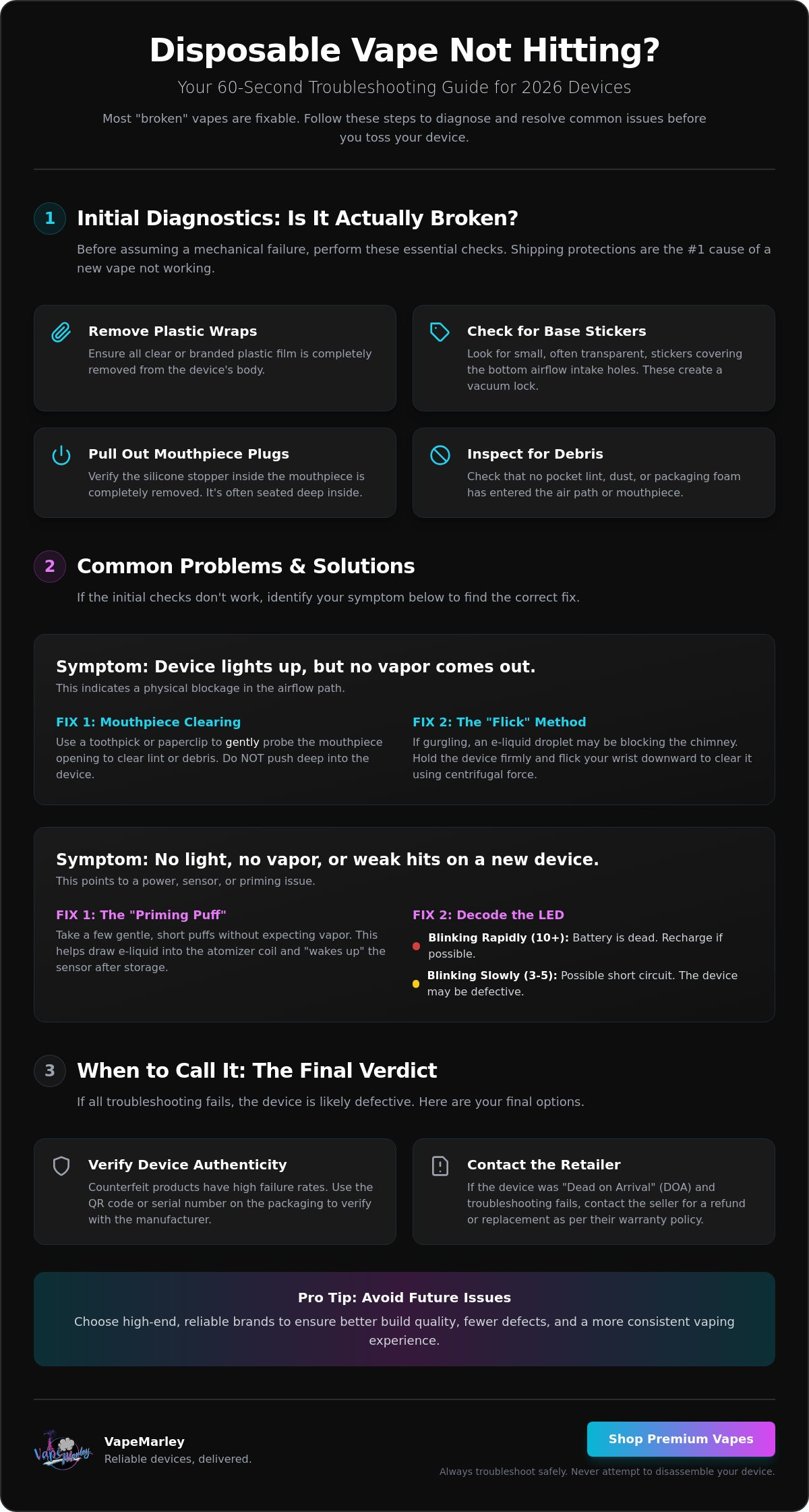
- Plastic Wraps: Ensure all clear film is removed from the device body.
- Base Stickers: Look for transparent or colored stickers covering the bottom intake holes.
- Mouthpiece Plugs: Verify the silicone stopper is completely removed.
- Debris: Check that no pocket lint or packaging foam has entered the air path.
The "Invisible" Barriers: Stickers and Silicone Plugs
Modern disposables use airtight seals to preserve flavor and prevent e-liquid oxidation during transit. Check the base of your device for small stickers covering the airflow holes. If these remain in place, they create a vacuum lock that prevents the draw-activation sensor from triggering. You should also inspect the mouthpiece for deep-seated silicone plugs. These are designed to keep the internal chimney clear of debris but will completely block vapor if not fully extracted. Leaving even a corner of a bottom sticker on can restrict the sensor's ability to "hear" your inhale.
The Priming Puff: Waking Up the Atomizer
The first draw on a new disposable is often the most difficult. This is because the e-liquid needs to migrate into the heating element after sitting in storage. A primer puff is a low-pressure draw intended to saturate the wick. Performing a few of these gentle, short pulls helps wake up the atomizer without the risk of burning the dry cotton. It's a standard part of the disposable vape not hitting fix process for new units. Once the vacuum seal is broken and the wick is saturated, the device should provide consistent, flavorful clouds. If the device remains silent after several gentle draws, the issue may lie with the internal pressure sensor or battery connection.
Clearing Airflow Obstructions and Pressure Lock Issues
If your device lights up but no vapor emerges, you're likely dealing with a physical obstruction rather than a terminal mechanical failure. This is a common disposable vape not hitting fix that usually takes less than a minute to resolve. Pocket lint is the most frequent culprit. It migrates into the mouthpiece during daily carry and forms a dense plug that prevents air from reaching the internal sensor. Environmental factors also play a role; cold weather increases e-liquid viscosity, making the juice too thick to flow properly. For those using 2026 high-capacity models, always check the adjustable airflow ring at the base. It’s easy to accidentally nudge these into a "fully closed" position, which mimics a broken device.
Safety is paramount when performing any physical maintenance on your hardware. While troubleshooting, keep FDA safety warnings in mind regarding device integrity; never force tools deep into the internal housing where the battery resides. Selecting devices with robust build quality from VapeMarley ensures your airflow components remain reliable over thousands of puffs, reducing the frequency of these minor annoyances.
The Mouthpiece Clearing Technique
To clear a suspected clog, use a thin toothpick or a safety pin to gently probe the mouthpiece. You only want to clear the immediate opening. Never use water or cleaning liquids, as moisture can short-circuit the internal electronics or ruin the flavor. If you suspect an e-liquid droplet is blocking the air path, try the "flick" method. Hold the device firmly and flick your wrist downward several times toward the floor. Centrifugal force often clears stubborn droplets from the chimney, restoring the draw immediately.
Solving Air-Lock and Pressure Problems
Sometimes a vacuum forms inside the e-liquid reservoir, preventing the sensor from triggering. You can often break this air-lock by performing a gentle "reverse-puff." Blow very softly into the base airflow holes for one second. This equalizes the internal pressure. Be careful not to blow too hard, as excessive pressure can flood the sensor with juice. If the device still feels tight, try covering one or two of the air intake holes with your fingers while taking a firm draw. This increased suction can often "jumpstart" a stubborn sensor that has become stuck due to changes in altitude or transit pressure.
Power Problems: Solving Battery and Sensor Malfunctions
Power failure is the next logical step in your diagnostic journey. If you've confirmed the airflow is clear, your disposable vape not hitting fix shifts toward the battery and sensor. These parts must communicate perfectly. The sensor feels your breath and tells the battery to fire. Many 2026 models feature USB-C recharging, which introduces new variables like port debris and cable compatibility. If your LED stays dark, you're likely looking at a dead cell or a faulty connection. Malfunctioning electronics can lead to overheating, which may exacerbate potential health risks by causing internal components to degrade. This is why understanding power signals is vital for both performance and safety.
Understanding Your Device’s LED Signals
Most 2026 hardware uses a standardized light language. A solid light during your draw means the battery is delivering power correctly. If the LED blinks ten times immediately, the voltage has dropped below the operating threshold. This is the most common reason for a "no hit" on a rechargeable unit. For non-rechargeable models, this signal means the device is finished. If the light flashes rapidly while you aren't puffing, it usually indicates a short circuit. When charging, ensure the LED pulses or stays lit. If it doesn't, try a different cable. Avoid high-speed laptop chargers; they can overwhelm the small circuits in a disposable, leading to permanent failure.
The Air-Pressure Sensor: The Heart of the Hit
The air-pressure switch is a tiny, sensitive diaphragm. Sometimes it gets stuck in the "off" position due to physical shock or e-liquid residue. This is a common SERP gap in basic guides that only focus on the battery. You can often resolve this with the "Sensor Tap" trick. Gently tap the base of the device against your palm or a wooden table. This slight vibration can often free a stuck sensor and restore the connection. If the device stays on after you stop hitting, the sensor is stuck in the "on" position. This is a safety hazard. Blow hard into the mouthpiece immediately to force the diaphragm back into its neutral state.
Cold temperatures are another silent battery killer. Lithium-ion chemistry relies on chemical reactions that slow down significantly in low temperatures. If your vape was left in a cold car, the battery might report as "dead" even if it's full. Warm the device in your pocket for five to ten minutes before trying again. This simple step often restores the voltage enough to trigger the sensor and get you back to vaping without further intervention.
Advanced Fixes for Internal Misalignment and Leaks
Internal liquid management is often the final hurdle when looking for a disposable vape not hitting fix. If your device has plenty of battery and clear air intake, the issue might be "blinding" of the airflow sensor. This happens when e-liquid leaks from the reservoir and pools around the internal pressure switch. Instead of sensing your breath, the sensor is submerged in juice. You might hear gurgling or experience "spit-back," where hot liquid enters your mouth. While some online forums suggest prying the device open to clean it, you should never attempt to disassemble a disposable vape. These units contain pressurized lithium batteries that can vent or ignite if the casing is punctured or wires are crossed.
Safe troubleshooting is about using external pressure to resolve internal issues. When a device is beyond simple fixes, it is safer to browse for a replacement among high-quality disposable vapes than to risk a battery fire. A leaked device isn't just a performance problem; it's a sign that the structural integrity of the internal pod has failed. If the following steps don't restore your hit, the device is likely a total loss due to an e-liquid short circuit.
Clearing a Flooded Atomizer
A flooded coil occurs when too much e-liquid enters the heating chamber at once. This prevents the coil from reaching the temperature needed for vaporization. To fix this, use the "Paper Towel" trick. Wrap a piece of paper towel tightly around the mouthpiece and blow firmly into the bottom airflow holes. This forces excess liquid out of the chimney and into the towel. You'll see dark spots of juice on the paper, indicating the clog is clearing. Storing your device upright instead of laying it flat helps prevent gravity from pulling juice into the air path, keeping the sensor clear for your next session.
The "Bottom-Blow" Hack (And When to Use It)
Sometimes the auto-draw sensor needs a physical reset that a standard inhale can't provide. Blowing gently into the charging port or the primary bottom air-hole can sometimes displace small bubbles or liquid films blocking the sensor. This creates a surge of pressure that forces the internal diaphragm to engage. However, this method carries the risk of over-activating the coil, which leads to a burnt taste. Blowing through the bottom should only be done in short, one-second bursts to avoid overheating. If you see vapor emerging from the bottom or the device gets excessively hot, stop immediately. This disposable vape not hitting fix is a last-resort measure for stubborn hardware.
When to Call It: Authenticity, Warranties, and Choosing Reliable Brands
There comes a point where a disposable vape not hitting fix is no longer about clearing a clog or tapping a sensor. If you've followed every technical step and the device remains unresponsive, you might be holding a "dud" or a counterfeit product. Counterfeit hardware often bypasses the rigorous safety standards found in verified disposable vape brands. This isn't just about a lost investment; it's a safety concern. Knowing when to stop troubleshooting is as important as knowing how to start. If your device emits a burnt plastic smell or becomes excessively hot to the touch, stop using it and dispose of it safely at a battery recycling center immediately.
If the device is a legitimate product but simply won't fire, you should follow a professional protocol to secure a replacement. Retailers are more likely to assist if you provide clear evidence of the failure. Always keep the original box and the receipt. Most high-end brands include a unique serial number on the packaging that helps the store verify the batch. Contact the vendor with a concise description of the issue, mentioning that you've already checked for common obstructions. This shows you're a knowledgeable consumer rather than someone making a simple user error. A reputable shop will value your loyalty and offer a resolution for a genuine manufacturing defect.
Spotting Fakes and Low-Quality Duds
The marketplace is unfortunately flooded with clones that mimic popular aesthetics but use substandard internal components. You can usually identify these by checking the scratch-off authenticity stickers found on the packaging. Scan the QR code to ensure it leads to the manufacturer's official domain. If the price seems too good to be true, the device was likely never meant to hit consistently. Learn how to spot a fake disposable vape to avoid these frustrations in the future. Authentic devices use higher-grade sensors and batteries that rarely fail right out of the box.
Choosing Your Next Device for Reliability
Moving forward, focus on brands that have demonstrated a low failure rate in the 2026 market. Reliability is the ultimate disposable vape not hitting fix because it prevents the problem before it starts. Consider investing in vape bundle deals. This approach ensures you always have a backup device ready if one suffers an unexpected failure. It also offers better value than buying single units repeatedly. At VapeMarley, we act as a curated expert, selecting only the most dependable options for our customers. Shop our curated collection of guaranteed authentic disposables at VapeMarley to ensure your next session is seamless and satisfying.
Mastering Your Hardware for a Seamless Experience
Most non-responsive devices aren't actually broken; they just need a bit of professional attention. By checking for invisible packaging barriers and mastering the sensor tap, you can often find a disposable vape not hitting fix in seconds. It's clear that understanding the difference between a simple air lock and a terminal battery failure saves you both time and money. Always prioritize your safety by avoiding disassembly and sticking to verified maintenance techniques. When you choose high-quality hardware, you significantly reduce the odds of dealing with a frustrating malfunction.
Maintaining a safe environment goes beyond your choice of electronics; if you are also a pet owner looking for professional guidance on animal safety and behavior, you can discover Sit Means Sit Dog Training for valuable resources on caring for your canine companions.
Tired of duds? Shop our 100% authentic, high-performance disposable vapes at VapeMarley. Our platform offers age-verified secure shopping and direct shipping across the USA. We feature a curated selection of top-tier 2026 brands designed for maximum reliability and flavor. You don't have to settle for a device that fails when you need it most. Armed with these troubleshooting skills, you can now vape with confidence and get the full value out of every puff.
Frequently Asked Questions
Is it safe to hit a disposable vape that is blinking?
No, you shouldn't continue trying to use a device while the LED is blinking. A flashing light is a safety feature that indicates either a depleted battery or an internal short circuit. Attempting to force a hit can lead to battery stress or overheating. If your device is rechargeable, plug it in for a full cycle; otherwise, it's time to dispose of the unit safely.
Why does my brand-new vape taste burnt instead of not hitting?
A burnt taste indicates that the atomizer is heating up, but the internal wick isn't saturated with e-liquid. This often happens if the device was stored horizontally or used too quickly after unboxing. Stand the vape upright for ten minutes to let gravity pull the juice into the heating element. If the burnt flavor remains, the internal coil is likely scorched and cannot be repaired.
Can I fix a disposable vape that fell in water?
Water damage is almost always terminal for these devices because they're sealed units. Moisture causes immediate short circuits in the lithium-ion battery and the sensitive air-pressure sensor. Even if the device seems to dry out, internal corrosion can lead to unpredictable auto-firing. For your safety, it's best to replace a water-damaged unit rather than risking a battery malfunction or a chemical short.
How long should I charge my rechargeable disposable if it stops hitting?
Most modern 2026 models require 30 to 60 minutes to reach a functional charge level. You should disconnect the device as soon as the LED indicator changes color or turns off to prevent overcharging. Using a standard USB-C cable with a low-voltage wall adapter is the safest method. Avoid using high-speed laptop chargers, as they can overwhelm the small internal circuitry and cause permanent damage.
What should I do if my vape is hitting by itself (auto-firing)?
If your device starts firing without you drawing on it, blow hard into the mouthpiece immediately. This sudden gust of air can often dislodge a pressure sensor that has become stuck in the "on" position. If the device continues to fire, place it on a non-flammable surface like a concrete floor until the battery is fully depleted. Do not put an auto-firing device in your pocket or bag.
Can cold weather stop my vape from hitting?
Yes, freezing temperatures can prevent your device from functioning by slowing down the battery's chemical reactions. Cold also makes e-liquid much thicker, which prevents it from flowing into the wick properly. If your device feels like it's dead after being left in a cold car, warm it between your hands for five minutes. This usually restores the battery voltage and thins the juice enough for a smooth hit.
Why do I hear a whistling sound when I try to draw?
A whistling sound is a clear sign of a partial airflow obstruction or a misalignment in the internal chimney. This is often the first step toward needing a disposable vape not hitting fix as debris or pocket lint begins to clog the intake. Check the small holes at the base of the device and clear them with a toothpick. If the device has adjustable airflow, toggling the switch can also resolve the noise.
How many puffs should I expect before a device naturally stops hitting?
Puff counts vary by model, but many high-capacity 2026 disposables are rated for 15,000 to 30,000 puffs. These manufacturer estimates are based on short, one-second draws. If you prefer longer, deeper hits, your actual puff count will be significantly lower than the number on the box. You'll know the device is finished when the vapor becomes thin or the flavor disappears entirely despite a full charge.