
Common Charging Mistakes That Affect High-Puff Disposable Vape Battery Life
Nov 24th 2026
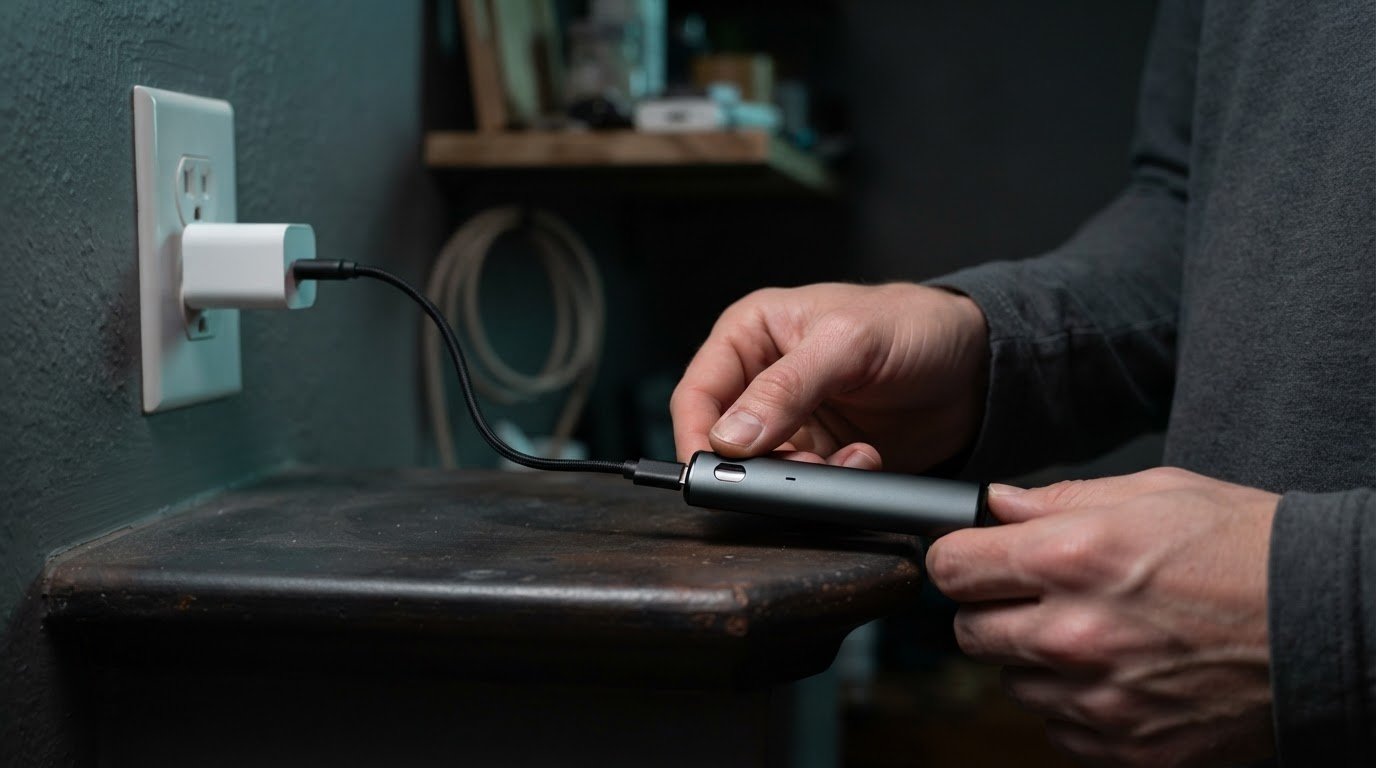
A charging port doesn’t mean every charging habit is suitable for a high-puff disposable vape. Battery charging should follow the device’s instructions. Handle the cable carefully and watch for signs of electrical trouble.
Leaving a device connected longer won’t necessarily solve a low-charge problem. Charging times and indicators vary by device, and a fault may need more than another attempt.
This guide explains how to connect and disconnect a charger, interpret charge indicators where available, and troubleshoot common electrical issues. It also covers why charging times differ and why some disposable vapes may not be designed to recharge. Follow the device’s instructions rather than guessing or forcing a connection.
Key Takeaways
- Follow the device’s charging instructions, and don’t assume every disposable vape is designed to be recharged.
- Use a compatible charger and handle the cable and charging port gently when connecting or disconnecting.
- Learn what the device’s charge indicators show so you can tell a low battery from a possible connection issue.
- If charging behaves unusually, look for simple electrical or connection problems rather than repeatedly forcing the charger.
- Charging time varies by device, so use its guidance instead of relying on a one-size-fits-all estimate.
Connecting and operating a charger
For a rechargeable device, follow its charging instructions and never force a cable into the port. Car battery procedures are different and do not apply to a disposable vape.
Charger setup and operation
Charger setup means connecting the correct charger to the correct battery in the sequence its instructions require. That distinction matters because a car battery and a compact vape device don’t share the same connection method. For a car battery, setup takes about 5 minutes; charge it in the vehicle when possible, with electrical consumers switched off.
Car battery connections follow a specific order: attach the red cable to the positive terminal, then the black cable to the negative terminal. Connect the charger to the battery before connecting it to mains power. These steps apply to car batteries, not vape charging ports. For a vape, follow the device’s directions and stop if the cable does not fit normally.
How battery charging works
Charging transfers electrical energy into a battery, with the charger and battery determining how that energy is accepted. The process depends on the battery type, so lead-acid car battery stages and voltages do not describe a vape device. A car charger may use staged charging, for example, but that does not establish the right charger or charging time for a disposable vape.
While a car is running, its alternator charges the battery; a plug-in charger works separately. Neither example tells you what a vape’s internal charging system supports. Check the device’s instructions to find out whether it is rechargeable and which connection method to use.
Preserving battery life during charging
To preserve battery life, avoid unsuitable charging habits and follow the device’s directions. Use only the specified charging method, connect the cable steadily, and disconnect it as instructed. Don’t assume that leaving a vape connected longer will improve its charge.
A car battery has different limits: the guidance here advises not leaving one connected to a charger for more than 24 hours. That limit is for car batteries, not vape devices. If a vape’s port, cable, or device becomes damaged or behaves unusually, stop charging rather than repeatedly reconnecting it.
Before connecting the cable, remove debris only if the device instructions explain how. Don’t insert tools into the port. Check that the cable fits securely without pressure. If the charge indicator doesn’t respond, don’t assume the battery is empty: a poor connection or unsuitable cable may also affect the result. Follow the device’s troubleshooting directions before trying again.
Disconnecting the charger safely
Disconnecting a charger means stopping the power supply before removing its connections. With a car battery charger, unplug it from mains power first, then remove its cables from the battery. This avoids handling connected leads while the charger is powered. A vape is different, so follow its instructions rather than applying car battery steps.
Unplug the charger before removing its cables
When a car battery finishes charging, switch off and unplug the charger from mains power before touching its clamps. Then remove the clamps from the battery. Keep the order clear: power source first, battery connections second. Don’t lift a clamp while the charger is still connected to mains power.
Once the charger is unplugged, hold each lead by its insulated clamp or connector, not by the cable. Pulling the wire can strain its connection to the clamp. Keep the disconnected clamps apart and away from the battery terminals as you remove them. These steps apply to car battery chargers, not small device charging ports.
Disconnecting a car battery is a separate task
Removing a car battery from a vehicle is different from unplugging a charger. If you need to disconnect the battery, remove the cable from the negative terminal before the cable from the positive terminal. Don’t confuse this order with charger removal, which starts by unplugging the charger from mains power.
Wear protective glasses and gloves when servicing, removing, or installing a car battery. Keep metal tools from bridging its terminals, and don’t let a removed cable fall back onto a terminal. If you’re only ending a charging session, don’t remove the vehicle’s battery cables unless that separate task is necessary.
Disconnecting a vape device
A vape charging port doesn’t use the red and black clamps found on a car battery. Follow the device’s charging instructions to determine when and how to disconnect its cable. Hold the plug or connector, then withdraw it gently and straight. Avoid yanking a cord sideways or twisting it, since that can strain the port.
If a cable sticks, feels loose, or needs force, stop rather than pulling harder. Check the device instructions for the correct way to release the connector. Don’t insert tools into the port or use car battery procedures as a workaround. A vape charging cable, for example, is not a negative-terminal lead.
Disconnecting correctly helps avoid unnecessary strain and keeps different procedures separate. Unplug a car charger from mains power before removing its clamps. When removing a car battery, disconnect the negative cable first. For a vape, follow its instructions and handle the connector gently. These steps do not extend battery life, but careful handling helps prevent damage to charging connections.
Battery voltage and state of charge
In the U.S., charging and disposal depend on the battery type and applicable disposal guidance. Don’t assume car battery procedures apply to a vape. Follow the device’s charging instructions and local guidance for disposal at the end of its life, rather than putting a battery in ordinary waste by default.
A voltage reading can help estimate charge, but the reference values for a 12-volt lead-acid battery don’t describe a disposable vape. A fully charged 12-volt lead-acid battery reads about 12.6 volts after resting. Each of its six cells is around 2.1 volts when fully charged.
Timing matters when interpreting a car battery’s voltage reading. After charging a lead-acid battery, let it rest for at least an hour before testing. A measurement taken immediately may reflect its recent charging state rather than a settled reading. For example, the result just after unplugging may differ from one taken after the battery has rested.
Those figures are useful for understanding car batteries, not for diagnosing a compact vape battery. Vape devices may signal charge through an indicator rather than a user-facing voltage display. Treat the indicator according to the device’s instructions; don’t compare it with the 12.6-volt lead-acid reference or apply a car battery tester to a vape.
Charge indicators need context. If a device signals low charge, follow its charging directions instead of repeatedly connecting and disconnecting the cable. If the indicator doesn’t respond, that alone does not establish the battery’s exact charge. Consider the cable connection, port, and device instructions when interpreting the signal.
Battery type also affects what a voltage number means. In a motorcycle example, 13.5 volts from the charging system can maintain a charged battery but won’t fully recharge a depleted one. That example concerns a motorcycle charging system, not a disposable vape or a standalone voltage reading.
Lead-acid batteries and vape batteries have different disposal considerations. Identify the device or battery type, then follow the applicable local disposal guidance. Don’t dismantle a vape to reach its battery or assume vehicle battery handling applies to a compact electronic device. The battery’s design determines the relevant charging and disposal instructions.
Use voltage readings only with the battery type they describe. A resting reading around 12.6 volts helps assess a fully charged 12-volt lead-acid battery, while a vape’s charge indicator and manufacturer instructions are the relevant references for that device.
In the U.S., charging and disposal depend on the battery type. Follow the device’s charging instructions and local disposal guidance. Car battery procedures do not necessarily apply to a vape.
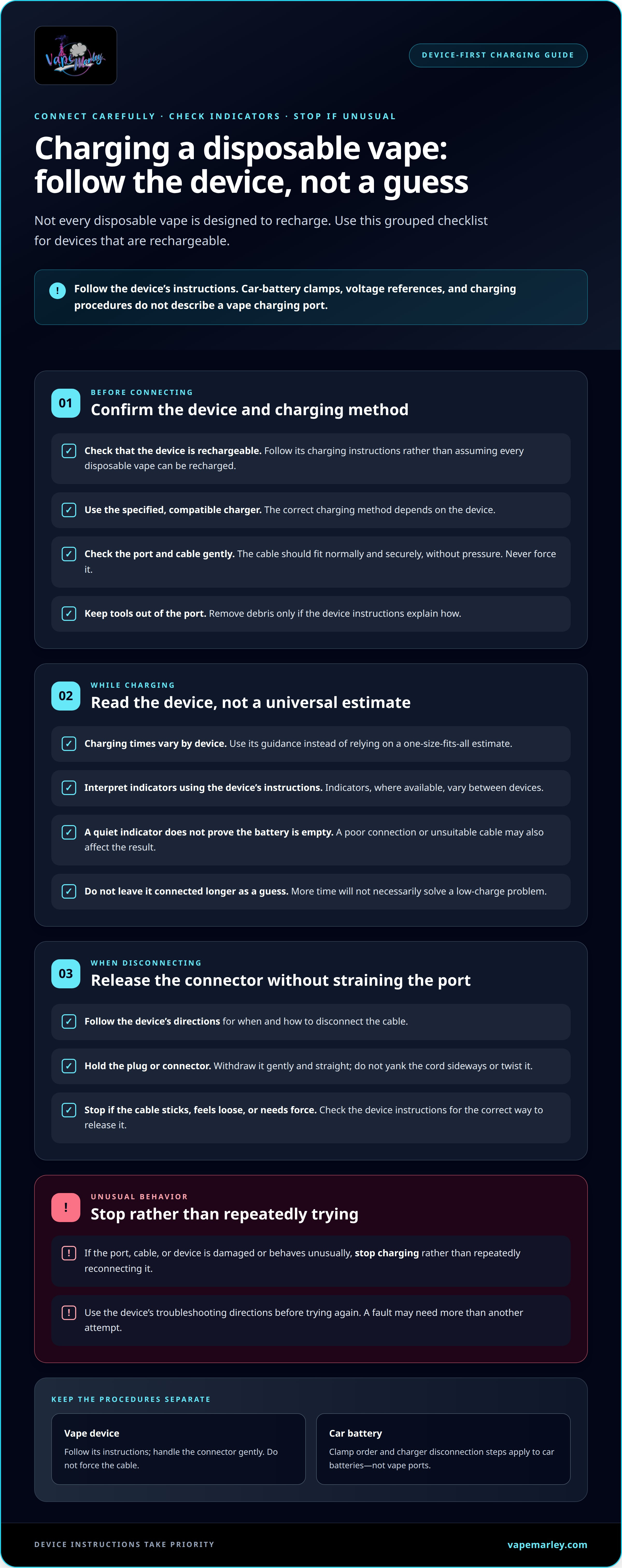
Charger features and charging times
Charger output, battery type, and charge level all affect charging time. Car battery figures don’t predict how long a disposable vape takes to charge. Follow the device’s instructions.
Charger features
A charger’s current output and charging stages determine how it supplies energy to a compatible battery. For car batteries, many chargers deliver 2-6 amps, while some provide 8-12 amps. A trickle charger typically outputs 1-3 amps. These ratings describe car battery chargers, not vape chargers.
Some multi-stage chargers use a bulk-charging stage before moving to later charging stages. The chargers described switch from bulk charging when battery voltage reaches 13.5 volts. Such features manage lead-acid charging; they don’t establish the right voltage, current, or charging behavior for a disposable vape.
Match a charger to its battery type. An EFB or AGM battery in a start-stop vehicle needs a charger designed for start-stop technology. A charger for the wrong battery type may use an unsuitable charging mode. For a vape, use only its specified charging method, not a car charger or its settings.
Charging times
Charging time is the period needed to replenish a battery, and it varies with the battery’s condition, capacity, and charger output. A car battery charge can take 1-6 hours, while a full car battery charge is usually achieved overnight. Those estimates apply to car batteries and shouldn’t be used to guess a vape’s charging time.
For example, car chargers delivering 2-6 amps operate differently from trickle chargers delivering 1-3 amps. A trickle charge can recharge a depleted or nearly depleted car battery overnight. The starting charge level and charger output affect the time; a higher current rating alone doesn’t give a reliable completion estimate.
Multi-stage charging also affects how a car battery reaches a full charge. During absorption, the battery accepts its remaining charge at its natural absorption rate, a process that takes longer than applying the charger’s bulk current. Vape battery chemistry and charging design differ, so use the device’s own indicator or instructions instead of these car battery examples.
Overcharging is a concern when a charger remains connected beyond the appropriate charging period. The guidance for car batteries advises against leaving one connected for more than 24 hours. That limit is specific to the car battery guidance here, not a vape-device rule. Follow the device’s instructions and disconnect it as directed; don’t extend charging time to compensate for an unclear indicator.
How does battery charging work?
A charger supplies electrical current, and the battery stores some of that energy through a chemical process. The exact process depends on battery chemistry, so lead-acid charging figures explain car batteries, not disposable vape specifications.
Many lead-acid charging systems use three stages: bulk, absorption, and float. Each stage changes how energy enters the battery. This helps explain why a charger may reduce its output before the battery is fully charged.
Bulk charging supplies the main charge
During bulk charging, a charger supplies current to raise the battery’s charge. Multi-stage chargers described for lead-acid batteries typically provide a bulk rate between 650 milliamps and 1.5 amps. In those chargers, bulk charging switches off when battery voltage reaches 13.5 volts.
That transition does not mean every battery is fully charged; it marks a change in the charging process. A charger limits current to help prevent excess current from damaging the charger or activating protective fuses or circuit breakers.
Absorption completes the charge
During absorption, a lead-acid battery takes in its remaining charge at a slower, natural absorption rate. One description of multi-stage charging says this stage supplies the final 15 percent of charge. Another three-stage example describes it as returning the last 20 percent of lead-acid capacity.
These figures describe different lead-acid charging explanations, not a universal percentage for every battery. In one three-stage example, absorption begins around 2.4 volts per cell, or approximately 14.6 volts for a 12-volt battery. Current then falls as the battery approaches full charge.
Float mode maintains a charged battery
Float mode maintains charge after the earlier stages. In the described lead-acid cycle, it holds about 2.25 volts per cell, or approximately 13.5 volts for a 12-volt battery. Some multi-stage chargers use a float voltage between 13.2 and 13.4 volts.
Don’t apply lead-acid voltage values or charging stages to a disposable vape. The device’s instructions and charge indicator are the relevant references. A car charger’s stages don’t tell you a vape’s battery chemistry, charging limits, or full-charge time.
These distinctions matter when interpreting charging behavior. A pause or change in an indicator isn’t enough to identify a particular charging stage. Follow the device’s directions instead of using car-battery voltage readings to diagnose it. For vaping products and accessories, explore VapeMarley’s selection.
Lead-acid battery manufacturers recommend three-stage charging as a method for efficiently restoring full capacity and extending battery life. A lead-acid battery maintenance charger returns approximately 80% of battery capacity during constant-current charging. In the described three-stage cycle, absorption voltage is maintained until battery current falls to approximately C/50 to C/100, where C is the battery’s amp-hour rating. For the page’s example of a 100 amp-hour lead-acid battery, absorption voltage is maintained at 2.5V per cell until current decreases to 1-2 amps. Equalization mode applies approximately 2.5-2.6 volts per cell to a lead-acid battery.
VapeMarley
VapeMarley is a practical next step when you’re considering a vaping product after learning how charging behavior differs by device. Its selection includes Disposable Vapes, Vape Accessories, and Vape Bundles, giving you options to explore as you decide what suits your preferences. Use the device’s own charging instructions for battery questions, since general car-battery guidance doesn’t define how a vape should charge. Product selection and safe charging are separate decisions, and keeping that distinction in mind helps you make an informed choice. If you have a question about VapeMarley, contact VapeMarley.
Make your next device choice with confidence
Let your routine guide your decision. Before choosing a device, consider whether its charging instructions are practical for you and whether you can follow them consistently. Good battery charging starts with treating each device as its own system, not relying on assumptions from another battery or charger.
That mindset can make everyday decisions clearer: use the product guidance as your reference, and pause if a connection or indicator behaves unexpectedly. When you’re ready to discuss a charging question or your options, contact VapeMarley. A considered next step helps you choose with greater confidence.
Frequently Asked Questions
What are the different types of battery chargers?
Common car battery charger types include multi-stage, trickle, and maintenance chargers, each suited to different needs. Multi-stage chargers move through charging phases, while trickle chargers provide a low, steady current. Equalization is a separate process for flooded lead-acid batteries after a full charge, not a general-purpose mode. Choose based on the battery chemistry and device instructions; a car battery charger does not determine what a vape requires.
How long does it take to charge common batteries?
Charging time depends on battery capacity, starting charge, and charger output. A car battery may take 1-6 hours, and a full car battery charge is usually achieved overnight. These estimates don’t apply to every battery. For a rechargeable vape, use its own instructions or indicator rather than estimating from car battery times. Most premium disposable devices include rechargeable batteries via USB-C, but not all disposables are rechargeable.
How do I charge lithium-ion batteries safely?
Use only the charging method specified for the device, and don’t substitute a charger intended for a different battery type. For rechargeable vape devices, follow the product instructions and stop if the cable or port appears damaged. All purchases require age verification at checkout. Our products are for adult users only - no exceptions. Many of our products contain nicotine, an addictive chemical. Keep products out of reach of children and pets.
What charger voltage and amperage should I use?
Use the voltage and current specified for the battery and charger pairing; car battery figures aren’t vape specifications. Many car chargers deliver 2-6 amps, trickle chargers typically output 1-3 amps, and some car chargers output 8-12 amps. For product questions, contact support@vapemarley.com or text +1 (765) 201-0461. If you’re unsure about vaping, consult a medical professional.