
Best Zero Nicotine High Puff Disposable Vapes: Top Picks for 2026
Oct 22nd 2026

A Zero Nicotine Vape is labeled 0 mg nicotine, but that label isn’t the only detail worth considering. Compare the device format and puff capacity with how often you expect to use it, and remember that nicotine-free labeling doesn’t guarantee the product contains no nicotine.
Flavor and a high puff count can make a disposable seem like a straightforward choice. Yet a Zero Nicotine Vape still produces aerosol for inhalation, so there’s more to consider than convenience. Review the ingredients, how you plan to use the device, and potential health risks before choosing.
This guide explains how to compare disposable and rechargeable options, assess puff ratings, and distinguish nicotine-free devices from those containing nicotine. It also outlines potential lung and cardiovascular concerns to help you weigh a Zero Nicotine Vape against your preferences and health priorities.
Key Takeaways
- Look for a 0 mg nicotine label, but remember that labeling alone may not guarantee what a product contains.
- Match puff capacity to your habits: compact devices rated for 5,000-10,000 puffs suit occasional use, while higher-capacity options may fit daily use.
- Compare disposable devices with rechargeable vapes and pods by weighing convenience, upkeep, and how you prefer to use them.
- Nicotine-free doesn’t mean risk-free; vaping aerosol can still irritate airways and raise lung and cardiovascular concerns.
- Explore disposable vapes, accessories, and bundles to find an option that fits your preferences.
How do I choose a nicotine free vape?
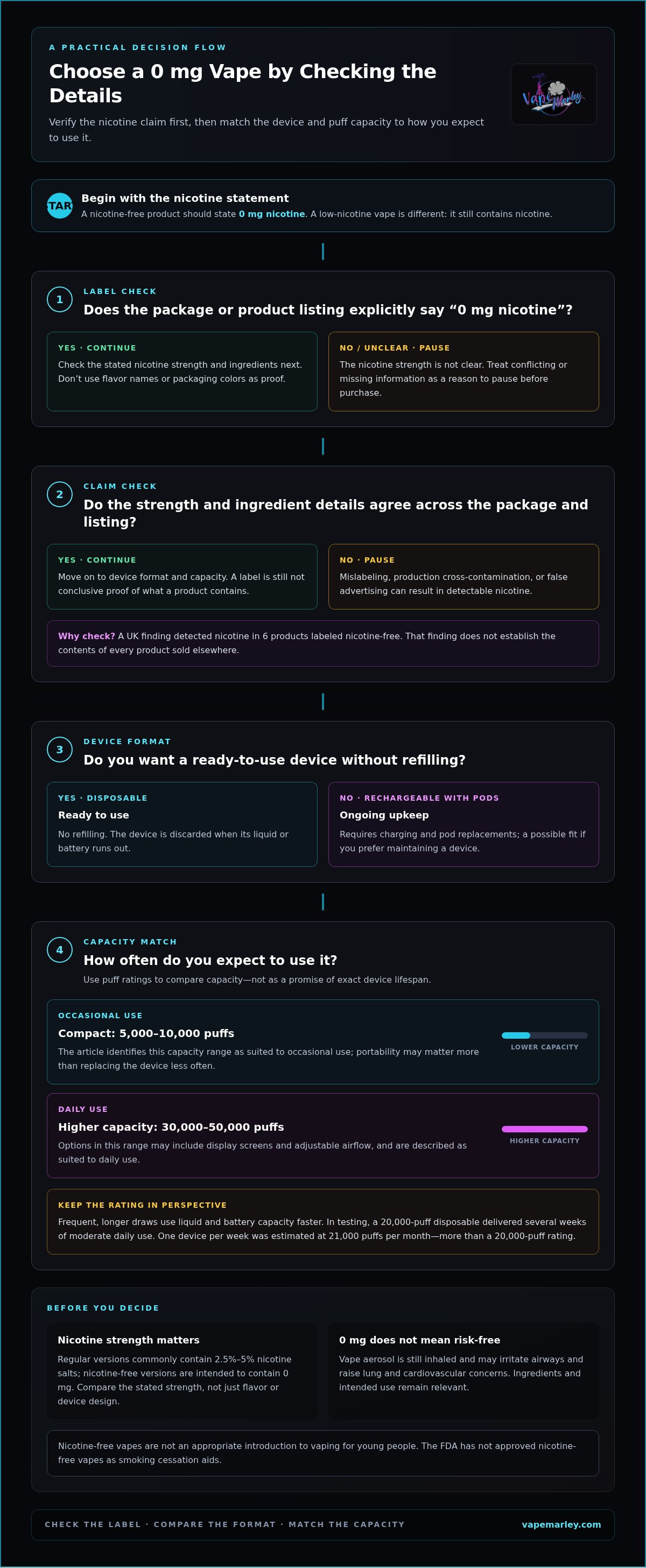
Start with the label: nicotine-free liquid should be marked 0 mg nicotine. Then compare device format, puff rating, ingredients, and how often you expect to vape.
Nicotine-Free and Low-Nicotine Options
A 0 mg product differs from a low-nicotine device, which still contains nicotine. If avoiding nicotine is your priority, compare the stated nicotine strength before purchase rather than relying on flavor names or packaging colors. A rechargeable device with refillable pods may suit someone who prefers replacing pods, while a disposable is ready to use without refilling. Consider the device format alongside the nicotine information.
Nicotine-free vaping may appeal to adults who want flavors without intentionally choosing nicotine. It isn’t a suitable introduction to vaping for young people. The Centers for Disease Control and Prevention says youth who vape may also be more likely to smoke cigarettes in the future. The U.S. Food and Drug Administration has not approved nicotine-free vapes as smoking cessation aids, so don’t treat a 0 mg label as evidence of a quit-smoking benefit.
Disposable Availability and Performance
Nicotine-free disposables are sold through online vape retailers and physical vape shops. Before purchase, compare the product’s nicotine statement, ingredients, puff rating, and whether it is disposable or rechargeable. Compact devices rated for 5,000-10,000 puffs suit occasional use; devices rated for 30,000-50,000 puffs, with display screens and adjustable airflow, suit daily use.
A puff rating helps you compare capacity, but it doesn’t tell you exactly how long a device will last. Frequent, longer draws use a device differently from occasional puffs. If portability and occasional use matter more than replacing a device less often, for example, consider a lower-capacity disposable. Assess flavor and device features separately from nicotine strength.
Checking Nicotine-Free Product Claims
To assess whether a product is truly nicotine-free, read the package and product description for an explicit 0 mg nicotine statement. Check the ingredients and strength details, then compare them across the packaging and listing. A nicotine-free label alone isn’t conclusive: mislabeling, production cross-contamination, or false advertising can result in detectable nicotine.
Nicotine-free vape products are not regulated, so labels and contents may be unreliable. A UK finding that 6 nicotine-free vapes contained nicotine illustrates why label checks matter, though it doesn’t establish the contents of every product sold elsewhere. Treat unclear or conflicting nicotine information as a reason to pause before purchase. Even with a 0 mg claim, the ingredients and aerosol remain relevant to your decision.
Are zero nicotine disposables as good as the regular versions?
They can offer the same ready-to-use format, but nicotine content and device capacity differ. Compare the puff rating, battery, liquid, and intended use before choosing.
Puff Counts and Device Lifespan
A puff count estimates device capacity, not an exact lifespan. A disposable rated for 20,000 puffs delivered several weeks of moderate daily use in testing. Your own usage changes that estimate: frequent, longer draws use liquid and battery capacity faster. Treat the rating as a comparison tool, not a calendar. Check whether the device is disposable or rechargeable before deciding what replacement involves.
Usage examples can help put capacity in context. Someone using one device per week may consume an estimated 21,000 puffs per month. A 20,000-puff rating therefore falls short of that example’s monthly use, while lighter use may stretch the same device longer. The number printed on a package doesn’t promise identical performance for every person.
- Occasional use: prioritize portability and a manageable puff rating.
- Frequent use: compare higher capacities and consider rechargeable devices with replaceable pods.
- Simple setup: choose a ready-to-use disposable if charging or pod replacement doesn’t suit you.
Nicotine-Free Use and Addiction Concerns
A genuinely nicotine-free vape contains no nicotine to drive nicotine dependence, but mislabeling or production cross-contamination can result in detectable nicotine. The Centers for Disease Control and Prevention says young people who vape may also be more likely to smoke cigarettes in the future. A zero-nicotine label doesn’t make vaping an appropriate starting point for young people.
Regular versions commonly contain 2.5%-5% nicotine salts, while nicotine-free versions are intended to contain 0 mg nicotine. That distinction matters more than flavor or puff count if avoiding nicotine is your priority. Compare the stated strength on the device packaging and product details; don’t assume two devices with similar designs contain the same liquid.
Disposable and reusable devices also differ in upkeep. A disposable is ready to use, then discarded when its liquid or battery runs out. A rechargeable device with pods requires charging and pod replacements, making it a possible fit for someone who prefers maintaining a device. A bundle can combine a device with related vaping products, but compare its contents with your needs instead of choosing by bundle size alone.
For a ready-to-use format, browse disposable vape options and compare device details against your preferred puff capacity and nicotine strength.
What's the difference between a no nicotine vape and a regular vape?
The key difference is the liquid’s nicotine content: nicotine-free products are labeled 0 mg, while regular versions may contain 2.5%-5% nicotine salts. The device can operate similarly, but the liquid changes what its aerosol delivers.
Reasons for Choosing Zero-Nicotine Vapes
Some adults choose a nicotine-free device for its flavors or familiar vaping routine without intentionally using nicotine. Others consider it while trying to quit smoking, but it isn’t a proven medical treatment. The U.S. Food and Drug Administration has not approved nicotine-free vapes as smoking cessation aids.
That distinction matters if quitting is your goal. No study directly supports these products as successful cessation tools. Nicotine replacement therapy is a separate approach, and research reports that it can double the success rate of quitting. Compare the purpose of each option, not just its device style or flavor selection. A Zero Nicotine Vape shouldn’t be mistaken for an established quit-smoking aid.
How Zero-Nicotine Vapes Work
A battery powers a heating element, which warms liquid and creates aerosol for inhalation. A device labeled 0 mg is intended to use liquid without nicotine. Regular versions use nicotine-containing liquid, including products with 2.5%-5% nicotine salts. The basic heating process can be similar, even though the intended nicotine delivery differs.
Device format and liquid formulation also shape the experience. Disposable and rechargeable models may use different designs, and how someone draws on a device affects its use. A 0 mg label describes the intended nicotine strength, not every ingredient or substance that heating may produce. For adults comparing formats, a Zero Nicotine Vape still involves inhaling aerosol.
Checking for Nicotine Content
Products labeled nicotine-free may contain detectable nicotine because of mislabeling, production cross-contamination, or false advertising. Compare the stated strength on packaging with the product description, and look for a clear 0 mg claim. If information conflicts, don’t assume the liquid is nicotine-free.
Regulatory oversight and approval status can vary for nicotine-free vape products. The FDA also hasn’t approved them as smoking cessation aids. These are distinct points: a nicotine claim doesn’t establish regulatory approval or show that a device can help someone quit.
Zero-Nicotine Vape Juice Ingredients
Nicotine-free liquid may contain propylene glycol, vegetable glycerin, and flavorings, with nicotine omitted from the intended formulation. Read the ingredient information for the specific product instead of assuming every flavor has the same blend. A 0 mg statement concerns nicotine; it doesn’t mean the liquid lacks other ingredients.
Heating can change what users inhale. Early research suggests heating propylene glycol can produce formaldehyde and acetaldehyde. Heating vegetable glycerin can also produce these compounds. The U.S. Food and Drug Administration says glycerol is generally recognized as safe to eat, but inhaling it may harm health. Food safety doesn’t establish inhalation safety.
Cardiovascular and lung health risks
A vape labeled 0 mg nicotine still produces an inhaled aerosol, not clean air. The absence of nicotine doesn’t remove risks linked to heated liquid, airway irritation, or chemicals in the aerosol. Treat nicotine content and inhalation exposure as separate considerations when weighing vaping against not vaping.
Early research suggests heating propylene glycol can produce formaldehyde and acetaldehyde, and heating vegetable glycerin can produce them too. The compounds formed depend on the liquid and heating conditions, so a nicotine-free label doesn’t describe every substance a person may inhale.
Vaping can expose users to volatile organic compounds. These compounds can damage airway cells and enter the bloodstream, where they may contribute to inflammation, oxidative stress, and blood-vessel damage. This suggests a possible pathway for cardiovascular concerns beyond the lungs, even when the liquid is labeled nicotine-free.
Lung effects can include airway irritation, and nicotine-free vaping may worsen asthma, COPD, or other lung conditions. Dry mouth and gum irritation are also associated with nicotine-free vaping. For example, inhaled aerosol may concern someone with asthma even without nicotine. A nicotine-free product is not a risk-free alternative to tobacco smoke.
E-cigarette- or vaping-use-associated lung injury, known as EVALI, can cause sudden, severe lung inflammation, permanent damage, and, rarely, death. These outcomes describe a serious vaping-related condition, not what every user will experience. Sudden breathing problems after vaping warrant urgent medical attention.
Young people face particular concerns because lung development continues until after the teen years. Avoid treating nicotine-free flavors or packaging as signs that vaping is suitable for young people.
For a practical decision, consider your health and what you would inhale, not just the nicotine label. If you have asthma, COPD, or another lung condition, aerosol exposure may aggravate symptoms. If you don’t currently vape, not starting avoids exposure to heated liquid and its aerosol. If you already vape, assess the nicotine claim separately from the device’s ingredients and inhalation risks.
Disposable zero-nicotine vape products
For a disposable, compare the nicotine claim with its puff rating and features. A high puff count can mean replacing the device less often, but it doesn’t establish product quality or guarantee a specific lifespan. First consider how often you expect to use it, then weigh convenience against the limits of a single-use device.
Use the stated capacity as a comparison point. Devices rated for 5,000-10,000 puffs suit occasional use, while devices rated for 30,000-50,000 puffs with display screens and adjustable airflow suit daily use. These figures describe rated capacity, not a fixed number of days. Draw length and frequency affect how quickly liquid and battery capacity are used.
Features can shape the experience as much as capacity. A display provides device information at a glance, while adjustable airflow changes how freely air moves through the device. These options may matter more to a daily user than to someone seeking a compact device for occasional use. Compare a Zero Nicotine Vape by its labeled nicotine strength and practical features, not puff count alone.
- Occasional use: compare compact devices rated for 5,000-10,000 puffs.
- Daily use: consider devices rated for 30,000-50,000 puffs with display screens and adjustable airflow.
- Nicotine preference: look for an explicit 0 mg claim instead of relying on flavor or design.
- Device lifespan: compare the rating with your expected use, rather than assuming the highest number is best.
High-capacity disposables can reduce how often you replace a device, but the rating doesn’t guarantee it will reach its stated capacity. Battery performance, liquid use, and individual draw habits affect when it stops working. Choosing a Zero Nicotine Vape means weighing these practical details alongside the product’s nicotine claim.
Labels deserve careful attention. Nicotine-free vape products may contain detectable nicotine because of mislabeling, production cross-contamination, or false advertising. Treat a clear 0 mg statement as a starting point, not proof that the device contains no nicotine.
A disposable is designed for use until depleted, unlike a rechargeable device with replaceable pods. That makes the disposable format straightforward, but replacing it means replacing the whole device. Explore disposable vape options and compare the stated nicotine strength, capacity, and features before choosing.
VapeMarley: Disposable Vapes
VapeMarley is a natural next step if a disposable format matches your preferences. Its selection includes disposable vapes, vape accessories, and vape bundles, giving you options to explore in one place.
Use this guide’s criteria as you compare products: read the nicotine-strength details, consider the device format, and weigh puff capacity against your expected use. If you’re also considering accessories or a bundle, focus on what suits your setup rather than choosing for convenience alone. Nicotine-free labeling doesn’t remove vaping’s potential health risks, so include them in your decision.
Visit VapeMarley online to explore its offerings.
Choose Your Next Step With Care
Your choice can reflect more than flavor or device design. Consider what you want from the experience, which ingredients you’re comfortable inhaling, and whether avoiding nicotine is your priority. A Zero Nicotine Vape may remove the intended nicotine content, but you still need to weigh vaping’s potential health risks. Take time to make a choice that aligns with your goals and comfort level.
When you’re ready to explore product options, VapeMarley offers disposable vapes, vape accessories, and vape bundles. Browse with your preferences in mind, and focus on the details that matter to your intended use. If you’d like to discuss your options, contact VapeMarley to discuss your options.
Make an informed decision at your own pace, keeping your health priorities at the center.
Frequently Asked Questions
Which brands make the best nicotine free vapes?
There isn’t one objectively best brand for every adult; compare the labeled nicotine strength, device format, and product details. VapeMarley carries brands including Geek Bar, Lost Mary, Kado Bar, and Mr Fog, with both nicotine and nicotine-free options available. A brand name alone doesn’t establish a product’s nicotine content. Vape products are for adults 21 and older, with age verification at checkout. Nicotine is addictive; keep products away from children and pets.
Are disposable e-cigarettes and disposable vapes the same thing?
In everyday product descriptions, “disposable e-cigarette” and “disposable vape” generally refer to a similar device: a self-contained electronic product that heats liquid into an inhalable aerosol. The terms may vary by retailer or packaging. Compare the product’s stated nicotine strength and ingredients, for example, rather than relying on its category name. A disposable differs from a rechargeable setup that uses a replaceable pod.
Do Zero Nicotine Vapes Help You Quit Smoking or Vaping?
No study directly supports zero-nicotine vapes as successful smoking-cessation products, and the FDA hasn’t approved them as cessation aids. As a practical next step, identify whether you’re trying to stop smoking, using nicotine, or vaping itself, since those goals may call for different support.
How long should it last?
It depends on puff capacity and how often and how long you draw. A 20,000-puff-rated disposable typically delivers several weeks of moderate daily use in testing, but that isn’t a personal guarantee. Someone taking frequent, longer draws may use liquid and battery capacity faster. Treat the rating as a comparison point, then consider your own pattern and whether you prefer replacing a whole disposable or maintaining a rechargeable device.
Is Nicotine-Free Vaping Safer?
Nicotine-free vaping avoids intentionally consuming nicotine, but inhaling aerosol isn’t therefore harmless. Liquid ingredients can produce chemicals when heated, and vaping may irritate airways. Separate nicotine exposure from aerosol exposure: removing one doesn’t remove the other. If you don’t already vape, not starting avoids exposure to vaporized liquid altogether.
What is a zero-nicotine vape and how does it work?
A Zero Nicotine Vape is intended to use liquid labeled 0 mg nicotine. Its battery powers a heating element, which warms the liquid and produces an aerosol for inhalation. The device may be disposable or rechargeable, but its basic heating function is similar. For example, a product marked 0 mg describes its intended nicotine strength, not every ingredient in the liquid or every substance formed during heating.
What are the health risks of vaping without nicotine?
Nicotine-free vaping can still irritate airways and may worsen asthma, COPD, or other lung conditions. It’s also associated with dry mouth and gum irritation. Heating propylene glycol or vegetable glycerin can produce formaldehyde and acetaldehyde. Vaping aerosol may expose users to volatile organic compounds that can affect airway cells and blood vessels. These concerns apply even when a product is labeled nicotine-free.
Is zero-nicotine vaping safer than nicotine vaping or smoking?
Nicotine-free vaping removes the intended nicotine dose, but that alone doesn’t establish greater overall safety. Aerosol and heated-liquid risks remain, and nicotine-free labels may not reliably reflect contents. The available facts here don’t establish a direct safety ranking against smoking or nicotine vaping. Compare the specific exposures involved, and don’t interpret “zero nicotine” as “risk-free.” Avoiding inhaled vape aerosol avoids those vaping exposures.