
Beri Crush 50K Charging & Battery Life Guide
Oct 13th 2026
A 50K puff label can sound like a battery-life guarantee, but it isn’t. The Beri Crush 50K Battery and Charging experience depends on more than the number printed on the device. How often you use it and how long each draw lasts can affect battery use, so a puff estimate can’t tell you exactly how long a charge will last or how many days the device will serve.
For a reliable charging routine, use the device’s packaging and manufacturer instructions rather than guessing at a charging time, cable type, or battery specification. Follow the directions for your specific device, and don’t assume that a high puff count means you’ll need to pay less attention to charging.
This guide explains how puff count differs from battery life, how to interpret battery changes, and how to approach charging responsibly. It also offers practical criteria for comparing product information without relying on assumptions.
Key Takeaways
- The 50K puff label isn’t a promise of battery runtime, a set number of days, or a fixed number of charge cycles.
- Assess Beri Crush 50K Battery and Charging information separately from the puff-count label.
- Battery indicators and their meanings can be model-specific. Use the device’s instructions to interpret them.
- Follow the supplied charging directions, stay present while charging, and stop if the device or cable behaves unusually.
- Before choosing a device, review its product information and applicable age requirements instead of relying on assumptions.
What the Beri Crush 50K Name Tells You, and What It Doesn’t About Battery Life
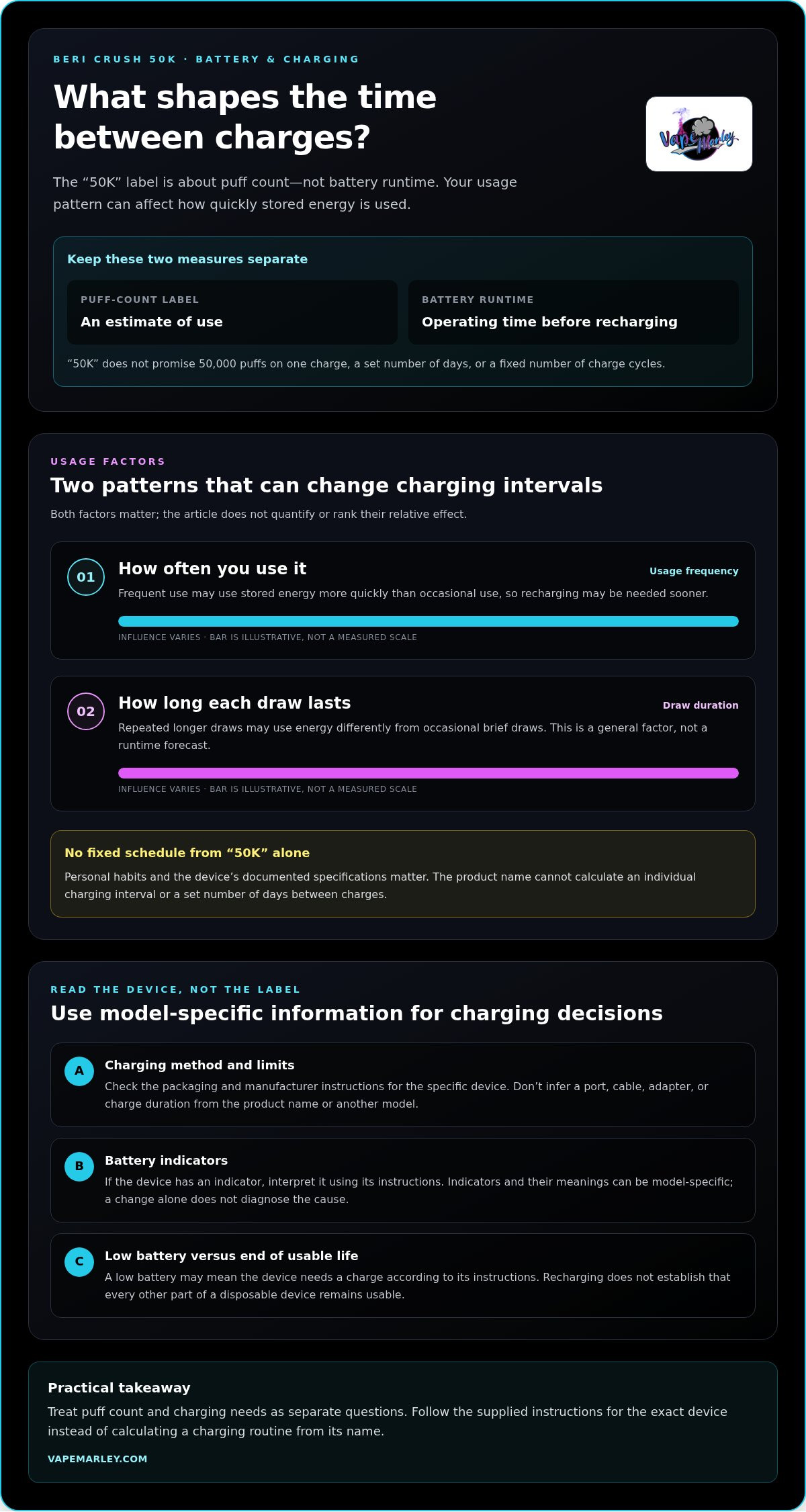
Battery life is how long a device operates between charges. It isn’t the same as puff count. The “50K” in the Beri Crush 50K name signals a puff-count label, but it doesn’t tell you how long the battery will last between charges, how many days you can use the device, or how many charging cycles it will support.
A puff estimate refers to a stated number of puffs; battery runtime refers to operating time before recharging is needed. The product name alone doesn’t provide a verified battery-capacity or runtime specification, or explain how the puff figure was measured. Treat the puff-count label and charging needs as separate questions, and use the device’s labeling and instructions for model-specific information.
Does 50K mean the battery lasts for 50,000 puffs?
No. The 50K label isn’t a promise that one battery charge will power 50,000 puffs, or a guarantee of a particular number of charges. It’s not a battery-capacity figure or a stated runtime. The device may need to be recharged during use, so the puff-count label can’t tell you when to charge it. Follow the device’s charging instructions rather than calculating a schedule from its name.
Why can battery life feel different from one user to another?
Use patterns affect how quickly a rechargeable device uses stored energy. Someone who takes draws frequently may need to recharge sooner than someone who uses the device less often. Draw duration can also vary: repeated longer draws may use energy differently from occasional brief ones. These are general factors, not a precise forecast for this model.
That’s why two people can have different experiences with devices carrying the same puff-count label. You can’t calculate charging intervals or a fixed number of days between charges from “50K” alone. Personal habits and the device’s documented specifications matter. If you’re comparing overall device longevity, a guide to how long disposable vapes last can explain other factors, while keeping that question distinct from battery runtime.
A puff-count label describes an estimate of use, not how long a battery runs between charges. Keep that distinction in mind when reviewing product claims. For a practical decision, check the exact product information and follow the charging instructions supplied with the device. That provides a more reliable basis for understanding battery use than the model name alone.
How Beri Crush 50K Battery Use and Recharging Fit Together
A rechargeable device uses energy stored in its battery as it operates. Recharging replenishes that energy, allowing the device to be used again while it remains functional. Usage and charging are connected, but the puff-count label doesn’t establish a specific runtime or charging method for the Beri Crush 50K.
Keep general battery concepts separate from model-specific facts. Don’t infer a port, cable type, adapter rating, charge duration, or indicator meaning from the product name or from another device. Use the packaging and manufacturer instructions for details that apply to this model.
Which charging details should come from the device instructions?
Use the instructions supplied with the device to identify the intended charging method and any stated limits. Follow those directions rather than relying on assumptions based on appearance or familiarity with other devices. Even if another Beri model looks similar or has its own charging guide, don’t automatically apply its specifications or steps to the Crush 50K. For model-specific charging details, follow the instructions supplied with that device.
If you have the packaging and instructions, read them before charging and use only the method and limits stated for the specific device. General advice online may describe another model, so don’t substitute it for the device’s own directions.
What can affect the time between charges?
How frequently a device is used and how long each draw lasts can influence how quickly it uses stored battery energy. For example, frequent use throughout the day may lead to a different charging pattern than occasional use. These are general considerations, not a promise about this model’s runtime. The product name alone can’t calculate an individual charging interval.
Also distinguish a battery that needs recharging from a device that has reached the end of its usable life. A low battery may mean the device needs a charge according to its instructions; it doesn’t, by itself, show that the device is finished. Conversely, recharging doesn’t establish that every other part of a disposable device remains usable. Follow the manufacturer’s guidance if the device behaves unexpectedly.
For broader context, a guide to rechargeable disposable vapes can explain how recharging fits into this product category. When comparing disposable vape options, focus on the exact product information and supplied instructions rather than assuming similar-looking devices share charging requirements. You can also explore disposable vape options with those questions in mind.
How to Read Battery Changes Without Confusing Them With Puff Count
A change in performance is worth noticing, but it doesn’t identify the cause on its own. If the device has a battery indicator, interpret it according to the instructions. Don’t treat the puff-count label, a change in feel, or one display reading as a diagnosis.
Use this comparison as a cautious starting point. It doesn’t assume that the Beri Crush 50K has a particular warning light, screen message, or behavior. Indicators and their meanings are model-specific.
Observed change: A documented battery indicator changes. What it may indicate: The battery status shown by that indicator. Safest next step: Check the supplied instructions for the indicator’s meaning and what to do.
Observed change: Performance feels different. What it may indicate: There may be more than one cause; the change alone doesn’t prove the battery is low. Safest next step: Compare what you observe with the device’s documented indicators and guidance.
Observed change: The device seems to have reached the end of its usable life. What it may indicate: It may be empty or otherwise no longer usable, but one symptom can’t confirm the cause. Safest next step: Follow the manufacturer’s instructions and don’t assume recharging will restore it.
Could reduced performance mean the battery is low?
Possibly, but reduced performance alone isn’t proof of a low battery. A change may have another explanation, and the same observation can mean different things on different devices. Check whether the packaging or instructions describe an indicator or symptom for this model. Use that guidance rather than guessing from a light color, screen message, or warning pattern.
If you can’t match what you see to the instructions, don’t treat a single clue as a definite fault or confirmed battery warning. Follow the device’s guidance, and stop using it if it behaves unusually or appears damaged.
How is low battery different from an empty disposable?
Battery charge and remaining usable product are separate considerations. A low battery may mean the device needs charging as directed, while an empty or otherwise finished device may not become usable again simply because it’s recharged. Don’t assume either condition from a puff estimate or one performance change. A how to know when a disposable vape is empty checklist can help you consider signs of depletion separately from battery status.
Read any Beri Crush 50K indicator as the manufacturer describes it, then consider whether the device still appears usable. This helps avoid a common mix-up: interpreting a battery clue as proof that the product is empty, or assuming a charge will solve every performance change.
A Safe, Practical Charging Routine for Beri Crush 50K
Start with the product’s own directions, not assumptions based on another device. The Beri Crush 50K’s packaging and manufacturer instructions are the reference for its charging port, cable, adapter rating, or charge duration. Stay present while charging, and stop if the device or charging equipment behaves unusually.
What should you do before connecting the device?
Read the Beri Crush 50K instructions and identify the charging method and any limits they state. Inspect the device, cable, and other charging equipment for visible damage. Use only an undamaged setup that matches the supplied directions. Don’t guess at technical requirements or borrow steps from a different Beri model.
A careful charging routine
- Review the directions. Locate the instructions for this specific device and note its stated charging method and restrictions.
- Inspect before use. Check the device and charging equipment for visible damage. Don’t use frayed, broken, or otherwise damaged equipment.
- Connect as directed. Use only a charging setup consistent with the device instructions. Don’t substitute a cable or power source based only on appearance or convenience.
- Stay nearby. Keep the device in view while it charges. If it becomes unusually hot or anything seems abnormal, stop charging and follow the manufacturer’s guidance.
- Finish according to instructions. Follow any directions about when to disconnect or what to do after charging. Don’t assume a charge time or indicator meaning unless the product materials state it.
Follow the product instructions, and stop using damaged charging equipment. This keeps your routine grounded in the device’s requirements rather than unverified advice. Treat Beri Crush 50K Battery and Charging details as model-specific, even if another rechargeable disposable looks similar.
When should you stop charging or stop using the device?
Stop charging if the device or equipment becomes unusually hot, shows visible damage, or behaves unexpectedly. Don’t open the device, alter its components, or attempt to repair the battery. Its parts aren’t intended for improvised fixes. Follow the product instructions for handling a device that appears damaged or malfunctions, and don’t resume charging just to see whether the issue goes away.
A safe routine is practical: check the right instructions, inspect the equipment, remain present, and respond promptly to anything unusual. To compare other disposable vape options, explore the selection with charging directions and safety considerations in mind.
Choosing Beri Crush 50K With Clear Battery and Charging Expectations
A sound purchase decision starts by separating the puff-count label from the charging instructions. The “50K” label doesn’t tell you how often you’ll need to recharge or how many days the device may last. Review the product information and charging directions for the specific device, then decide whether those details fit your expectations.
What should you review before choosing a rechargeable disposable?
Compare the information provided for the specific product with your everyday-use preferences. Consider whether you’re comfortable following charging instructions and whether recharging suits your idea of convenience. A puff-count label alone can’t answer those questions. A broader guide to choosing a disposable vape can help you think through other selection criteria, too.
- Read the product labeling and supplied instructions for documented specifications and charging guidance.
- Consider whether you’re comfortable keeping and following device-specific instructions.
- Check the applicable age requirements before purchase. In the United States, the federal minimum purchase age for vaping products is 21.
These checks help set realistic expectations without relying on assumptions about battery capacity, charging time, or runtime. Similar names or designs aren’t a substitute for the exact product details.
How can you keep expectations realistic after purchase?
Keep the device instructions so you can refer to them when a charging question comes up. Track your own usage and charging patterns over time; that personal record is more useful than treating the puff-count label as a calendar estimate. If an indicator or behavior raises a question, use the model’s instructions rather than applying guidance meant for another device.
For Beri Crush 50K Battery and Charging, assess the documented charging information separately from the puff-count label. This keeps your decision grounded in what the product information says instead of turning a number in the name into a promise about battery performance.
VapeMarley’s online selection includes disposable vapes, accessories, and bundles. The store uses age verification for online purchases. Adults who meet applicable age requirements can browse with a clear understanding of the difference between a puff-count label and charging expectations.
Make Your Next Device Choice With Confidence
Make it a habit to keep product instructions accessible and use them whenever a charging question comes up. If you choose a rechargeable disposable, note how your usage and charging routine work in practice. That gives you a personal point of reference for future choices without treating a product label as a forecast.
Beri Crush 50K Battery and Charging details are one part of deciding whether a device suits your preferences. Give equal attention to the information provided for the specific product and to the level of convenience you want from everyday use. Clear expectations make it easier to choose thoughtfully.
VapeMarley is a U.S. online storefront for adults, with age verification for online purchases. Ready to explore? Browse VapeMarley’s disposable vape selection and choose with the product information and charging expectations in mind.
Frequently Asked Questions
Does the Beri Crush 50K battery last for 50,000 puffs?
No. The “50K” label isn’t a guarantee that one battery charge lasts for 50,000 puffs. Puff count and battery runtime measure different things, and the product name doesn’t establish a fixed runtime. For Beri Crush 50K Battery and Charging specifications, use the device’s own documentation. Personal use also matters, so don’t convert the label into a number of days or charging cycles.
How do you charge a Beri Crush 50K?
Follow the charging instructions supplied with your Beri Crush 50K. Don’t infer the port, cable, adapter rating, or charging steps from another device. Before connecting it, inspect the device and charging equipment for visible damage and make sure the setup matches its instructions. Stay nearby while it charges. If anything becomes unusually hot, appears damaged, or behaves unexpectedly, stop and follow the product’s safety guidance.
How long does a Beri Crush 50K take to charge?
Use the charging duration stated in the instructions for your specific device, not an estimated time from another Beri model. If its documentation doesn’t give a duration, don’t guess or leave it connected longer based on assumptions. Charging time describes how long replenishing the battery takes. It’s separate from how long the device lasts during use, and a puff-count label can’t calculate either duration.
Can you use a different charger with the Beri Crush 50K?
Only use charging equipment that matches the requirements stated in the device’s instructions. A connector that appears to fit doesn’t establish that an adapter or cable is suitable. Check the equipment for damage before use, and don’t improvise with a substitute when the model-specific requirements aren’t clear. Use the product documentation as your reference before connecting the device.
Why is my Beri Crush 50K not charging?
Check the device and charging equipment for visible damage, then compare your setup with the supplied instructions. Don’t assume a particular light, screen message, or sequence indicates a specific issue unless the documentation says so. If the device or equipment is damaged, behaves unusually, or remains unresponsive, stop charging and follow the product’s safety guidance. Don’t open the device or attempt a repair.
Does recharging a Beri Crush 50K make it last longer?
Recharging can restore battery charge when the device is intended to be recharged and you follow its instructions, but it doesn’t guarantee a set number of extra puffs or days. Battery charge and remaining usable product are different considerations. A recharge also can’t be assumed to restore a device that has otherwise reached the end of its usable life. Follow the device’s guidance and don’t treat its puff label as a lifespan promise.